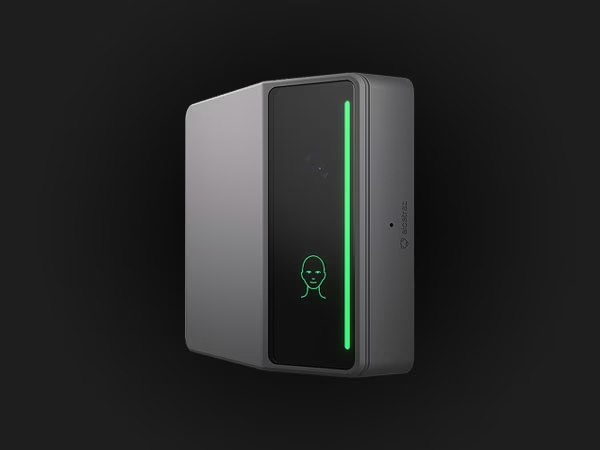



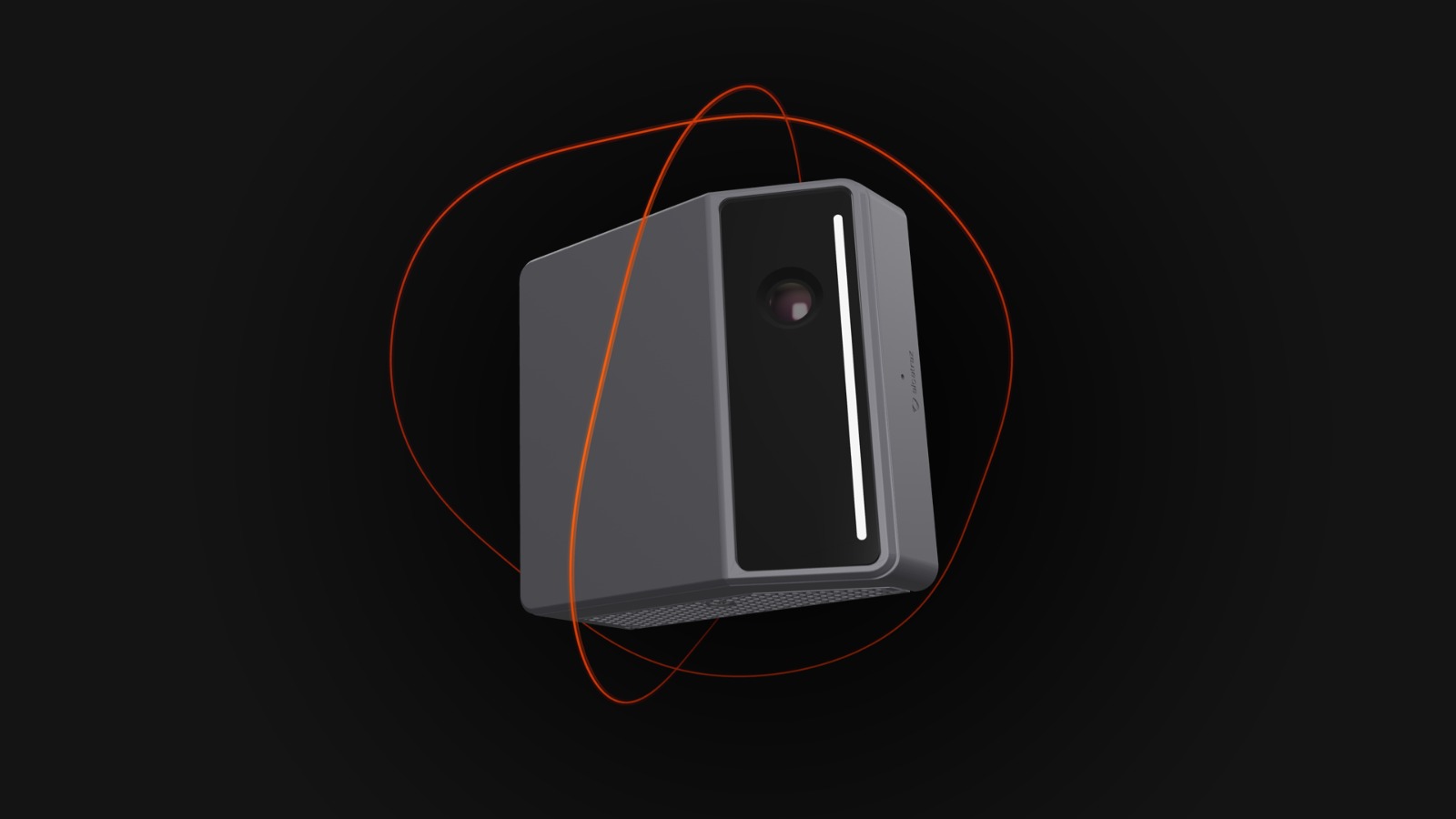

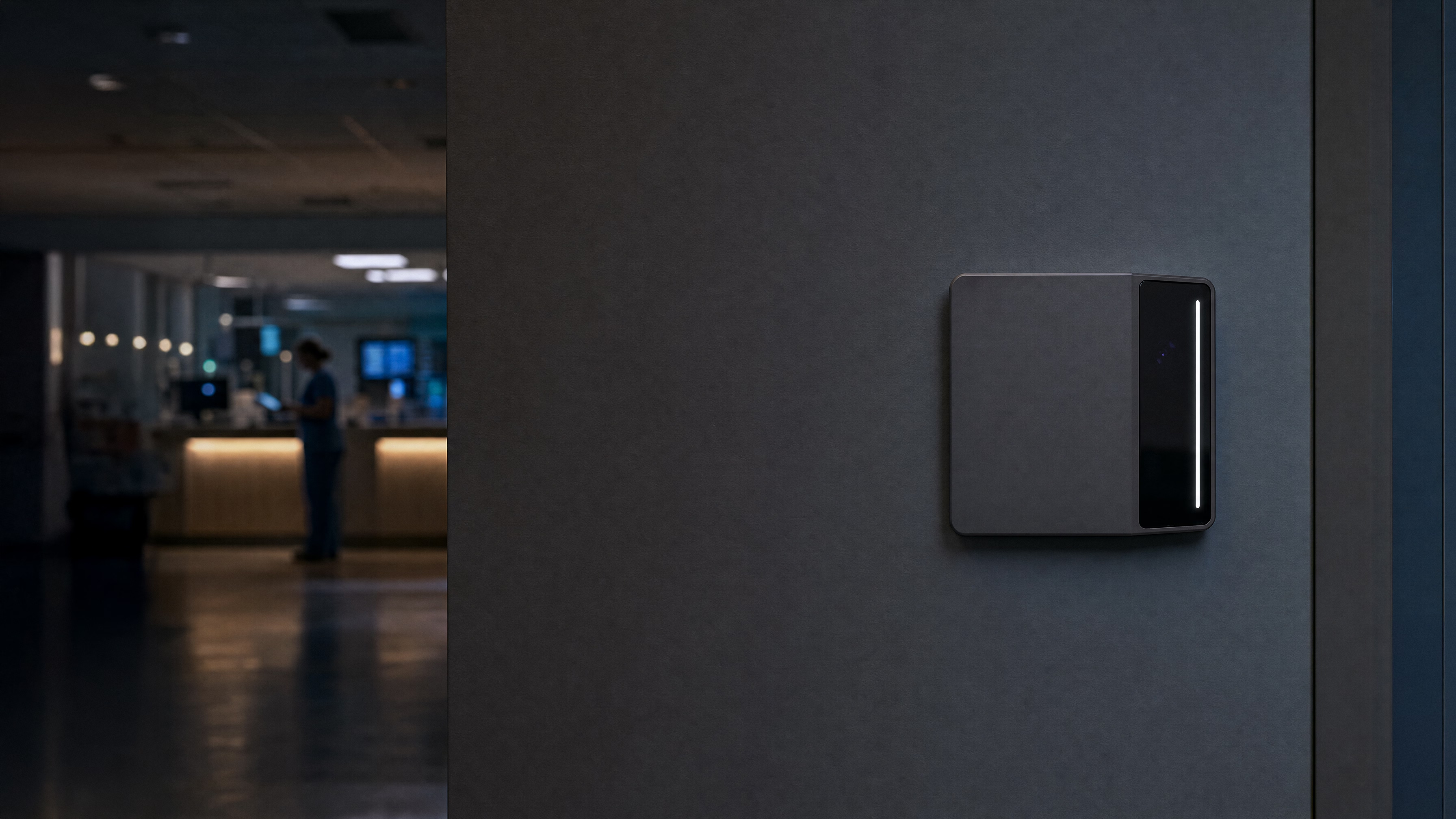
Biometric Access Control for Hospitals and Life Sciences
Alcatraz secures hospitals, research labs, and pharmacies with facial authentication, multi-factor access control, and real-time tailgating detection. Protecting patients, staff, and research without disrupting care.
Trusted by



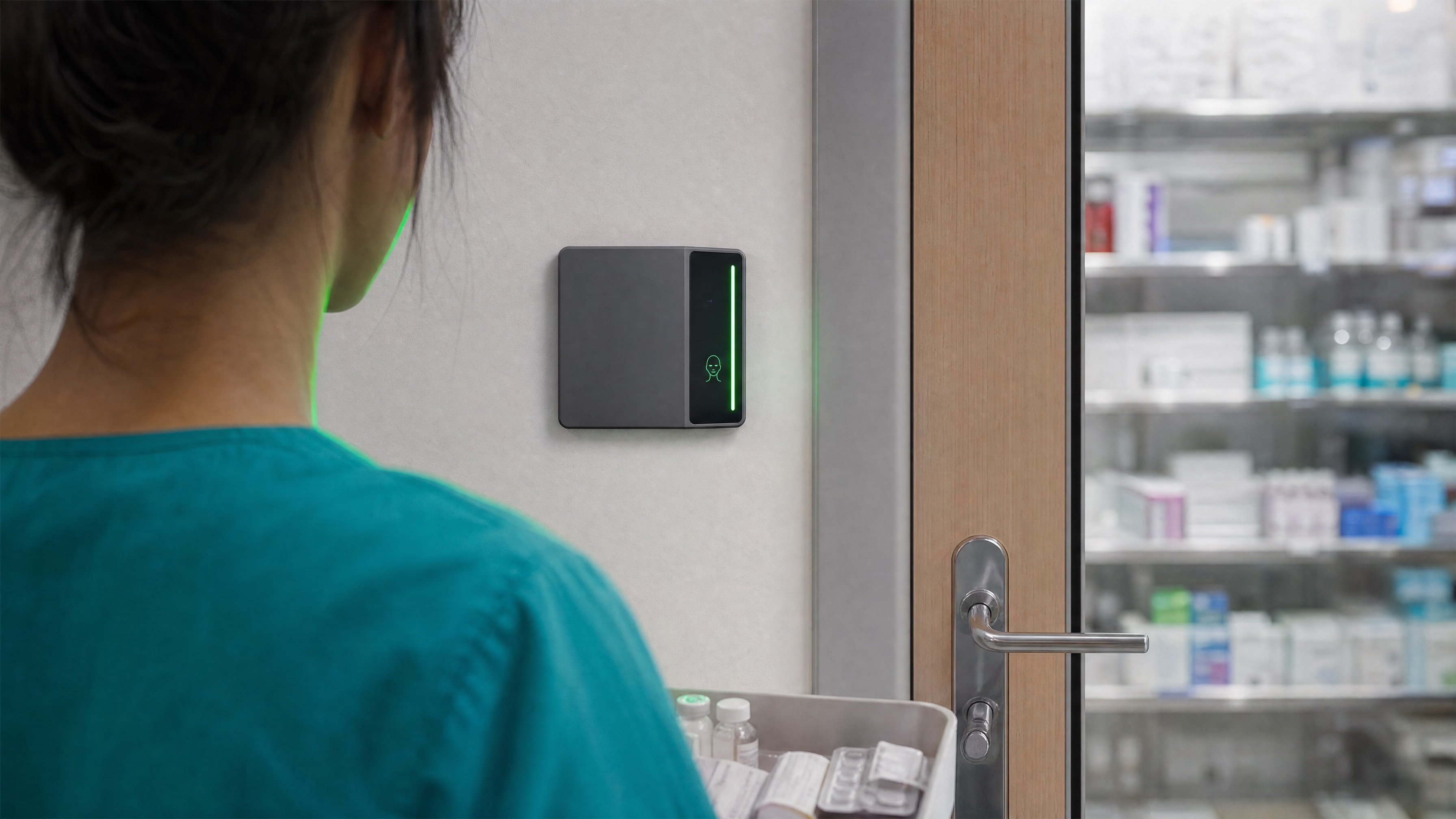
Stronger protection for high-risk areas
A second layer where it matters most
Pharmacies, research labs, and cleanrooms carry more risk than the rest of the building, but a badge system treats every door the same way. Alcatraz adds a second layer of authentication so your highest-risk spaces stay protected without slowing down the rest of the building.
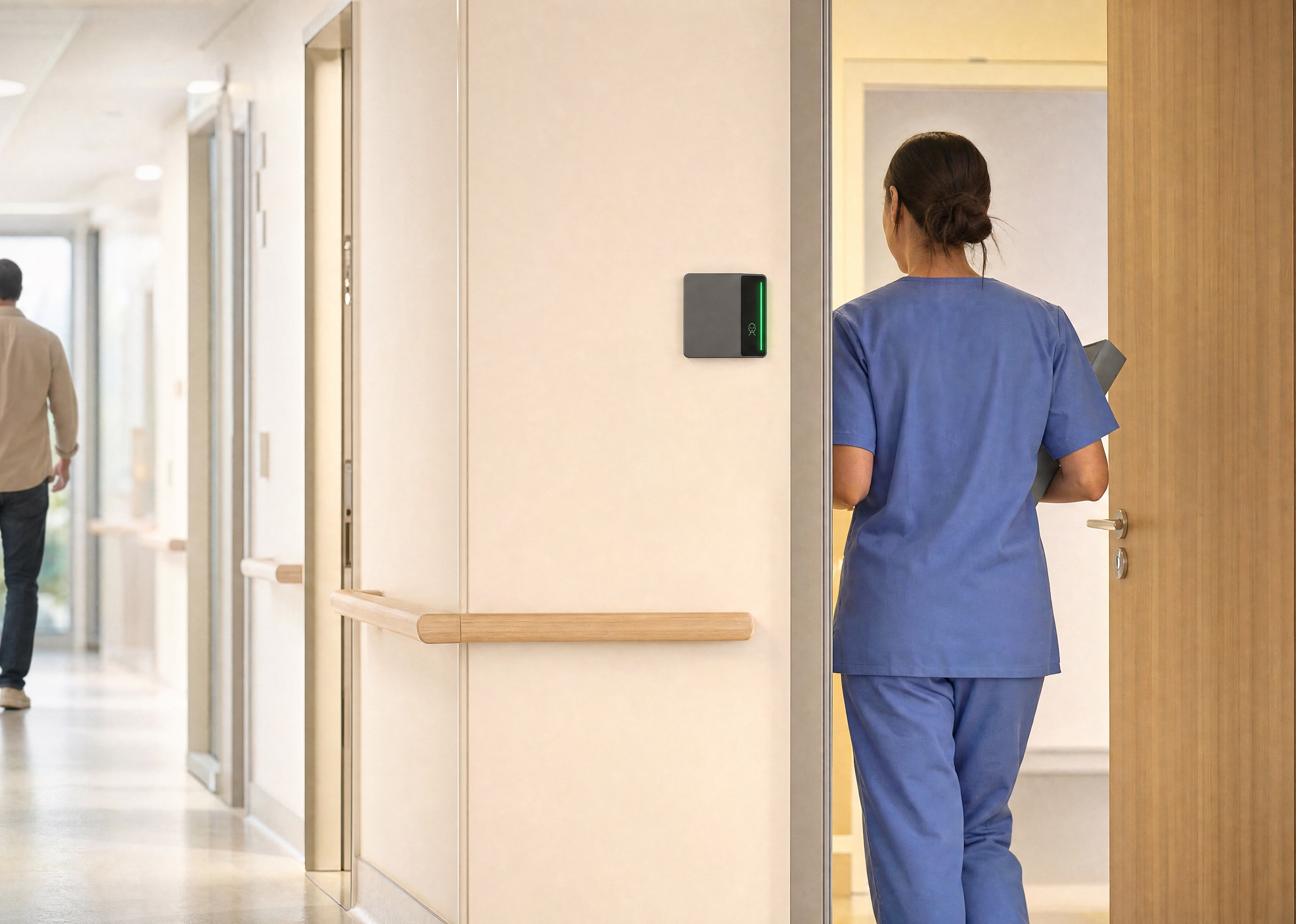
Faster access for staff and researchers
No badge, no slowdown
A badge that gets swiped, misplaced, or carried into a cleanroom is one more thing that can slow down staff or introduce contamination risk. Alcatraz authenticates in under a second with no badge required, so staff spend more time with patients and in the lab.
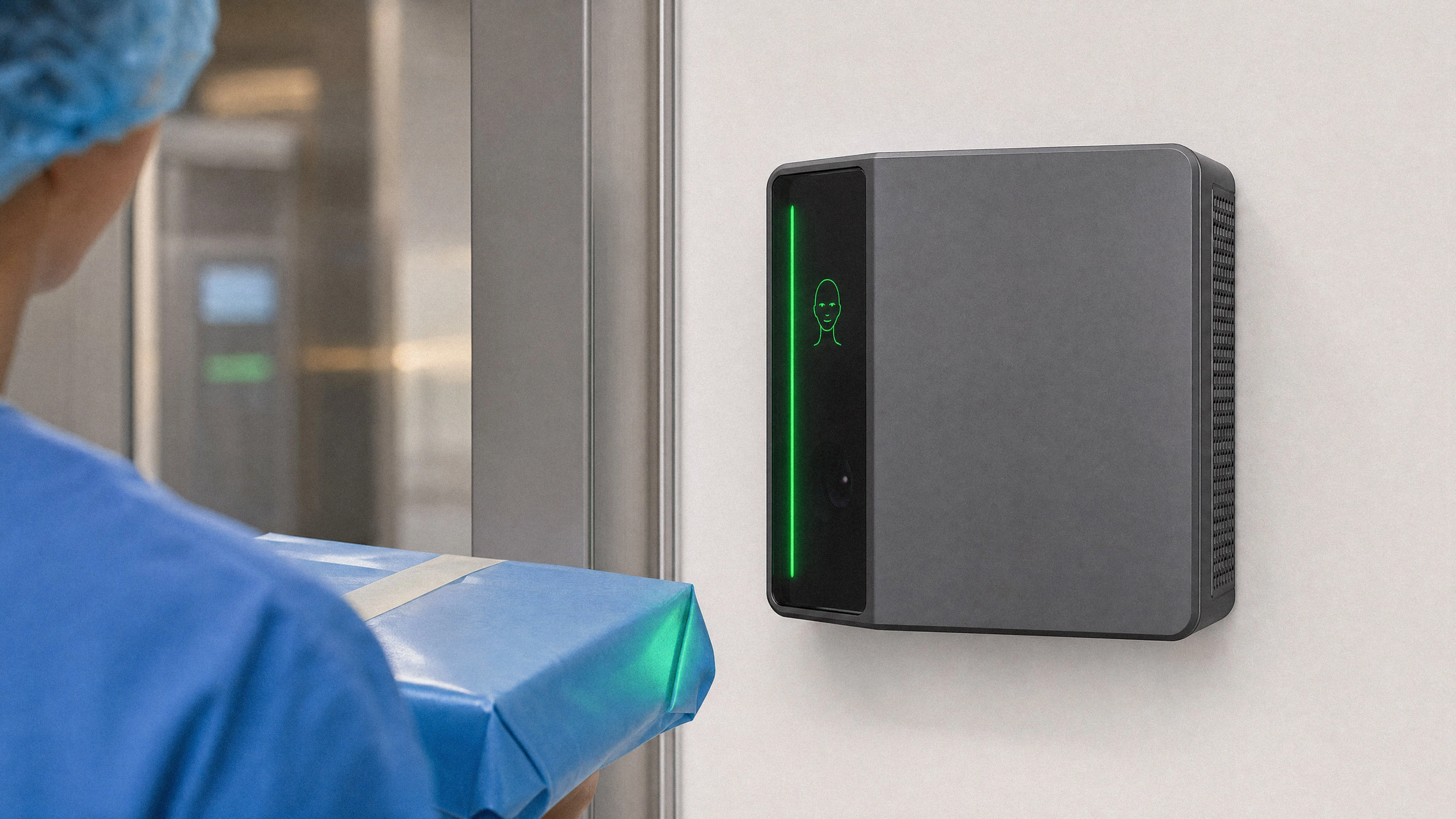
Controlled access to sensitive spaces
Every entry accounted for
Badges get shared and lost, and that's exactly how the wrong person ends up in a lab, pharmacy, or executive suite. Alcatraz confirms exactly who's entering, and flags tailgating the moment it happens, so sensitive spaces stay accessible only to authorized people.
Protected healthcare and life sciences access points
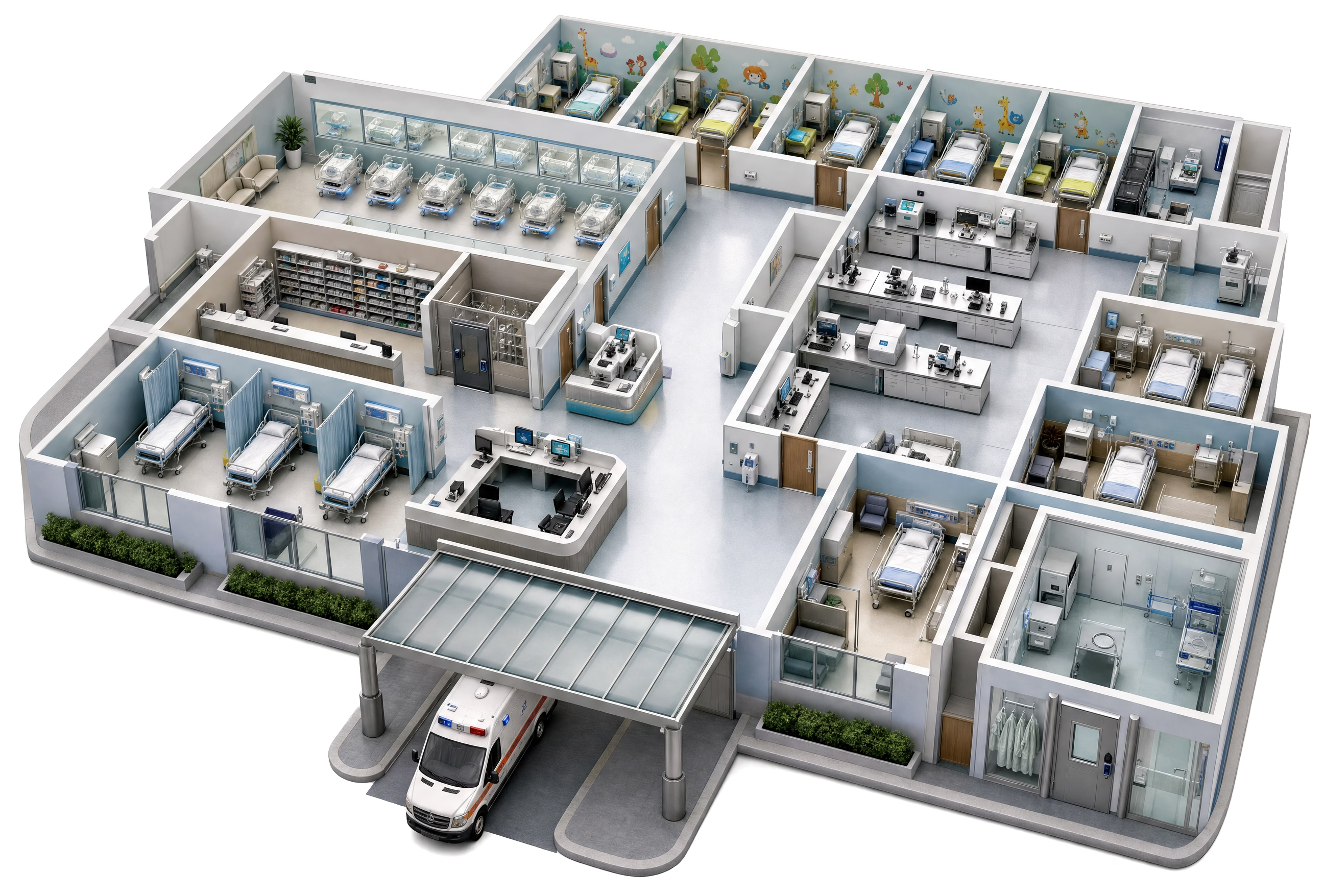
Emergency departments
The ED is the hospital’s most porous boundary: public on one side, clinical on the other, staff moving fast with hands full. Doors open hands-free in under a second, and tailgating detection flags anyone slipping in behind them, with video for the security desk.
Pharmacy and medication rooms
Controlled substances demand exact accountability. Every pharmacy and medication room entry is attributable to a verified person, with 2FA at the vault, so diversion investigations review who verifiably entered instead of who might have held a badge.Multi-factor at pharmacy vaults
Laboratories and clean environments
BSL labs and clean rooms are where badges fail: gowned staff, gloved hands, contamination protocols. Touchless entry never breaks gowning, access is scoped by role and training status, and every containment crossing logs to a verified individual.Enrollment, roles, and audit reports
Neonatal and pediatric units
Infant and pediatric security is the clearest case for verifying the person. Unit doors open only for verified staff, and tailgating detection with video covers the follow-through attempt badge systems never see.
Records and data storage
Records rooms and data closets hold the patient information access rules exist to protect. Entry is limited to authorized staff, and person-level logs give privacy officers named, verified entries rather than badge numbers.
The facial authentication solution for healthcare and life sciences
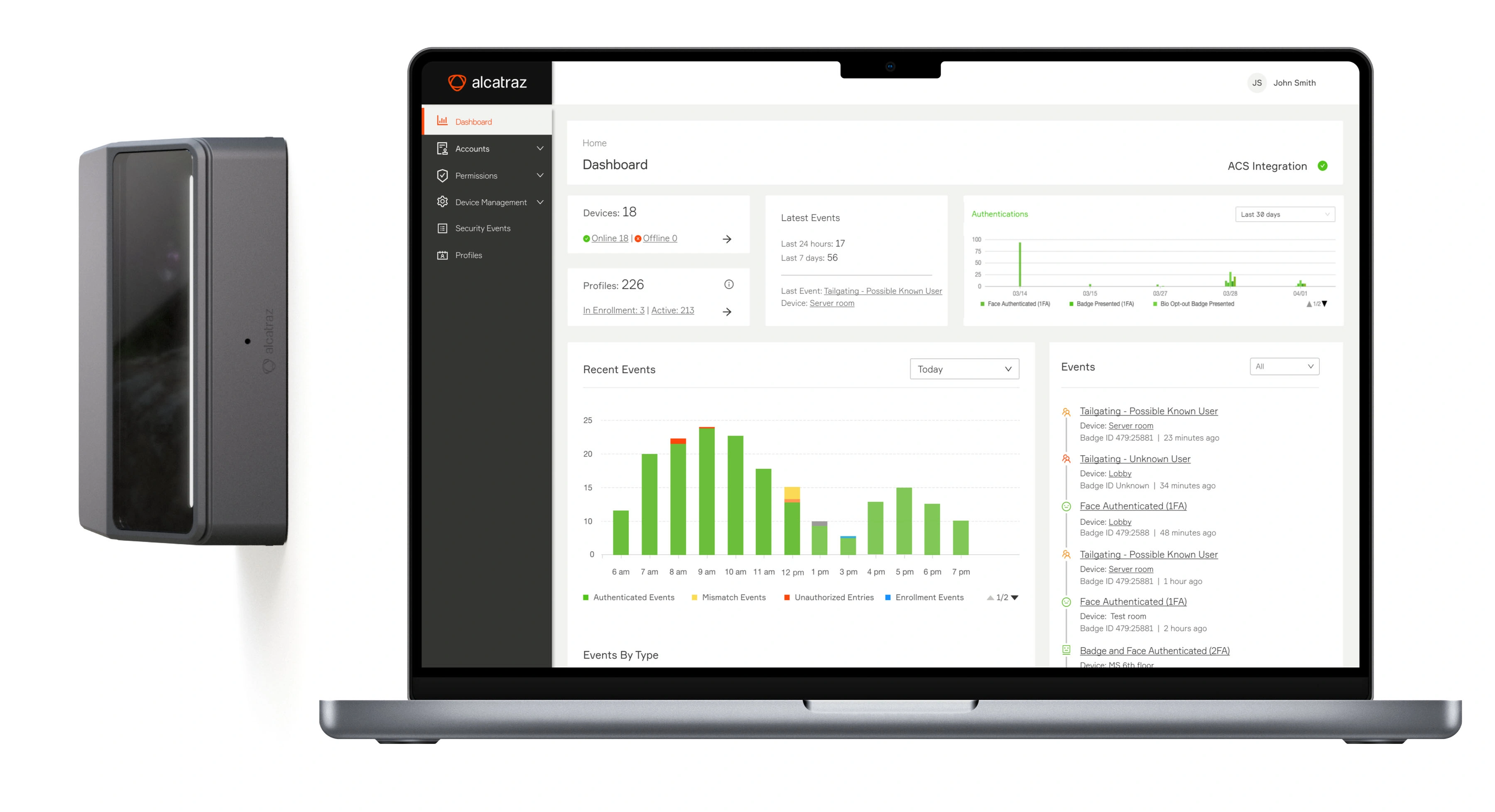
Alcatraz secures pharmacies, research labs and cleanrooms, and turnstiles and executive offices with live facial authentication, real-time tailgating detection, and centralized management.
Security requirements in clinical and regulated environments

A card log can't prove who accessed a records area, medication room, or executive suite, only that a badge did. Alcatraz recognizes who is authorized and catches anyone who doesn't, in real time.
Proof from healthcare deployments
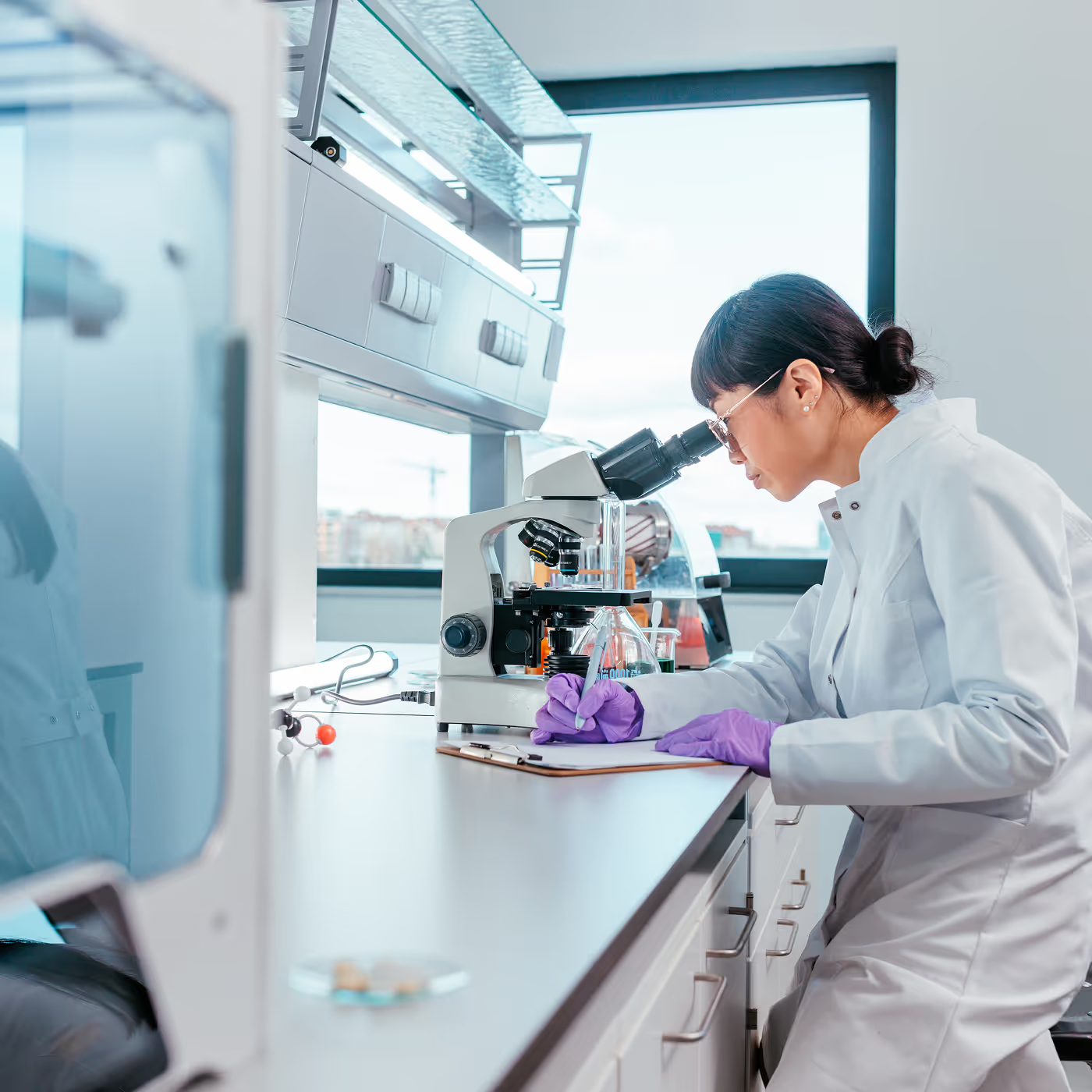

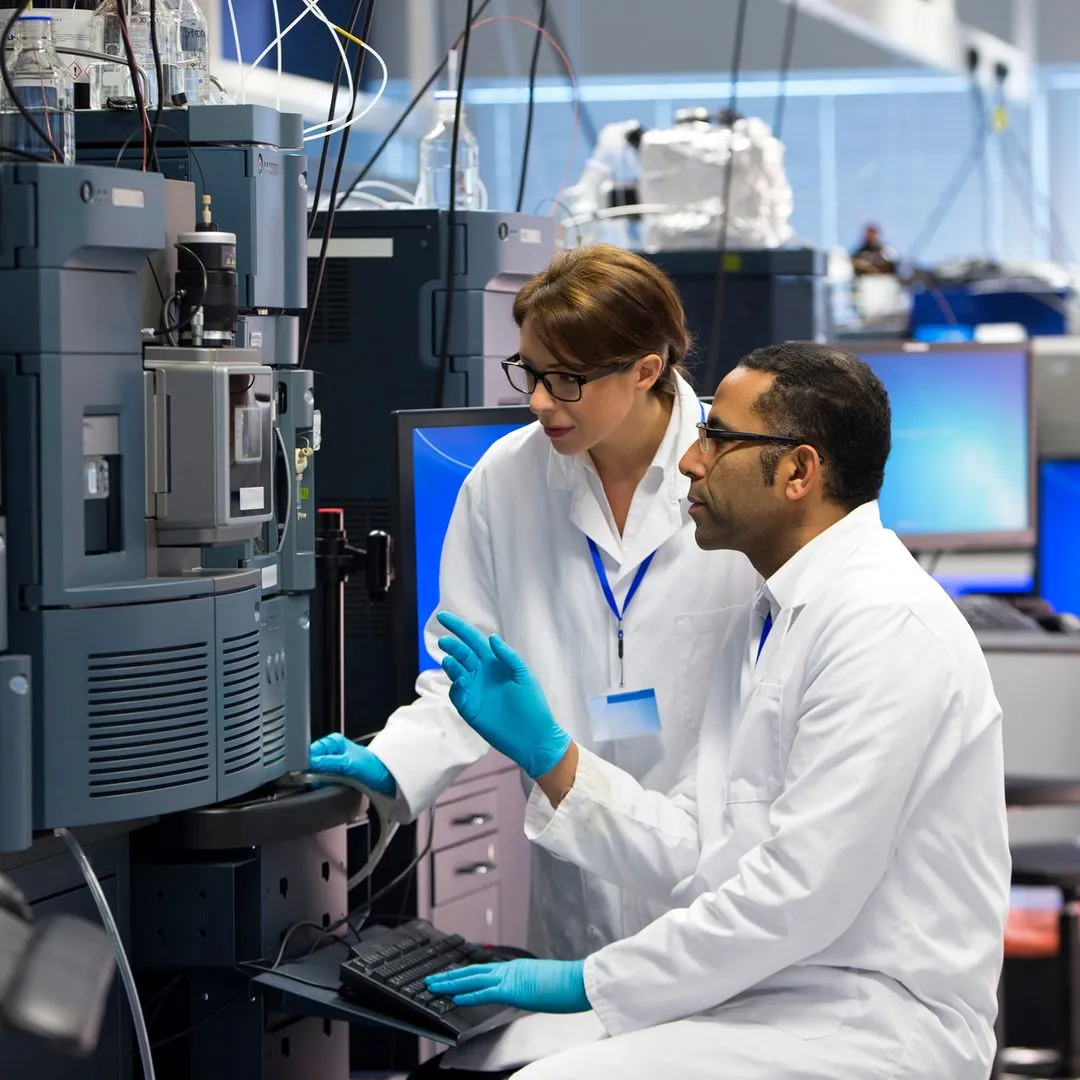
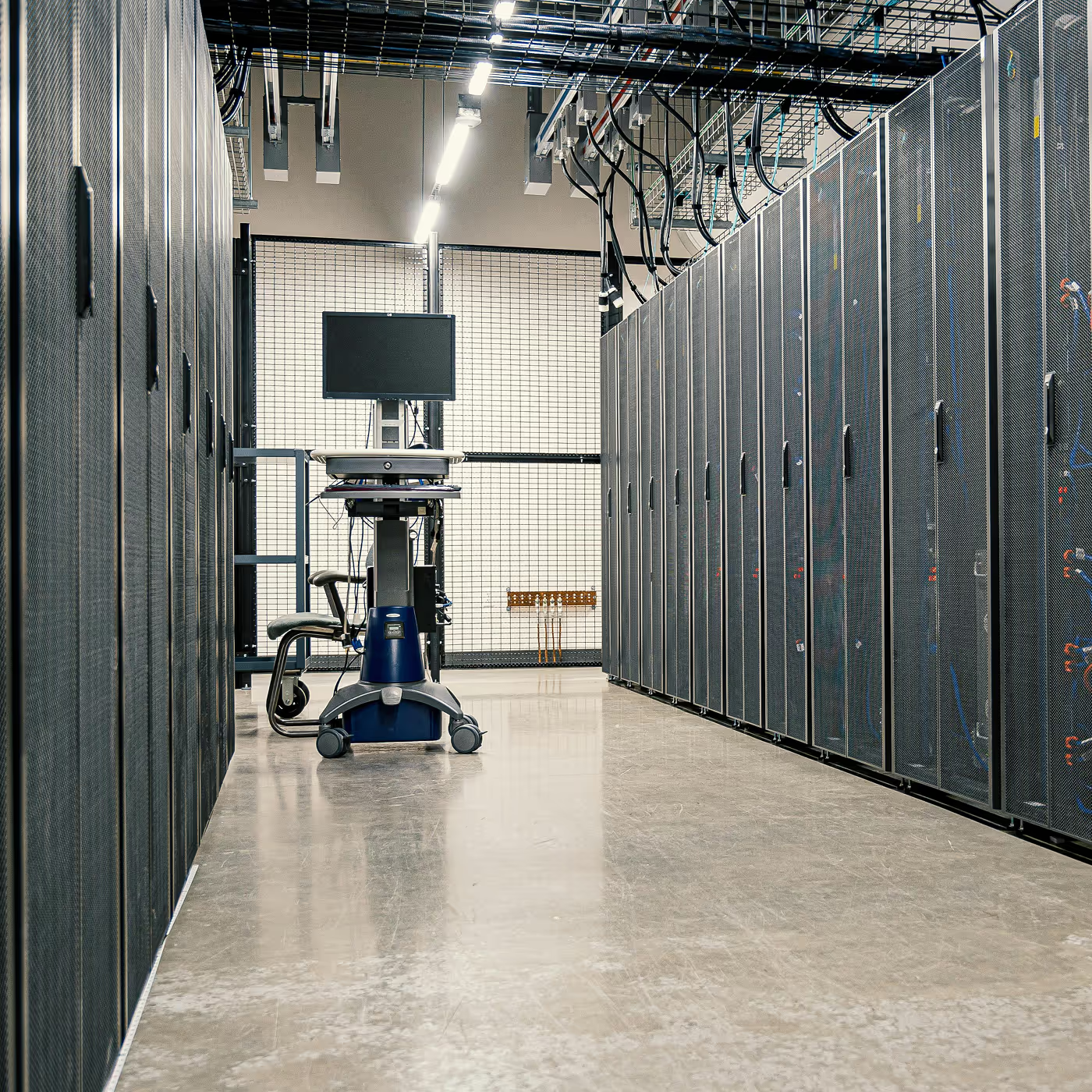
Major biopharma deploys frictionless access across secure facilities
A global biotechnology leader deployed Alcatraz to secure executive suites and turnstiles. With frictionless access control and tailgating detection, the company enhanced security while preparing for large-scale expansion across labs and IDF closets.
Medical technology company strengthens secure access
A global medical technology leader deployed Alcatraz for 2FA into high-security areas. With frictionless access and tailgating detection, the solution delivered compliance-ready protection across a worldwide footprint of 75,000 employees.
Research organization secures labs with privacy-first biometrics
A leading AI research company certified Alcatraz for use across sensitive data centers and labs within one month. The solution met stringent privacy requirements, provided tailgating detection, and enabled rapid deployment across mission-critical environments.
Global healthcare IT leader secures data centers with 2FA biometrics
A leading healthcare technology provider deployed Alcatraz to replace failing legacy biometrics in its data centers. By integrating facial authentication with badge readers, the company enabled easy-to-use 2FA and tailgating detection, strengthening compliance and operational security across critical facilities.
Privacy-first by design
Privacy is built into the architecture. End-users opt in before enrollment, authentication happens on-device, and no biometric data is ever stored or transmitted, so Alcatraz helps you stay ahead of BIPA, CCPA, GDPR, and other privacy regulations worldwide.
FAQs
Can Alcatraz secure pharmacies and cleanrooms without slowing down clinical staff?
Yes. Alcatraz can layer a second authentication factor specifically at pharmacies and cleanrooms, while keeping high-traffic entrances like main entrances and hallways on fast, single-factor face authentication, so added security doesn't create a bottleneck.
Does using facial authentication mean staff no longer need a badge at all?
Not necessarily. Alcatraz can run standalone on face alone at high-traffic entrances, or add face as a second factor alongside a badge at higher-risk areas like pharmacies and research labs, configured independently per door.
Can facial authentication reduce the risk of a badge contaminating a lab experiment or cleanroom?
Yes. Because Alcatraz authenticates by face, staff in labs and cleanrooms don't need to handle, swipe, or carry a badge at every checkpoint, removing a physical object that can be misplaced or introduce contamination risk during sensitive work.
Does Alcatraz store patient or employee biometric data in a way that could violate privacy regulations?
No. Faces are matched on-device and the original image is discarded immediately; what's retained is a one-way encrypted template bound to a badge number that can't be reconstructed into a face, supporting compliance with BIPA, CCPA, GDPR, and similar regulations.
Can Alcatraz detect if someone follows a staff member into a restricted lab or pharmacy?
Yes. Alcatraz monitors doorways in real time and flags tailgating the instant it happens, whether that's someone following an authorized person into a research lab or slipping into a pharmacy as another person exits.
Does Alcatraz work with the access control and badge systems hospitals and life sciences campuses already use?
Yes. Alcatraz integrates natively with existing access control panels and badge systems, so hospitals and life sciences facilities can add facial authentication without ripping out existing infrastructure.