


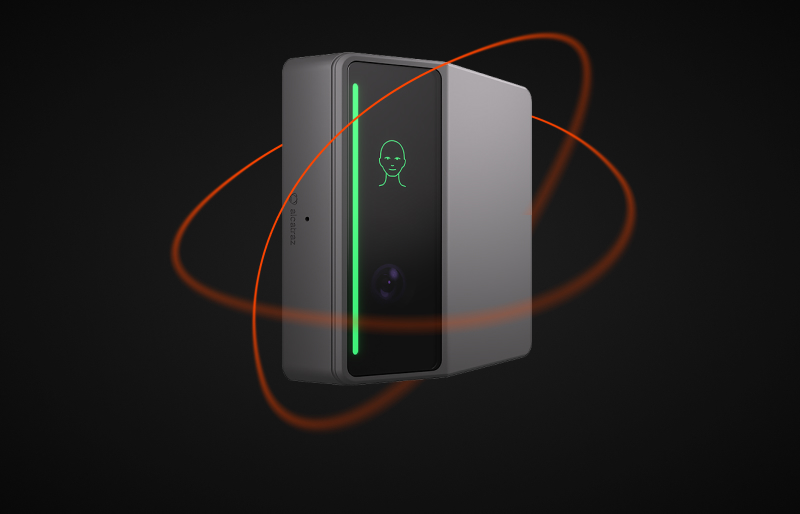


How stadium facial authentication cuts entry times by 80% for staff and players

Stadium security teams manage an impossible challenge. They must verify hundreds of authorized personnel across dozens of restricted points while keeping delays to absolute zero. Traditional badge systems force staff and athletes to fumble for credentials during critical moments. This creates bottlenecks exactly when speed matters most.
Stadium facial authentication eliminates this friction entirely. It replaces outdated card readers with instant biometric verification that authenticates users at walking speed.
With 47% of venues prioritizing this technology in 2025, organizations report clearing entry gates 10 minutes faster with an average entry time of just 2 seconds per ticket while strengthening protection against tailgating.
Key takeaways
- Facial authentication reduces entry times by 80% for staff and players compared to traditional badges.
- AI-powered 3D detection instantly identifies and documents tailgating attempts that legacy systems miss.
- Edge-based processing ensures verification occurs in milliseconds regardless of stadium network conditions.
- Privacy-first architecture secures biometric data without storing images to ensure GDPR and CCPA compliance.
- The smart stadium market is projected to grow to $41.68 billion by 2029 as venues prioritize touchless security.

Why legacy credential systems fail during operations?
Managing physical access across complex venues creates challenges that traditional security infrastructure cannot handle. Game day demands split-second authentication for locker rooms, broadcast areas, and executive suites.
The hidden cost of card-based access
A forgotten card means delays at the worst possible moments. Imagine a team physician rushing to provide emergency care but getting stuck at a door searching for a badge.
Facial authentication eliminates these vulnerabilities. Personnel use biometric credentials that cannot be lost or stolen. When a broadcast technician approaches a media center with equipment in both hands, authentication happens instantly.
This frictionless experience transforms security from an operational obstacle into an invisible enabler.
Tailgating creates unacceptable security gaps
Someone following closely behind an authorized user gains access to restricted areas without any authentication. This happens whether the act is intentional or just social convention. In venues hosting high-profile athletes and valuable equipment, this breach creates critical risk exposure that most security directors severely underestimate.
Traditional proximity card readers lack the intelligence to distinguish between one person and two people passing through an access point. Stadium access control systems require sophisticated AI that can identify and alert security teams the moment unauthorized entry occurs.
Stop tailgating with three-dimensional detection
Modern AI facial authentication systems integrate this capability directly into the biometric device. This eliminates the need for separate sensors and complex integrations. The system identifies three distinct unauthorized entry scenarios:
- Tailgating: Someone following an authorized user.
- Piggybacking: Someone being deliberately let in by staff.
- Crossing: Entering as someone else exits.
How facial biometrics transform venue access control
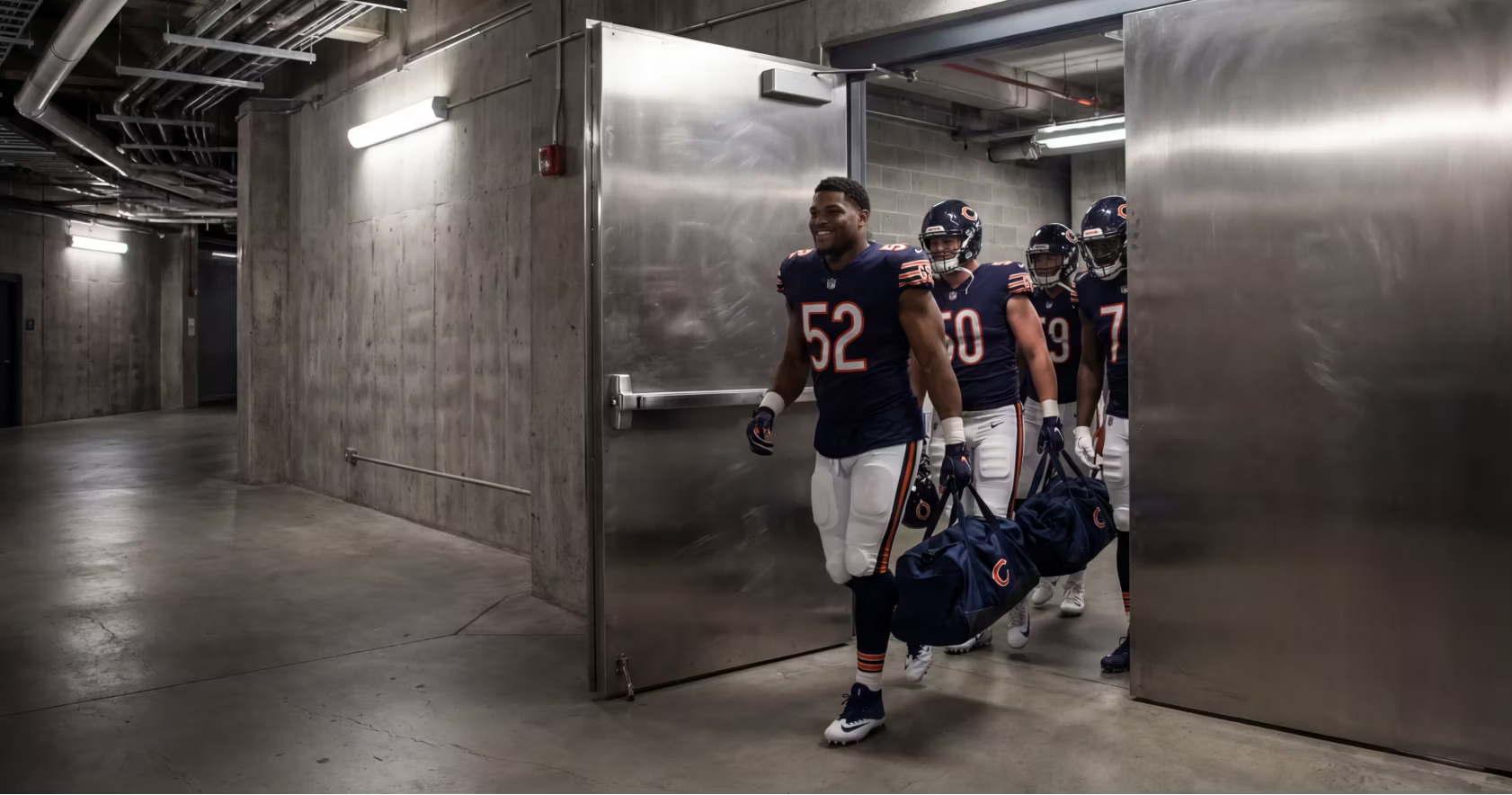
The NFL implemented facial authentication software across all stadiums specifically for restricted areas. This includes playing fields, press boxes, locker rooms, and staff zones.
This deployment validated the technology for high-stakes environments where authentication failures could compromise athlete safety and operational integrity.
Instant authentication at the network edge
Edge-based AI processing represents a critical architectural advantage for venue security operations. Authentication happens locally on the device instead of transmitting biometric data to cloud servers. This approach delivers three essential benefits:
- Authentication occurs in milliseconds regardless of network conditions.
- Sensitive biometric information never leaves the physical security perimeter.
- Venues maintain complete operational control over their security infrastructure.
Real-world deployment across restricted areas
To understand the value of stadium facial authentication, we must look at specific operational contexts. Different access points present distinct security requirements.
Locker rooms and athletic training facilities
Athletes and coaches need seamless access to locker rooms and medical spaces. They often move while carrying equipment or in the middle of time-sensitive pre-game preparation.
A professional sports organization deployed facial authentication here and saw immediate results:
- Average entry times dropped to under 2 seconds, compared to traditional credential systems that require manual verification.
- The system maintains 99.7% accuracy, even in low-light locker room environments, handling thousands of daily access attempts.
- It detected tailgating attempts that card readers routinely missed, converting abstract security risk into actionable intelligence.
Broadcast facilities and media credentialing
Broadcast crews arrive at venues carrying cameras, audio equipment, and production gear that makes traditional badge-based access impractical.
Facial authentication allows a cameraman to walk through restricted entrances without setting down equipment. This ensures credentials are not shared or transferred between unauthorized parties.
Privacy-first architecture and compliance
Privacy is the primary concern for biometric adoption. Modern access control differs fundamentally from surveillance. Stadiums must balance high-level security with individual rights.
This approach ensures that biometric data remains under strict organizational control rather than exposing users to mass monitoring.
How it protects user data
The system uses a privacy-by-design architecture that builds trust with staff and athletes.
- Explicit consent: Users opt-in during enrollment.
- Encryption: The face is converted into an encrypted code.
- No image storage: The source photograph is immediately discarded.
- Irreversible data: The encrypted template cannot be reverse-engineered to recreate a face.
This ensures compliance with BIPA, GDPR, and CCPA regulations. The system compares a live code against an enrolled code, not a database of photos. Legal teams consistently approve this architecture because it eliminates the liability risks associated with traditional surveillance.
Seamless integration with existing infrastructure
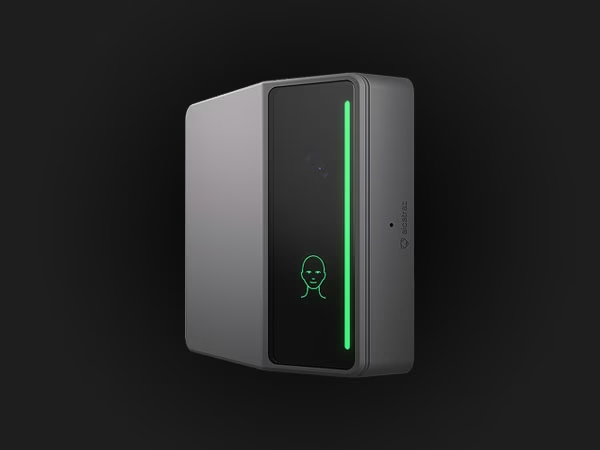
Venues do not need to replace their current access control systems to modernize. Facial authentication devices mount at access points and communicate with existing platforms.
The NFL deployment required zero downtime and no changes to existing credentialing policies. When a user authenticates, the system sends a signal to the existing controller just like a card reader would.
Operational benefits beyond security
The financial benefits extend beyond avoiding replacement costs. Organizations report 60-70% reductions in credential-related help desk tickets - no more replacement cards for lost badges or emergency access requests. These savings often justify the investment within the first year.
Measuring operational impact across security dimensions
Security directors need quantifiable evidence that technology works to justify the investment. Venues deploying facial authentication report consistent metrics that prove immediate operational value.
- Throughput: Check-in times decreased significantly, effectively eliminating lines during peak arrival windows for staff and players.
- Detection: Systems provide real-time tailgating alerts at sensitive points like locker rooms, converting abstract risk into actionable security intelligence.
The future of intelligent venue security
Smart stadium technology adoption continues accelerating across the sports and entertainment industry. The smart stadiums market reached $19.55 billion in 2024 and is projected to grow to $41.68 billion by 2029 at a Compound Annual Growth Rate (CAGR) of 16.4 %. While this growth encompasses multiple categories, access control represents the core infrastructure that enables all other smart capabilities.
Venues are now leveraging this technology to transform the fan experience:
- Express Lanes: Several pro teams offer facial authentication as an optional ticket verification method, often utilizing biometric turnstiles for speed.
- Scalability: Public-facing deployments build on the proven security value of internal staff systems.
- Future-Proofing: Integrated AI platforms allow venues to adapt to sophisticated threats while improving efficiency.
Ready to transform your stadium security?
The shift from legacy access control to Alcatraz AI isn't just an AI-powered upgrade—it's a fundamental operational transformation that delivers measurable improvements in security, efficiency, and user experience.
Whether you are protecting high-value assets, managing complex game-day operations, or seeking to eliminate credential-related friction, this touchless solution integrates seamlessly to secure your most critical areas.
Discover how facial authentication works in real-world stadium environments. Schedule a demo to see the Rock X in action and discuss your specific venue security requirements.