



Face recognition vs. face authentication: security & privacy implications

The terms face recognition and face authentication are often used interchangeably. After all, both terms refer to the same facial biometrics technology, right? Well, not exactly. Although both technologies use biometric software systems to identify individuals, they employ distinct processes and are applied for different purposes.
It is crucial to know how these two biometric identification systems differ so organizations can understand the ethical and legal concerns surrounding facial recognition. In this article, we'll explain the key differences between face authentication vs. facial recognition, how each technology works, and where they are commonly used.

Face authentication vs. recognition in a nutshell
- Different purposes: Authentication verifies a claimed identity (1:1 or 1:few matching), while recognition identifies unknown individuals from a database (1:many matching)
- Privacy implications: Authentication requires explicit consent and participation, while recognition can operate without subject awareness
- Data handling: Authentication systems like Alcatraz AI's don't store actual facial images, only mathematical templates
- Regulatory compliance: Face authentication adheres to privacy regulations like BIPA, GDPR, and CCPA when properly implemented
- Ethical considerations: Authentication empowers users with choice, while recognition raises surveillance and privacy concerns
What is facial recognition?
Facial recognition is a biometric technology that identifies or confirms an individual's identity by analyzing and matching their facial features. It works by mapping facial characteristics such as the distance between eyes, nose width, and cheekbone shape to create a unique digital "faceprint." This technology can identify people in photos, videos, or in real-time by comparing captured facial data against a database of stored faces. It's commonly deployed in security systems, law enforcement, surveillance, and smartphone unlocking features.The term facial recognition has come under great scrutiny in the past several years. There have been several companies that have leveraged the technology in ways that many people believe violate their privacy rights. These companies surreptitiously collected biometric data from users that were, in some cases, unaware that the data was being collected.
This data has been compiled into large databases that are then shared or even sold to third-party entities for use in such applications as covert surveillance or to send targeted marketing ads. This non-cooperative use of the technology is what many people associate with when they are thinking about or discussing face recognition. Starting with the Illinois Biometric Information Privacy Act (BIPA) and followed by GDPR in the EU, CCPA in California, and others, legislation has been created to limit the use of non-cooperative face recognition in these types of applications to protect the privacy of citizens.
What is facial authentication?
Facial authentication is a biometric verification technology that confirms a person's identity by comparing their facial features with a pre-enrolled template. Unlike facial recognition (which identifies unknown people from a database), authentication verifies a claimed identity through a one-to-one or one-to-few matching process. It requires the user's active participation and consent, providing secure access control without physical credentials like badges or PINs. Modern facial authentication systems incorporate liveness detection to prevent spoofing attempts using photos or masks.
In contrast to non-cooperative face recognition, face authentication technology is used to verify the identity of an individual that is actively interacting with the system. Face authentication can be implemented using different techniques.
If you have an Apple iPhone X or later model, you are familiar with one of these face authentication techniques known as one-to-one matching (aka face verification). This method provides a very simple “Yes or No” answer to the question of, “Is this or is this not the right person trying to unlock me?”
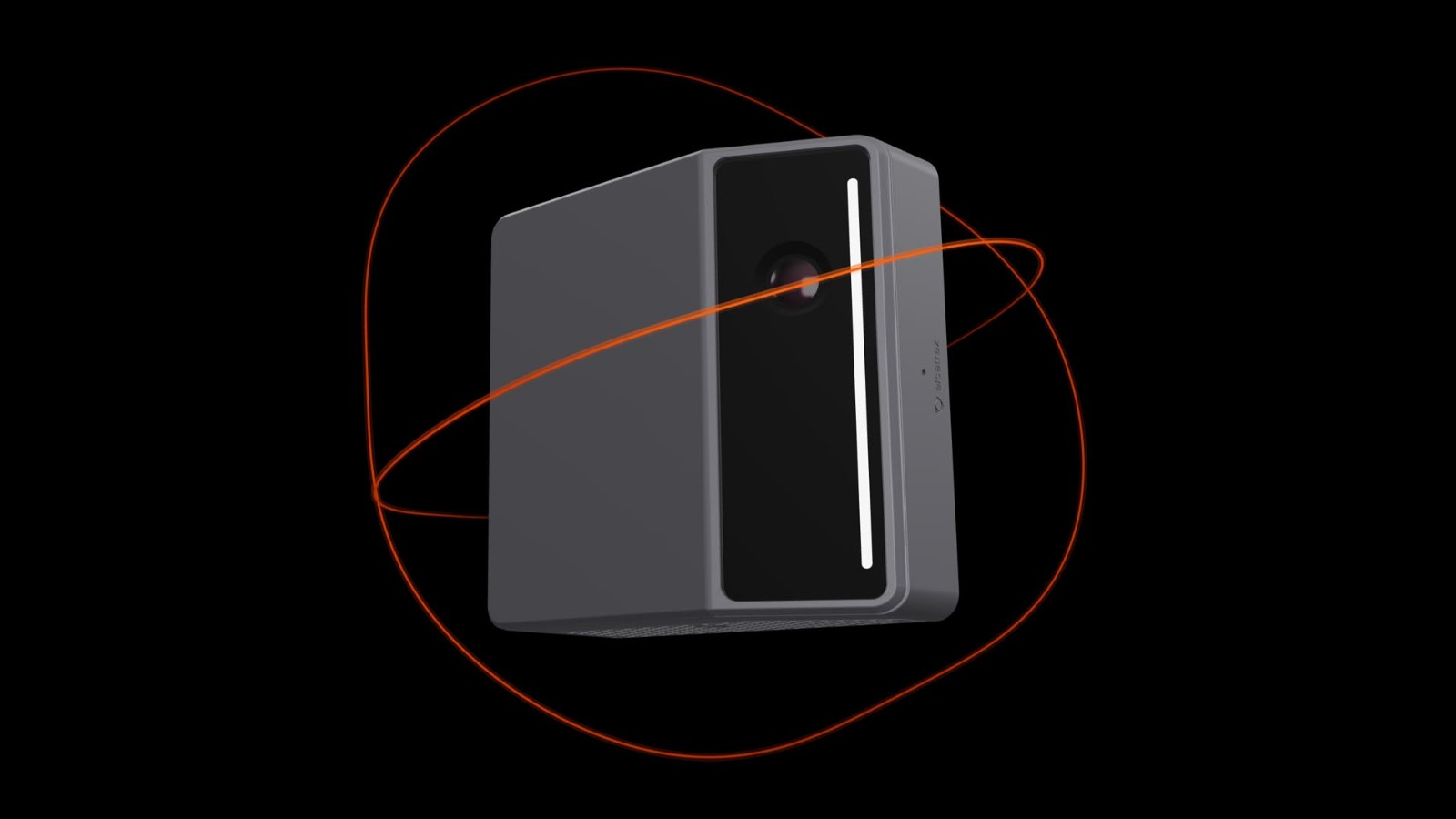
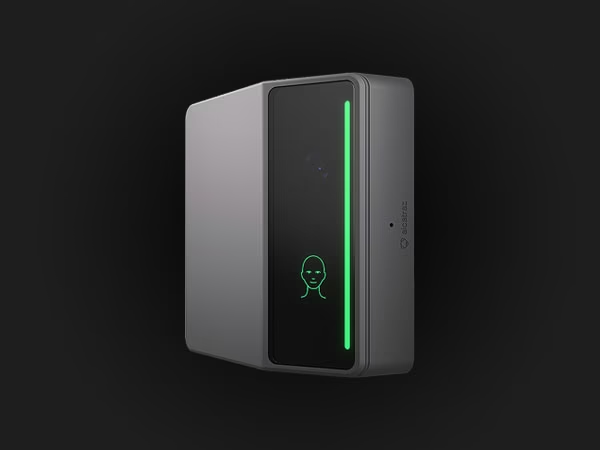
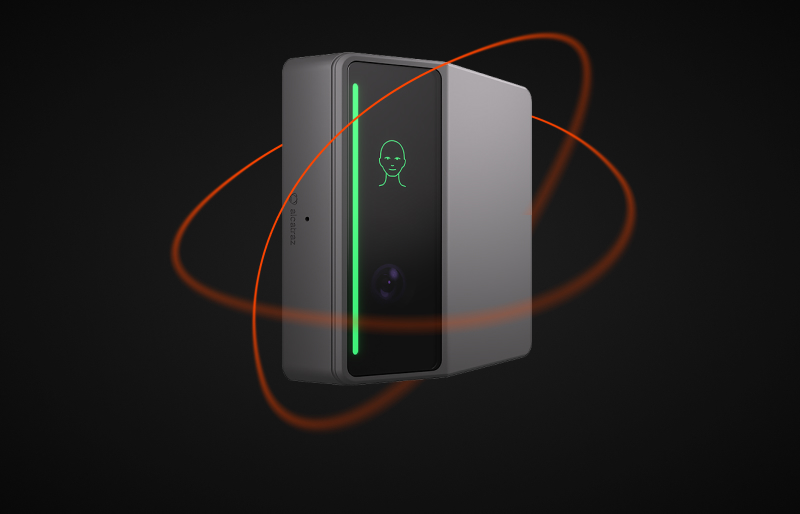
Systems such as the Alcatraz AI Rock take advantage of a technique known as one-to-few matching. This method leverages artificial intelligence to verify the identity of the person interacting with the system. All system users are aware that they are using a biometric system and have provided consent prior to enrolling or being authenticated. These systems provide tools that allow companies to administer the biometric profiles in a way that adheres to local legislation and protects the privacy of the enrolled individuals.

Key functions and uses in surveillance
Facial recognition systems identify or attempt to identify unknown individuals by comparing their facial features against a database of known faces. This 1 to many matching process answers the fundamental question: "Who is this person - and are they authorized to be here?"
Common applications of facial recognition include:
- Law enforcement surveillance: Identifying persons of interest in public spaces.
- Border control: Scanning travelers against watchlists without requiring their active participation.
- Retail analytics: Tracking customer demographics and shopping patterns.
- Social media: Automatically tagging people in photos across platforms.
The key distinction is that facial recognition can operate without the subject's knowledge or consent. It scans faces passively, often without individuals actively participating in or being aware of the process. This non-cooperative approach has triggered significant privacy concerns.
How facial recognition systems capture and analyze data?
Facial recognition technology captures and processes facial data through several key steps:
- Face detection: Identifying that a face exists in an image or video frame
- Face analysis: Measuring facial features and creating a digital "faceprint"
- Database comparison: Comparing the faceprint against thousands or millions of stored images
- Identification: Determining potential identity matches with varying confidence levels
These systems collect and maintain extensive databases of facial images, often without explicit permission from the individuals in those images. Companies may share or sell this data to third parties for various purposes, including targeted marketing, law enforcement, or surveillance.
Legislations like Illinois Biometric Information Privacy Act (BIPA), GDPR in the EU, and CCPA in California emerged specifically to address these concerns by regulating how biometric data can be collected, used, and shared.
Exploring facial authentication mechanisms
Facial authentication uses similar underlying technology but applies it differently. This method verifies a person's claimed identity rather than trying to identify an unknown individual. The system asks: "Is this person who they claim to be?"
The authentication process involves several key technologies:
- Active participation: Users knowingly interact with the system, looking directly at the device
- Liveness detection: Advanced systems ensure the subject is a living person, not a photo or mask
- Depth sensing: 3D analysis ensures the authentication is based on actual facial geometry, not just a flat image
- Template creation: Converting facial features into mathematical representations rather than storing images
Alcatraz AI's Rock X combines these technologies with proprietary AI algorithms to provide secure, privacy-focused authentication that protects both physical spaces and user data.
Practical applications: from smart devices to secure access
Facial authentication serves a wide range of practical applications where verification of a known identity is required:
- Mobile device access: Unlocking computers, phones and tablets (e.g., Windows Hello).
- Physical access control: Securing entry to buildings, rooms, or restricted areas.
- Financial services: Confirming identity for payments or account access.
- Healthcare: Verifying patient identity for medical records access.
Unlike facial recognition, authentication systems operate with the user's knowledge and active participation. The individual must explicitly opt-in and consent to using their biometric data for this specific purpose.
Alcatraz AI's implementation focuses specifically on physical access control, providing a touchless, secure alternative to traditional methods like keycards, PINs, or fingerprint readers that can be lost, shared, or compromised.
Technical differences between facial recognition and authentication
The fundamental technical difference between these technologies lies in their matching methodology:
For example, the iPhone's Face ID uses 1:1 matching, comparing your face only to the stored template of the authorized user. Systems like the Alcatraz AI Rock employ 1:few matching, verifying against a limited set of authorized users who have explicitly enrolled in the system.
In contrast, facial recognition systems compare an unknown face against massive databases, returning potential matches with varying confidence levels. This approach introduces significant privacy and accuracy concerns.
Accuracy and reliability in different scenarios
Authentication and recognition systems also differ significantly in their accuracy profiles:
- Controlled environments: Authentication systems operate in consistent, controlled settings with cooperative users, resulting in higher accuracy rates.
- Variable conditions: Recognition systems must contend with poor lighting, angles, distance, and non-cooperative subjects, often reducing accuracy.
- False positives: Recognition systems must balance between failing to identify matches (false negatives) and incorrectly matching innocent people (false positives).
- Demographic bias: Many facial recognition systems exhibit varying accuracy rates across different demographic groups, raising equity concerns.
Alcatraz AI's multo-factor authentication technology minimizes these issues by operating in controlled environments with active user participation and proper lighting conditions. The system continually improves through machine learning while maintaining strict privacy protections.
Ethical considerations in using facial biometric technologies
Facial recognition technology has raised significant ethical concerns:
- Surveillance without consent: Systems can track individuals across public spaces without their knowledge.
- Chilling effects on behavior: Awareness of surveillance may discourage lawful activities like political protests.
- Data security risks: Centralized databases of biometric information become attractive targets for hackers.
- Function creep: Data collected for one purpose may be used for unrelated purposes later.
- Algorithmic bias: Systems may perform differently across demographic groups, potentially reinforcing discrimination.
These concerns have prompted bans or restrictions on facial recognition in cities like San Francisco, Boston, and Portland, as well as comprehensive legislation like GDPR in Europe, which requires explicit consent for biometric data processing.
Alcatraz AI's approach to privacy-first authentication
Alcatraz AI addresses these ethical concerns through a fundamentally different approach to facial biometrics:
- Explicit consent: Users knowingly enroll in the system for a specific purpose
- No image storage: The system converts facial features into mathematical templates without storing actual images
- Purpose limitation: Data is used solely for authentication, not for tracking or marketing
- Local processing: Authentication happens on-device or on local networks, not in the cloud
- User control: Individuals can revoke consent and have their data deleted
This privacy-by-design approach ensures compliance with regulations like BIPA, GDPR, and CCPA, protecting both organizations and users.
Implementing facial authentication in various industries
Organizations across industries have successfully implemented facial authentication to enhance security while respecting privacy:
- Banking: Financial institutions use facial authentication to secure physical access to sensitive areas like data centers and trading floors, eliminating credential sharing while maintaining audit trails
- Healthcare: Hospitals implement touchless authentication for access to medication dispensaries and patient areas, reducing contamination risks while protecting sensitive information
- Education: Universities secure access to research facilities and dormitories, preventing unauthorized entry while providing students and faculty with convenient, credential-free access
In each case, the key difference from facial recognition is that users explicitly opt into the system for a specific purpose, with their data used solely for authentication rather than identification or tracking.
Tighten access control with Alcatraz AI
Now you know why these two terms should not be used interchangeably! If you need to boost your organization’s physical security and tighten access controls, Alcatraz AI’s touchless face authentication system can help. Contact us now to schedule an in-person or virtual demo to see our AI-powered, autonomous access control solution in action.
Frequently asked questions about facial recognition and authentication
How does Alcatraz AI ensure privacy in facial authentication?
Alcatraz AI protects privacy by converting facial features into mathematical templates rather than storing actual images, obtaining explicit user consent through enrollment, using data solely for authentication purposes, and providing mechanisms for users to revoke consent and have their data deleted.
What are the main advantages of using facial authentication over facial recognition?
Facial authentication offers enhanced privacy through explicit consent, reduced liability under regulations like BIPA and GDPR, greater accuracy in controlled environments, and elimination of common security vulnerabilities like lost credentials or tailgating, all while providing a frictionless user experience.
Can facial authentication be used in mobile devices?
Yes, facial authentication is widely used in mobile devices, most famously in Apple's Face ID technology. Mobile implementations typically use 1:1 matching to verify the device owner's identity. Alcatraz AI offers mobile enrollment capabilities that complement physical access control systems.
Are there any regulatory concerns with deploying facial authentication technology?
When properly implemented with explicit consent, data minimization, and purpose limitation, facial authentication complies with regulations like BIPA, GDPR, and CCPA. Organizations should ensure their systems obtain informed consent, provide privacy notices, secure the biometric data, and offer alternative authentication methods.