




Security technology for stadiums: What you need to know - access control & AI solutions

Modern stadiums and arenas are some of the most complex security environments in the world. Tens of thousands of people move through confined entry points within minutes. Teams, performers, media, contractors, and VIPs all navigate different zones with varying requirements of security.
And the truth is simple: legacy systems can’t keep up with what today’s venues demand. The pressure is continuous, the stakes are high, and the gaps in outdated access control have never been more obvious.
This isn’t about adding more guards or building bigger gates. It’s about acknowledging the reality of modern stadium operations: speed, accuracy, privacy, and intelligence must coexist all at once at every access point.
And that’s exactly why the next generation of security technology for stadiums looks very different from what most venues are still using today.
To address these pressures, modern venues are turning toward intelligent, identity-based systems that can keep pace with real-time operations.
The highlights below summarize the key improvements driving this transformation:

Key takeaways:
- Stadiums and arenas are high-pressure, high-volume environments where legacy access control systems simply can’t keep up.
- When 20,000 to 100,000+ people converge on a venue, any friction becomes a failure point.
- AI-powered facial authentication removes the biggest security failure points: lost badges, shared credentials, slow queues, manual checks, and undetected tailgating.
- Facial authentication isn’t a future technology: it’s the new standard for venues that need speed, accuracy, and airtight access control at scale.
- Temporary workers, contractors, and rotating event staff can be onboarded faster and more securely with mobile enrollment and identity-based permissions.
- Major technologies driving the transformation are biometric turnstiles, automated tailgating detection, eye-level video, and real-time alerts, giving venues true visibility into who is entering restricted zones.
- With native compatibility for Wiegand, OSDP, major ACS systems, and cloud or on-premises deployment, stadiums can modernize security without ripping out infrastructure.
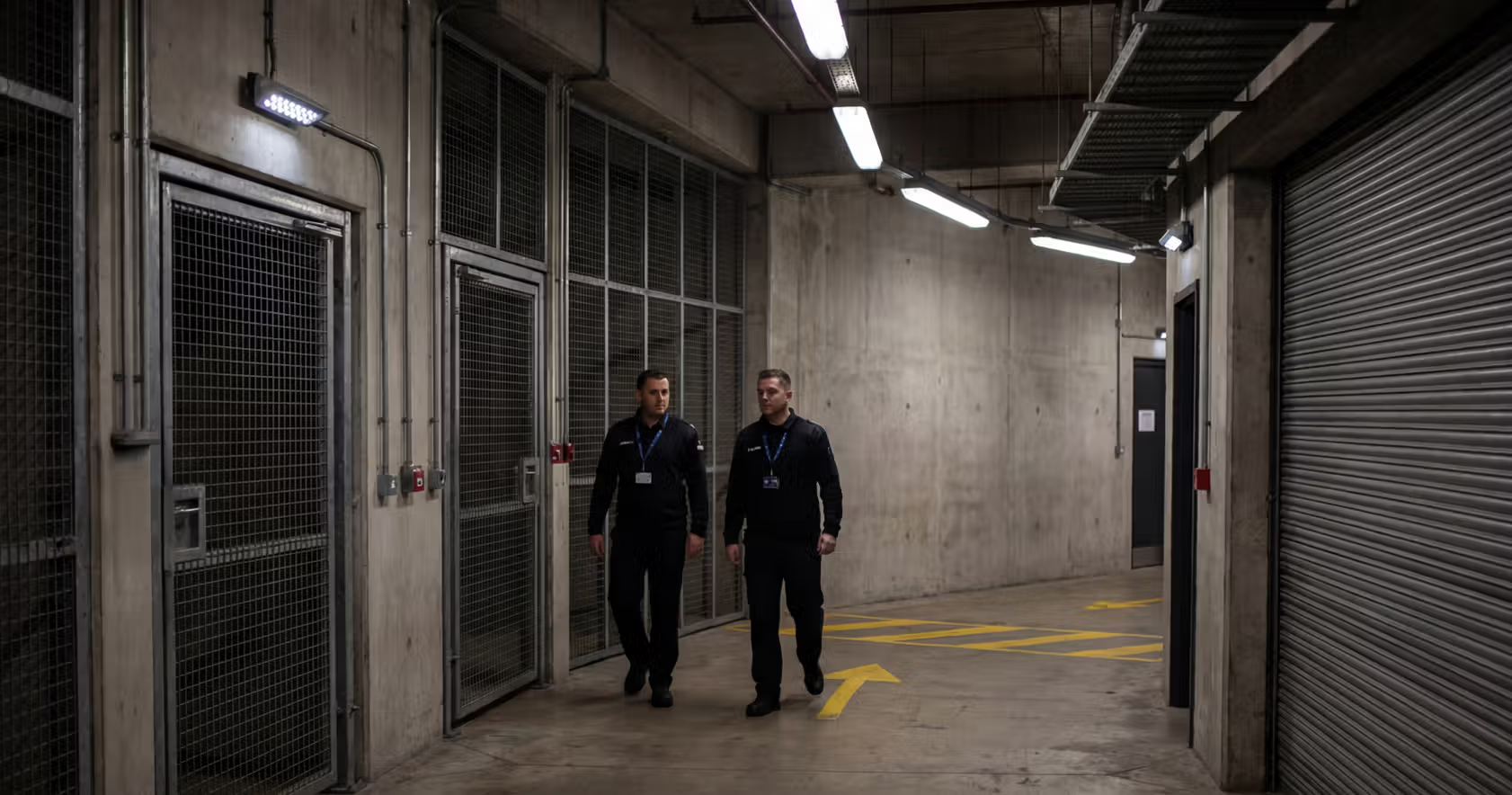
Why do stadium and arena security systems need a smarter approach?”
If you’ve ever watched a stadium come to life on game day, you already know the truth: everything happens fast. Security teams don’t have the luxury of stopping and scrutinizing everyone who walks through a door.
Legacy systems simply weren’t built for this:
- Badges get lost.
- People share credentials.
- PIN pads slow down queues.
- Guards can’t catch every unauthorized follower.
- Cameras record, but they don’t intervene.
And during peak times, all those weaknesses multiply. This is exactly why stadiums are shifting to technologies that authenticate faster, verify identities more accurately, and reduce reliance on the weakest link of all: human nature.
Because stadium security today isn’t just about keeping dangerous items out. It’s about ensuring the right people and only the right people get where they’re supposed to go.
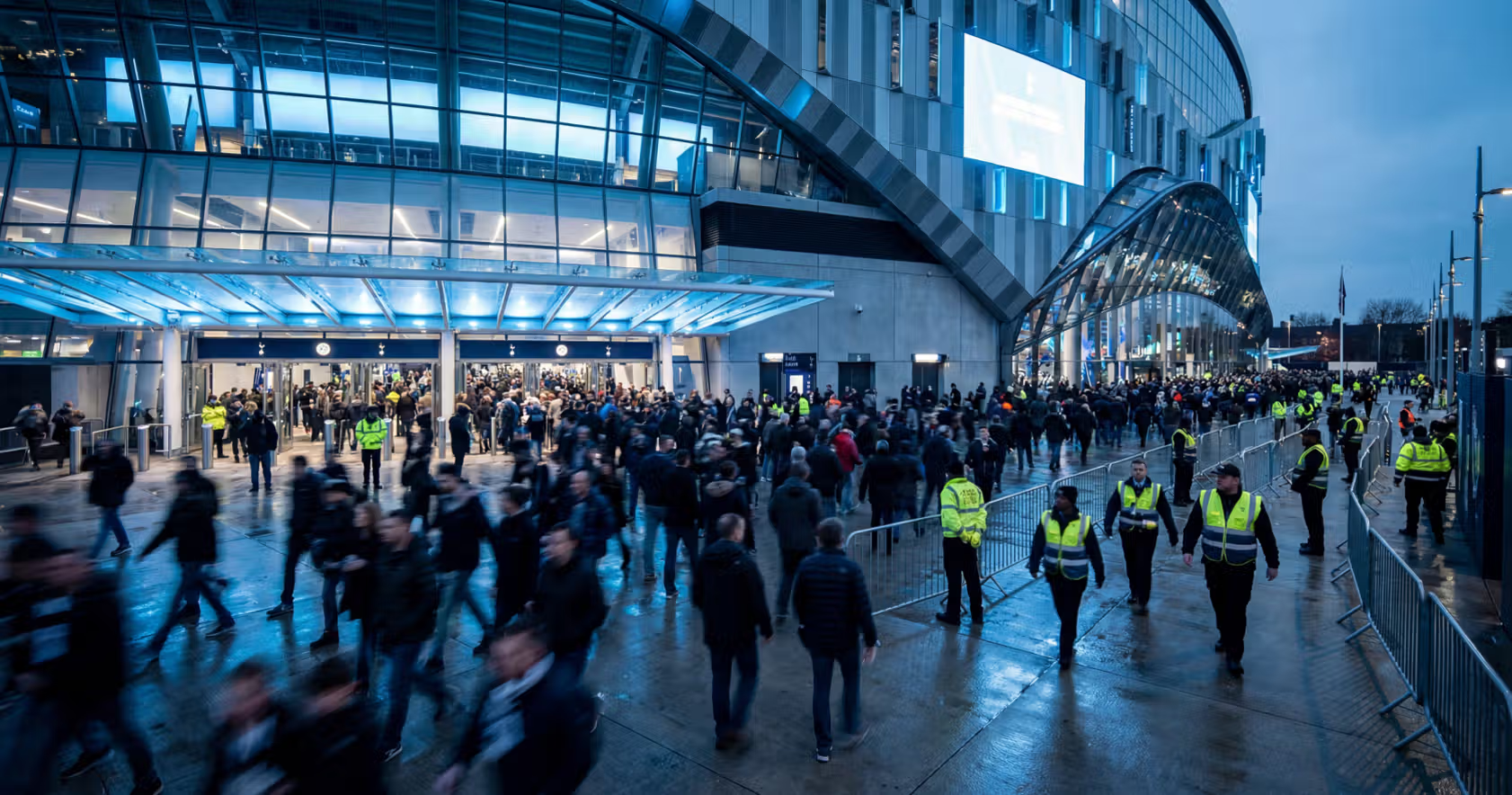
The evolution of safety & security technology for stadiums and arenas
Security for stadiums used to be simple: Metal detectors. Paper passes. A few guards. Mostly reactive cameras. Then the environment changed, and the threats changed with it. Today’s stadiums face a new set of challenges:
- Rising insider threats
- Rotating contractors
- Massive temporary staffing
- Credential sharing
- VIP and press access complexities
- Back-of-house security vulnerabilities
- Digital and physical convergence
- More demanding regulatory expectations
And with high-profile teams, celebrity performers, and broadcast partners constantly on-site, the stakes couldn’t be higher.
This is why modern venues are turning to AI-powered access control, and specifically facial authentication, as a foundational layer, not an optional add-on.
Because stadiums need technology that can think and react at game-day speed. They need automation that eliminates manual bottlenecks. And they need identity assurance that doesn’t rely on fragile plastic cards.

Critical security zones in large venues
Stadiums represent several environments stacked together. Every zone carries different risks, different access rules, and different crowd behaviors. Treating them all the same is exactly why security gaps form.
Public entry gates & high-traffic crowd flow
These zones move the fastest. Thousands of people pass through in minutes. Security technology here needs to minimize friction while still enforcing strong identity verification for staff, press, operations teams, and contractors who enter through the same gates.
Athlete, performer & back-of-house restricted areas
Locker rooms, tunnels, training spaces, production rooms are areas where unauthorized entry can cause catastrophic consequences. Identity verification has to be instantaneous, accurate, and hands-free.
VIP, media & ultra-secure zones
These spaces require the strictest verification. Shared credentials and tailgating are especially dangerous here, and the people inside expect a seamless experience, not delays or intrusive checks.
Temporary access for contractors & event-day staff
This is one of the biggest weaknesses in traditional stadium security. Temporary shifts and rotating crews create constant onboarding/offboarding challenges. Manual enrollment? Too slow. Shared badges? Too risky.
Every one of these zones demands a different access control strategy. And no badge system can adapt to this complexity without leaving gaps.
Core stadium security technologies that matter in 2025
The conversation about security technology for arenas and safety technology for stadiums is shifting. It’s not about piling on more devices - it’s about deploying the right technologies where they have the highest impact.
AI-Powered facial authentication and access control
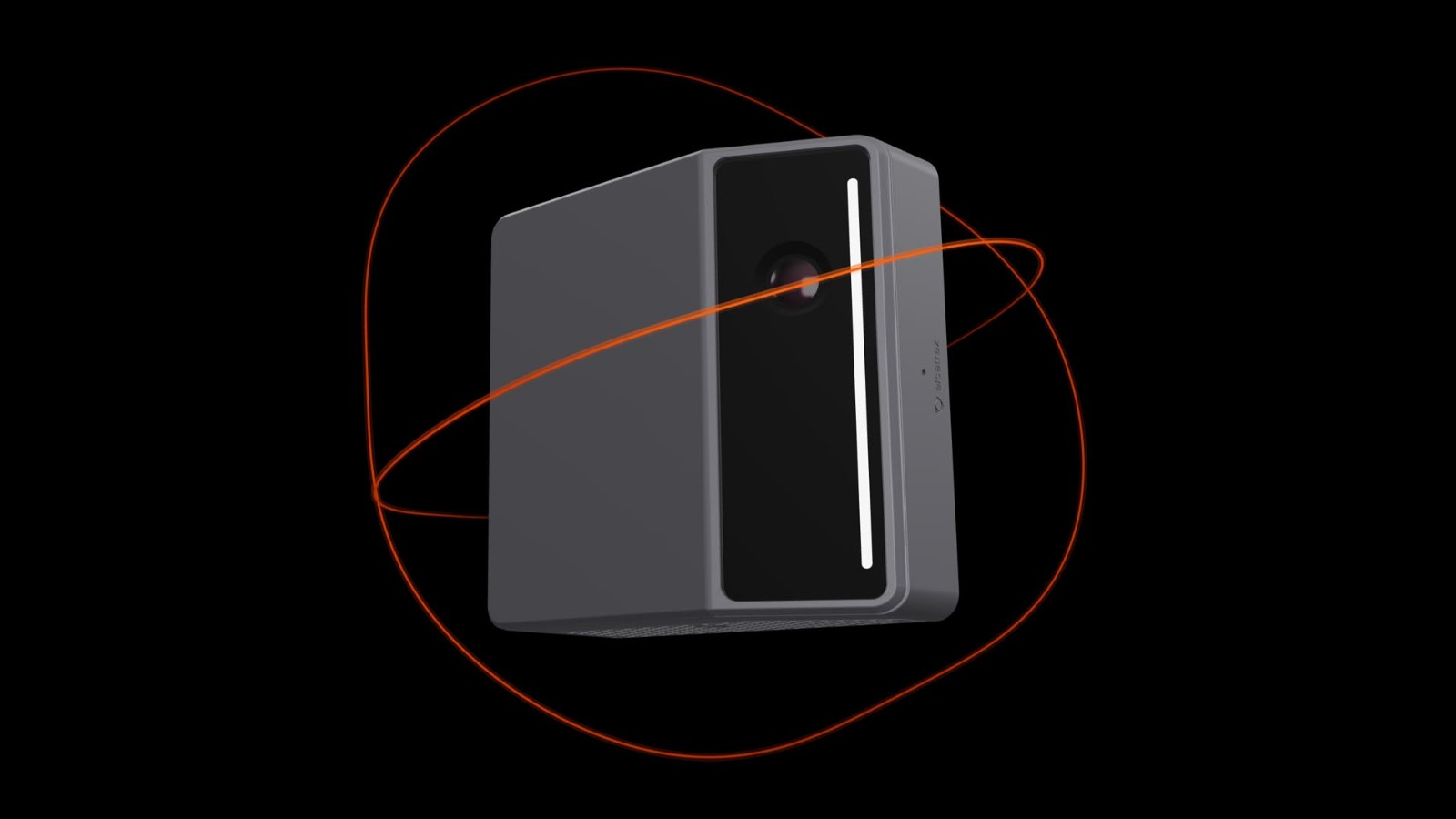
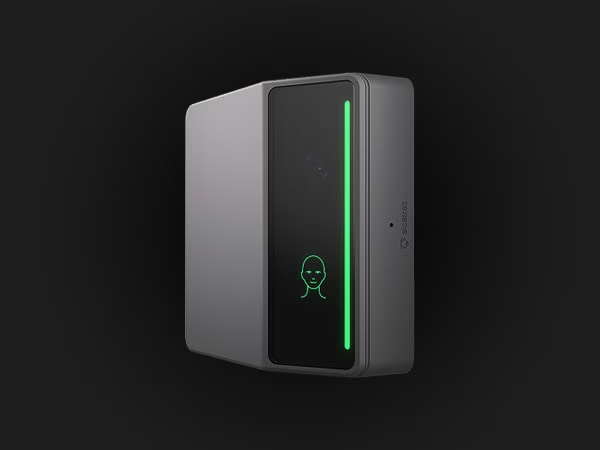
Rock X from Alcatraz AI gives stadiums and arenas something legacy systems never could: A frictionless, accurate, privacy-first way to verify identity in real time.
With facial authentication:
- Staff get in instantly.
- Athletes move securely without slowing down.
- VIPs avoid bottlenecks and unnecessary checkpoints.
- Contractors can be enrolled remotely and access only what they’re approved for.
- Lost or stolen badges stop being a threat.
And because Rock X operates at the edge, authentication happens on the device even in harsh weather, glaring sunlight, or freezing temperatures. This isn’t about convenience. It’s about consistency, accuracy, and speed, the three things stadium security has struggled with for years.
Managing contractors, temp staff & event-day workers
Temporary staff could be one of the biggest security risks. Not because they’re malicious - but because the logistics of managing them with badges or PINs are nearly impossible at scale.
Facial authentication solves this:
- Workers can enroll on their phones before arriving.
- Consent is built into the process.
- Permissions are tied to identity, not plastic.
- Access automatically expires after their shift or contract ends.
And because Rock X continuously updates user profiles at the edge, there’s no need for re-enrollment if someone's appearance changes. It’s a cleaner, more secure system - and one that finally scales to stadium reality.
Tailgating detection: the most overlooked threat in stadiums
If you’ve ever watched two people walk through a secured door after only one badge swipe, you’ve seen tailgating firsthand. And it happens constantly in stadium environments.
The problem? Most stadiums don’t even know it’s happening.
Tailgating is one of the fastest ways a bad actor can reach restricted areas, and traditional systems simply can’t detect it. Rock X fixes that. Its AI-powered tailgating detection identifies:
- When two people try to enter with a single credential
- When someone follows too closely
- When an unauthorized individual attempts to slip through
Security gets instant alerts, and the video is captured automatically. The ACS logs a real-time event for audit and compliance, so there is no extra hardware, overhead camera teams, and no manual monitoring is required. This is true stadium intelligence - the kind legacy systems were never designed to provide.
Rock X also integrates natively with:
- Wiegand
- OSDP
- Major ACS systems
- Popular VMS platforms
Meaning you don’t have to rip out readers or rewire your stadium. You simply add intelligence to what you already have.
And with cloud or on-premises deployment options, you can choose what fits your operational needs. Updates roll out automatically, making the system smarter over time.
Privacy-first security technology for arenas and stadiums
If people don’t trust the technology, they won’t use it. And in a public-facing venue like a stadium, privacy concerns matter. This is where Alcatraz separates itself from the field.
Unlike facial recognition technology that scans crowds and identifies faces without consent, Alcatraz makes facial authentication a user-enabled, privacy-by-design system.
Here’s what that means:
- No images of faces are stored.
- 3D scans become encrypted, anonymized “data blobs.”
- Those blobs cannot be reverse-engineered back into a face.
- No PII is collected: not names, not job titles, nothing.
- Users must opt in before enrollment.
- Biometric data stays on the device. It isn’t shared or transmitted to third parties.
This level of privacy protection is why Alcatraz meets or exceeds GDPR, CCPA, and BIPA requirements - which is critical for venues with global audiences and diverse staff.
Stadium security use cases: real impact, real outcomes
Here are some AI-powered access control transforms operations:
- Faster Staff Entry & Fewer Bottlenecks: No badges. No PINs. No fumbling. Just instant, verified access, even at scale.
- Better Privacy & Protection for Athletes and Performers: Only authorized individuals enter locker rooms, practice halls, tunnels, and training areas. No exceptions. No guesswork.
- Eliminating Credential Misuse: A face can’t be forgotten, lost, shared, stolen, or cloned. This single improvement eliminates some of the highest-risk behaviors in stadium operations.
Why facial authentication is becoming the standard for stadium security
Facial authentication is becoming the new standard in stadium security for one simple reason: it fixes the problems that legacy systems created and could never solve.
Traditional access control has always relied on something you carry - a badge, a card, a PIN. These items slow people down, get lost, get shared, and create bottlenecks at exactly the moments when you need flow, not friction.
Rock X facial authentication changes that dynamic completely. It’s faster because it works the moment a person approaches the door. It’s more secure because it verifies identity, not a transferable credential. It can integrate cleanly because it slots into existing Wiegand or OSDP systems without forcing a rip-and-replace. And above all, it puts privacy first, using encrypted templates, opt-in enrollment, and on-device processing that keeps personal data protected.
Facial authentication isn’t just another upgrade. It’s the technology that brings stadium access control up to the speed, accuracy, and intelligence that today’s venues demand.