




What is physical security access control? A complete guide to modern, frictionless protection

Physical security has always been a foundational requirement for protecting people, property, and critical infrastructure. But in today’s threat landscape, traditional physical security access control models are increasingly failing to keep up. Badges get shared or lost, PINs are reused, doors are propped open, and tailgating becomes routine - especially in high-traffic environments.
At the same time, the consequences of failure are getting worse. Unauthorized access is no longer just a facilities issue. It can trigger data breaches, regulatory violations, operational downtime, and safety incidents. Insider threats, credential sharing, and human error now account for a significant portion of physical and cyber security incidents, exposing a fundamental weakness in legacy access control systems.
This is why the industry is shifting toward identity-driven, AI-powered, frictionless physical access control. Instead of relying on something a person carries, remembers, or shares, modern systems verify who the person actually is: passively, securely, and in real time.
This guide explains what physical security access control is, why legacy approaches are breaking down, and how modern, privacy-first facial authentication is redefining secure access.
What is access control in physical security?
Access control in physical security is the process of regulating who can enter a physical space, where they are allowed to go, when access is permitted, and under what conditions. It is the enforcement mechanism that ensures only authorized individuals can pass through secured entry points, such as doors, gates, and turnstiles, and that restricted zones are maintained.
What's the role of access control in physical security?
Physical security is the broader discipline focused on protecting people, assets, and facilities from physical threats. It includes surveillance, intrusion detection, security personnel, environmental design, and access control.
Physical access control, by contrast, is the decision-making layer within physical security.
It determines:
- Who is allowed to enter
- Which areas can they access
- How access is granted or denied
Examples include secure doors, biometric turnstiles, data center entry points, and restricted area management. In practice, the physical access control layer is where most security failures occur, because identity verification is compromised.

Physical security vs cyber security - why they're no longer separate
Historically, physical and cyber access control were treated as separate systems. That separation no longer reflects reality.
Many data breaches begin with physical access to servers, endpoints, or restricted areas. Shared vulnerabilities include insider threats, credential reuse, and poor identity verification.
This is especially critical in:
- Data centers and technology environments
- Healthcare facilities
- Financial services
- Education campuses
- Entertainment and sports venues
Strong physical IAM reduces both physical and cyber risk.
Physical access is often the first step in a cyber breach. If an attacker can enter a facility, tailgate into a restricted area, or impersonate an authorized employee, they can gain access to endpoints, networks, and sensitive data. This is why modern security strategies increasingly unify physical identity access management and digital IAM under a shared trust model.
Why is physical access control essential today?
Today, Alcatraz protects more than one million employees at Fortune 500 companies by delivering frictionless access control that scales, respects privacy, and integrates seamlessly with existing infrastructure. Here are the main benefits our biometric security solution brings to the table:
Mitigating modern physical security threats
Today's most common physical security threats include:
- Unauthorized access through stolen or shared credentials
- Tailgating during peak traffic periods
- Insider threats with legitimate credentials but malicious intent
- Social engineering at access points
Traditional badge-based systems are especially vulnerable because they authenticate credentials, not people. Facial authentication changes that equation by continuously and passively verifying identity.
Compliance, safety, and business continuity
Regulatory pressure has made physical access control a compliance requirement, not a convenience. Laws such as GDPR, CCPA, and BIPA place strict obligations on how identity data is collected, stored, and used. A physical access control failure can now trigger legal penalties, audits, and reputational damage.
Beyond compliance, physical access control directly impacts safety and operations:
- In corporate environments, it protects intellectual property and critical infrastructure.
- In healthcare, it safeguards patients, staff, substances, and medical records.
- In data centers, it ensures that access rights align with cybersecurity policies and audit requirements.
Core components of a physical security access control system
A modern physical security access control system consists of four core integrated components.
1. Identity verification & authentication
Each access control system uses several verification tools to identify individuals/credentials as the foundation of access control. Common credentials include badges, PINs, mobile credentials, and biometrics.
Legacy systems fail because identity is easily transferred or compromised. Biometrics and facial authentication are the only tools that tie access to the individual, not a credential, making them far more suitable for modern fast-paced environments.
2. Access points, readers & entry hardware
These include doors, turnstiles, gates, and secured entryways, along with readers and sensors that capture authentication events. Modern systems increasingly combine authentication, video at the door, and intelligent authentication directly at the access point.
3. Access control management software
Access control software helps organizations enforce access policies, including role-based permissions and time- or location-based access. These systems integrate with Access Control Systems (ACS) using standard protocols like Wiegand or OSDP to avoid rip-and-replace deployments.
4. Monitoring, alerts & incident response
Logs, alerts, and video correlation provide real-time visibility and forensic insight. Advanced systems can detect anomalies such as tailgating or forced entry and trigger immediate response workflows.
The 5 Types of Physical Security Controls
Physical security relies on layered controls:
- Access control systems to verify identity
- Surveillance and video intelligence for visibility
- Intrusion detection for perimeter protection
- Security personnel for oversight and response
- Environmental design (CPTED) to deter threats through layout and lighting
Modern systems unify these layers through AI and automation.
How do physical access control systems work?
At a high level, physical access control follows a simple flow:
- Identity is presented
- Identity is verified
- Access is authorized or denied
- The event is logged and monitored
The difference between legacy and modern systems lies in how reliably identity is verified.
Real-time monitoring and enforcement
Modern systems go beyond yes/no decisions. They continuously monitor access events, detect tailgating, correlate video with identity, and provide actionable alerts to security teams - without requiring manual badge checks.
What is identity access management (IAM) in physical security?
Identity and Access Management (IAM) in physical security refers to the policies, technologies, and processes used to manage who is granted physical access across locations and systems throughout the identity lifecycle.
When organizations ask, "What is identity access management in physical security?", the answer is increasingly tied to unifying physical and digital identity. Modern IAM ensures that access privileges align with employment status, role changes, and risk profiles automatically.
Facial authentication enables this by providing continuous, high-assurance identity verification without friction.
Types of physical access control methods
When implementing physical access control solutions within your organization, you should keep in mind four main types of physical security devices:
1. Card-based and key-based access control
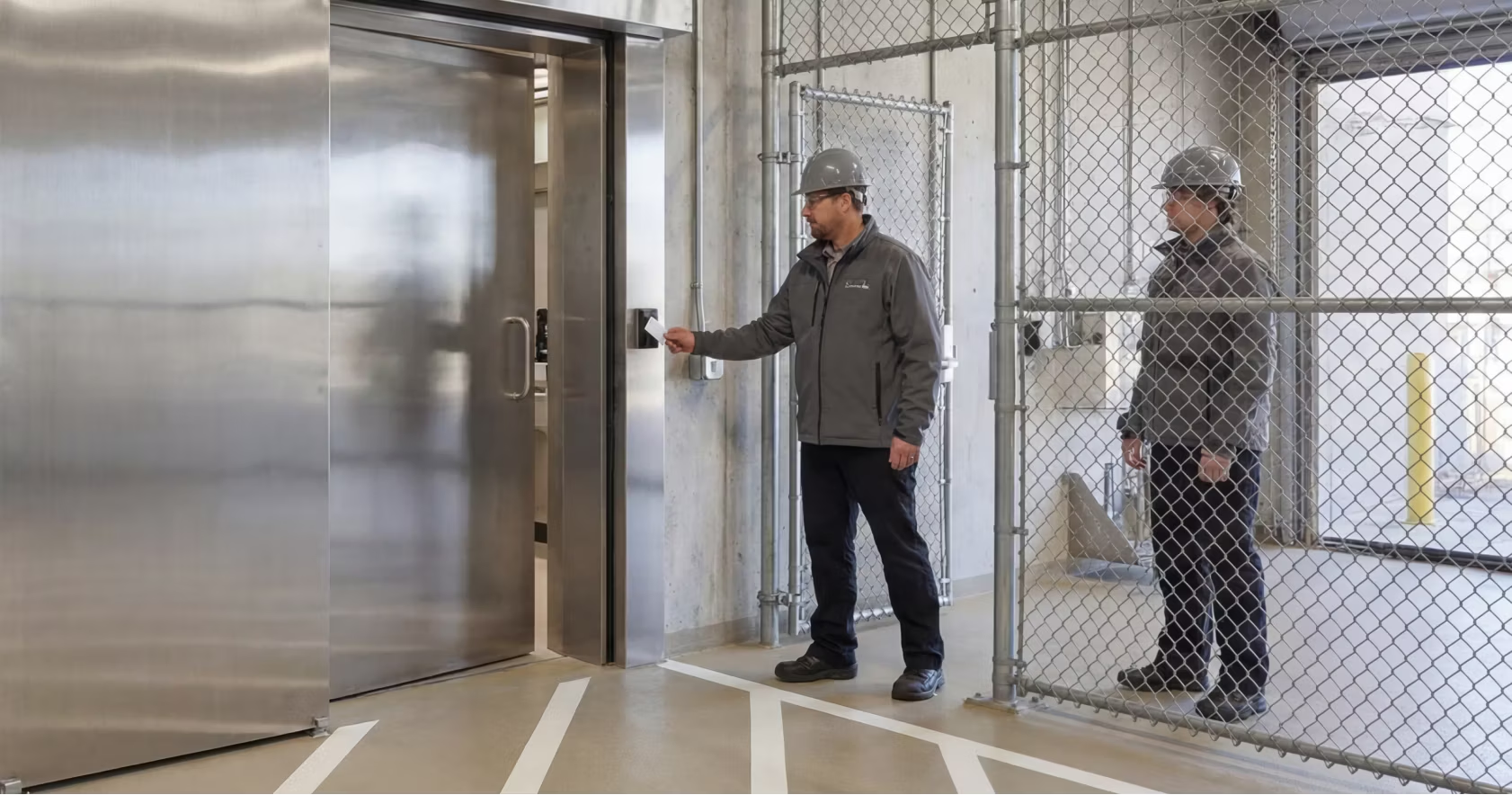
These systems are widely used but inherently insecure. Credentials can be lost, cloned, or shared, making them unsuitable for high-risk environments.
2. Biometric access control (fingerprint, iris, facial)
Biometrics improve security by tying access to the individual. However, not all biometrics are equal. Fingerprints and iris scans often introduce friction, hygiene concerns, and high failure rates in real-world conditions. On the other hand, using a face as your credential allows for frictionless access control
3. Facial authentication and passive MFA
Facial authentication enables passive, touchless identity verification. Users simply walk through access points without stopping, tapping, or scanning - making it ideal for high-traffic environments. Unlike facial recognition (which induces privacy concerns), Alcatraz uses privacy-preserving facial authentication designed explicitly for access control (no facial data is ever stored or shared).
4. PINs and keypads
These methods still have niche use cases but fail at scale due to usability issues, credential fatigue, and poor enforcement.
How does Alcatraz redefine physical access control?
Rules-based systems fail at scale. AI enables real-time decision-making, continuous learning, and adaptive enforcement. Edge-based AI processes identity locally, improving speed, reliability, and privacy.
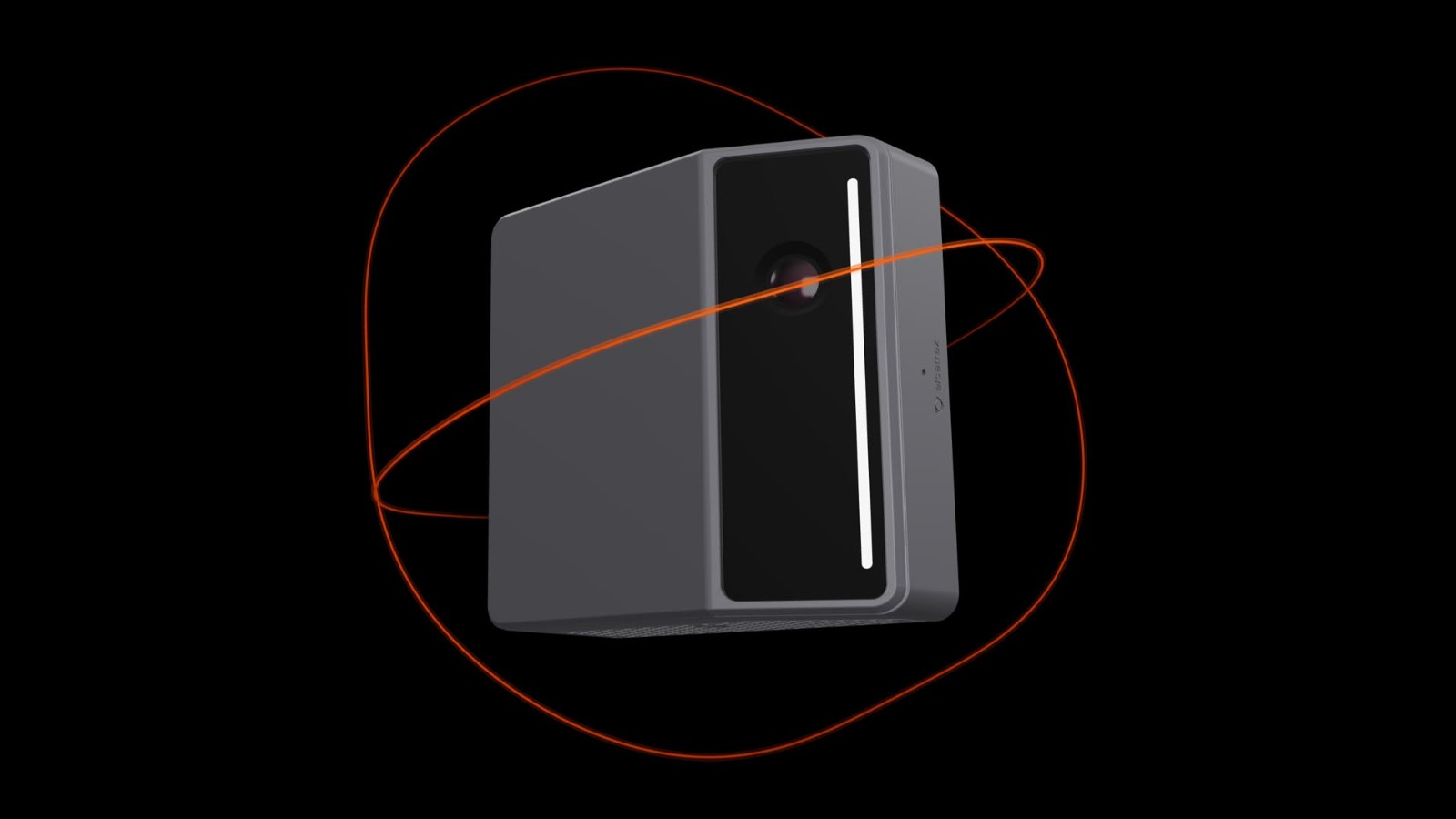
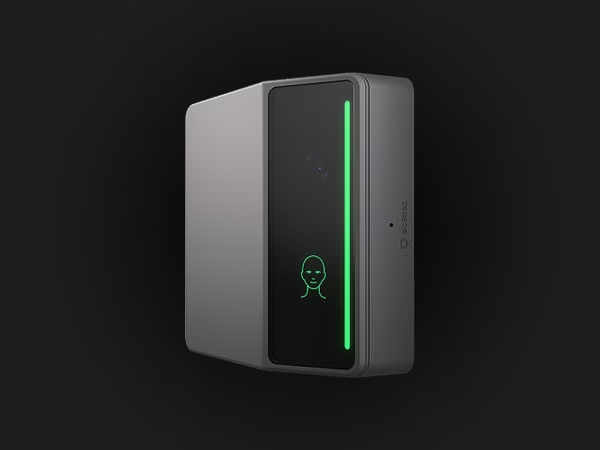
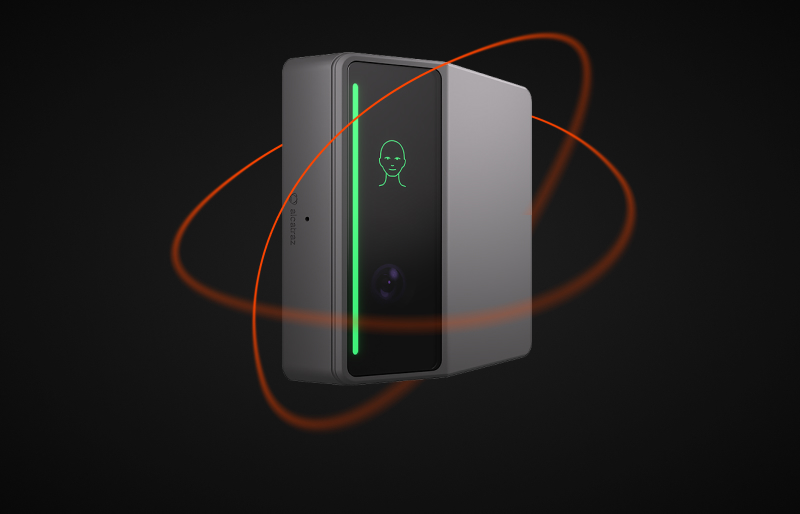
1. Rock X - AI-Powered Facial Authentication at the Edge
Rock X is Alcatraz AI's award-winning facial authentication device designed for indoor and outdoor environments. It integrates inline with existing ACS systems using Wiegand or OSDP and operates entirely at the edge.
2. Privacy-First Biometric Access Control
Alcatraz uses one-way biometric templates, encrypted data blobs, and transparent opt-in consent. The system is designed to comply with GDPR, CCPA, and BIPA by default, without storing personal data like names or job titles.
3. Real-World Use Cases
Rock X secures corporate offices, data centers, healthcare facilities, campuses, and high-traffic environments while reducing operational costs and improving user experience.
Frequently Asked Questions About Physical Access Control
What is physical security access control?
It is the system used to verify identity and regulate access to physical spaces.
What is access control in physical security?
The enforcement layer determines who can enter, where, and when.
What is identity access management in physical security?
It is the governance of physical access using identity-centric policies and technologies.
Is biometric access control more secure than cards or PINs?
Yes, because biometrics authenticate the person, not a transferable credential.
Final Thoughts - Building Safer Spaces with Smarter Access Control
As threats evolve, physical security access control must evolve with them. Identity-driven, frictionless, privacy-first systems are no longer emerging; they are becoming the baseline. Alcatraz AI is helping organizations build safer spaces by replacing outdated credentials with trusted facial authentication.
To learn how Rock X can modernize your access control strategy, explore the Alcatraz platform or schedule a demo.