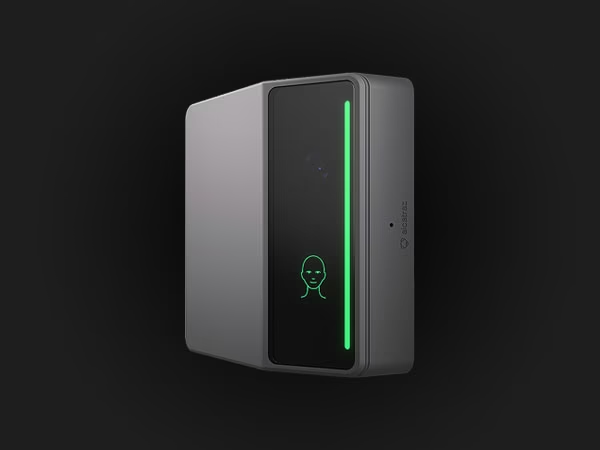



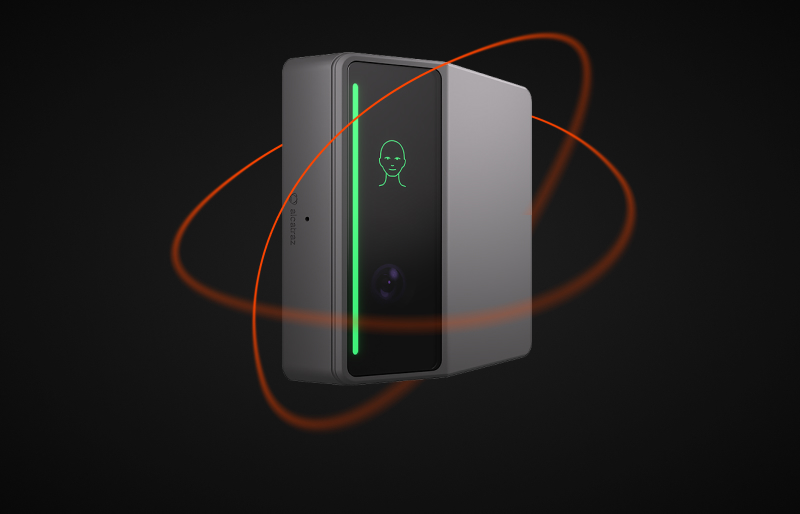



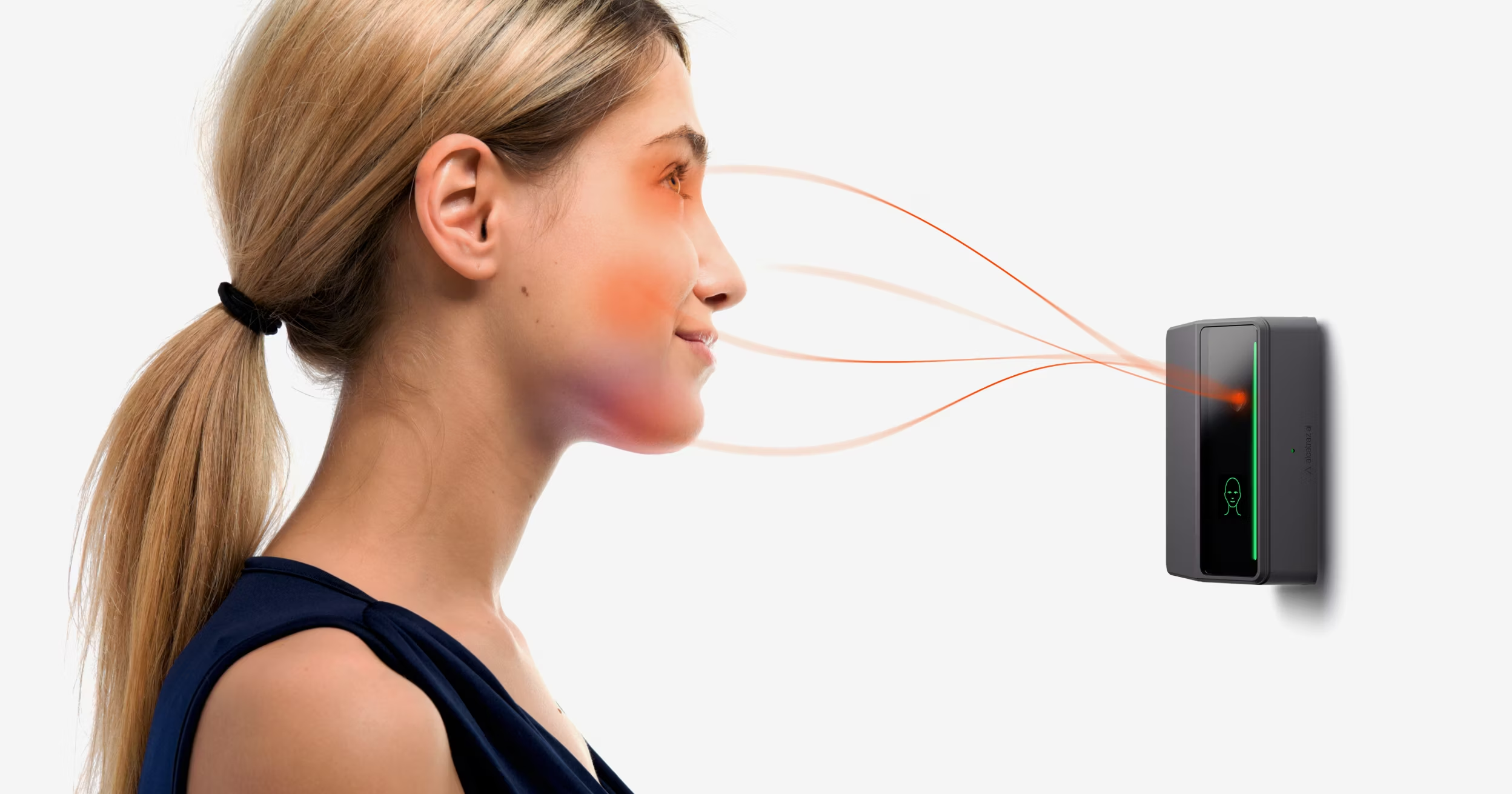
CUPERTINO, Calif. —April 23, 2026 — The days of plastic employee ID badges may be numbered. Americans have been swiping plastic cards to access their workplaces for years, but a new survey reveals substantial numbers of workers want to hang up their lanyards and use an ID that can’t be forgotten or misplaced — their face.
According to a new survey from Alcatraz, the privacy forward facial biometric firm for physical access, biometric systems such as facial authentication are becoming more widely understood and accepted as part of daily life, including in the workplace. But there are signs of a generational divide emerging that employers will have to navigate carefully.

Key findings:
- Employees want smarter access: Almost 1 in 3 employees (30%) would prefer to use biometrics to access their workplace instead of traditional methods.
- Workers think biometrics are the future: 46% of employed U.S. adults expect biometrics to replace most security requirements within the next 5-10 years.
- Vast majority of Gen Z are comfortable with the tech: 72% of Gen Z respondents report being comfortable with biometric authentication compared to 54% of Boomers.
“Millions of Americans use facial authentication to open their smartphones or access their bank accounts. Swiping an ID badge to access the office feels outdated. Face ID for secure spaces is finally here and it is 100% anonymous. ” says Tina D’Agostin, CEO of Alcatraz. Alcatraz’s AI powered privacy forward technology has been transformative. The world’s largest AI data centers, airports and energy structures have rapidly deployed Alcatraz’s facial authentication technology to secure their high security facilities.
“As biometrics become more widely used, workers understand that they no longer have to give up their face and put personal identifying information at risk just to work securely in an office. When implemented responsibly, security systems contain multiple privacy safeguards and don’t require surveillance technology. The generational divide revealed in our survey shows that employers have to be thoughtful in how they implement these systems, because adoption only happens when people trust the technology. ”
The survey comes at a time when facial authentication is becoming more widely used in the workplace. In addition to top data centers and energy infrastructure, Alcatraz’s facial authentication biometric has also been adopted by Fortune 100 companies, NFL teams, and stadiums to secure backstage areas and, in some cases, for audience access.
Other findings:
Badges cause problems
- 38% of employees who have lost or forgotten their badges admit to being late to work or meetings as a result, highlighting the limitations of outdated access systems.

Americans are open to biometrics, but privacy is top of mind
- Among those who are open to using biometrics, the top two most important features of biometric authentication remain security (62%) and privacy (55%).
- Overall, the top concern with biometrics is being locked out if the technology fails (52%), followed by data being used for surveillance without consent (51%) and hacking or spoofing of their biometric data (48%).
- Among those hesitant to adopt biometrics, the leading worries are lack of control over how their biometric data is stored or used (56%), being required to use biometric authentication with no other option (55%) and the data being used for unauthorized tracking or surveillance (53%).
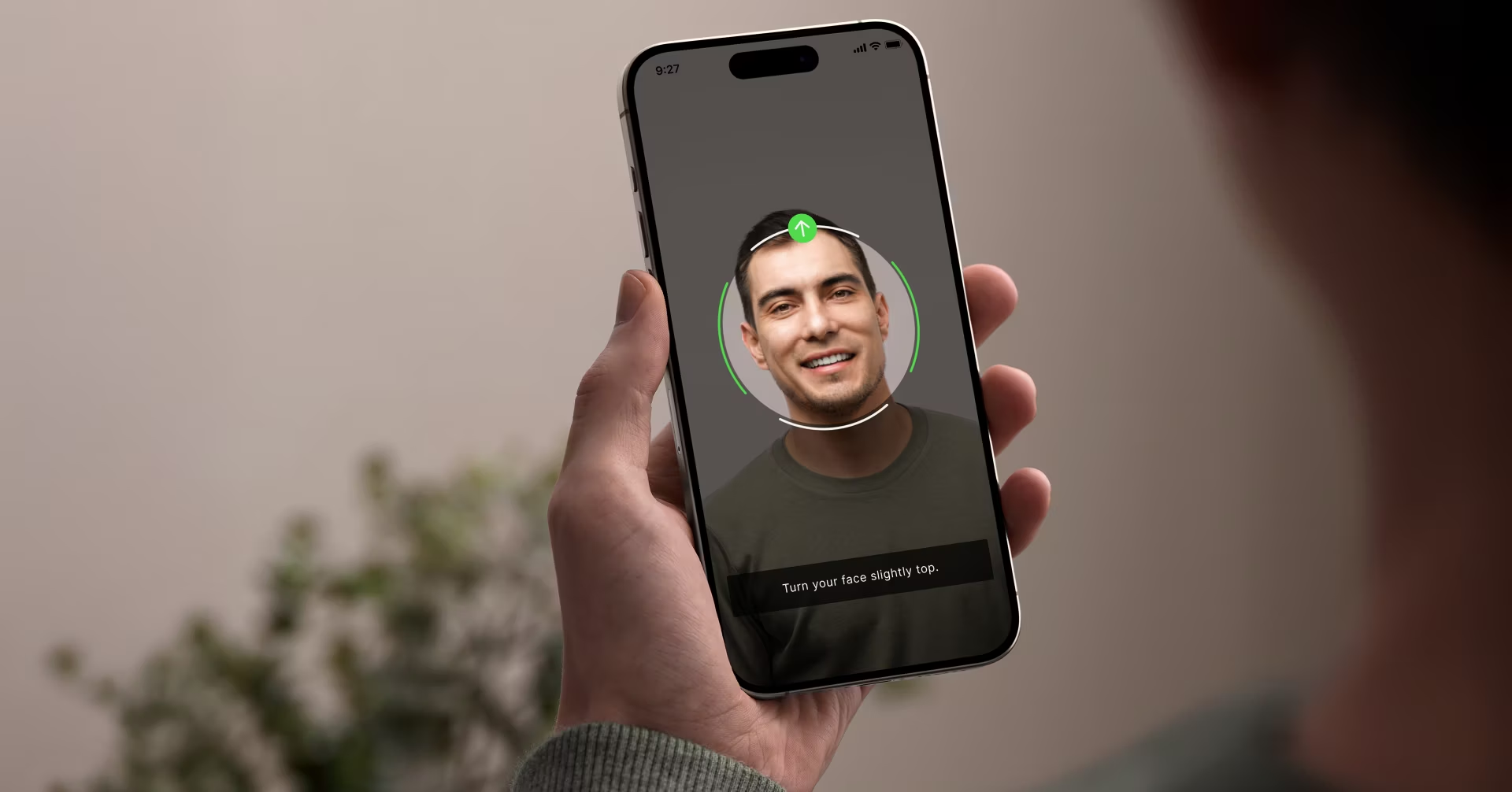
A generational divide Is emerging
- Gen Z leads the way in biometric familiarity and openness. Among those open to using biometric authentication overall, nearly half (47%) are open to using biometric authentication at work, followed by 42% each of millennials and Gen X, compared to just 28% of Boomers.
- More than a third of Gen Z (37%) and millennials (35%) now prefer facial authentication for identity verification to access their secure data, showing how Face ID has normalized everyday use of biometrics.
- At the other end of the spectrum, 46% of Boomers not opposed to biometrics overall, say they’re open to using biometrics at the airport, compared to 36% of Gen Z, suggesting older generations may associate biometric use more with security checkpoints than daily life. Across all generations, only about 1 in 5 are open to using biometrics at the gym, where the perceived stakes are lowest.
All figures, unless otherwise stated, are from YouGov Plc. Total sample size was 1,243 adults, of whom 602 were employed (either full or part-time). Fieldwork was undertaken between September 17 and 18, 2025. The survey was carried out online. The figures have been weighted and are representative of all U.S. adults aged 18+.
Contact: press@alcatraz.ai