



The hidden cost of tailgating: Why enterprises are turning to automated detection
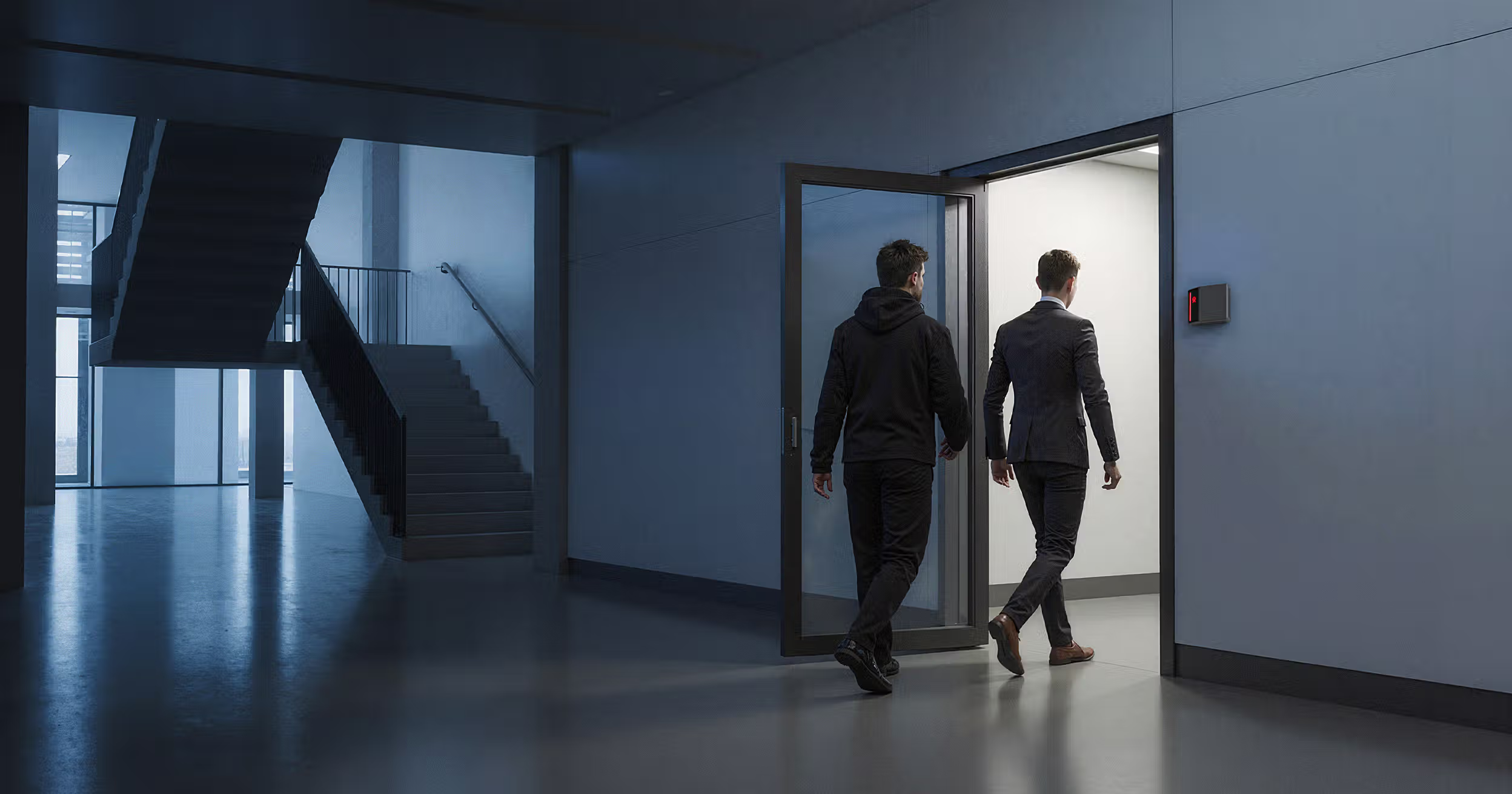
Tailgating has become one of the most persistent and underestimated enterprise security threats. It doesn’t require hacking skills, stolen credentials, or sophisticated tools. It only requires a moment of inattention at the door. And that moment can cost enterprises millions.
This article breaks down the real cost of tailgating, why the threat is escalating, and why organizations are adopting automated tailgating detection systems, especially AI-powered solutions like facial authentication access control to close the gap.

What you need to know about tailgating:
- Tailgating is one of the most underestimated causes of enterprise security breaches.
- Traditional access control badges, PINs, guards, and basic cameras cannot prevent it.
- Automated tailgating detection provides real-time, accurate, and proactive protection.
- Facial authentication eliminates shared credentials and strengthens identity assurance.
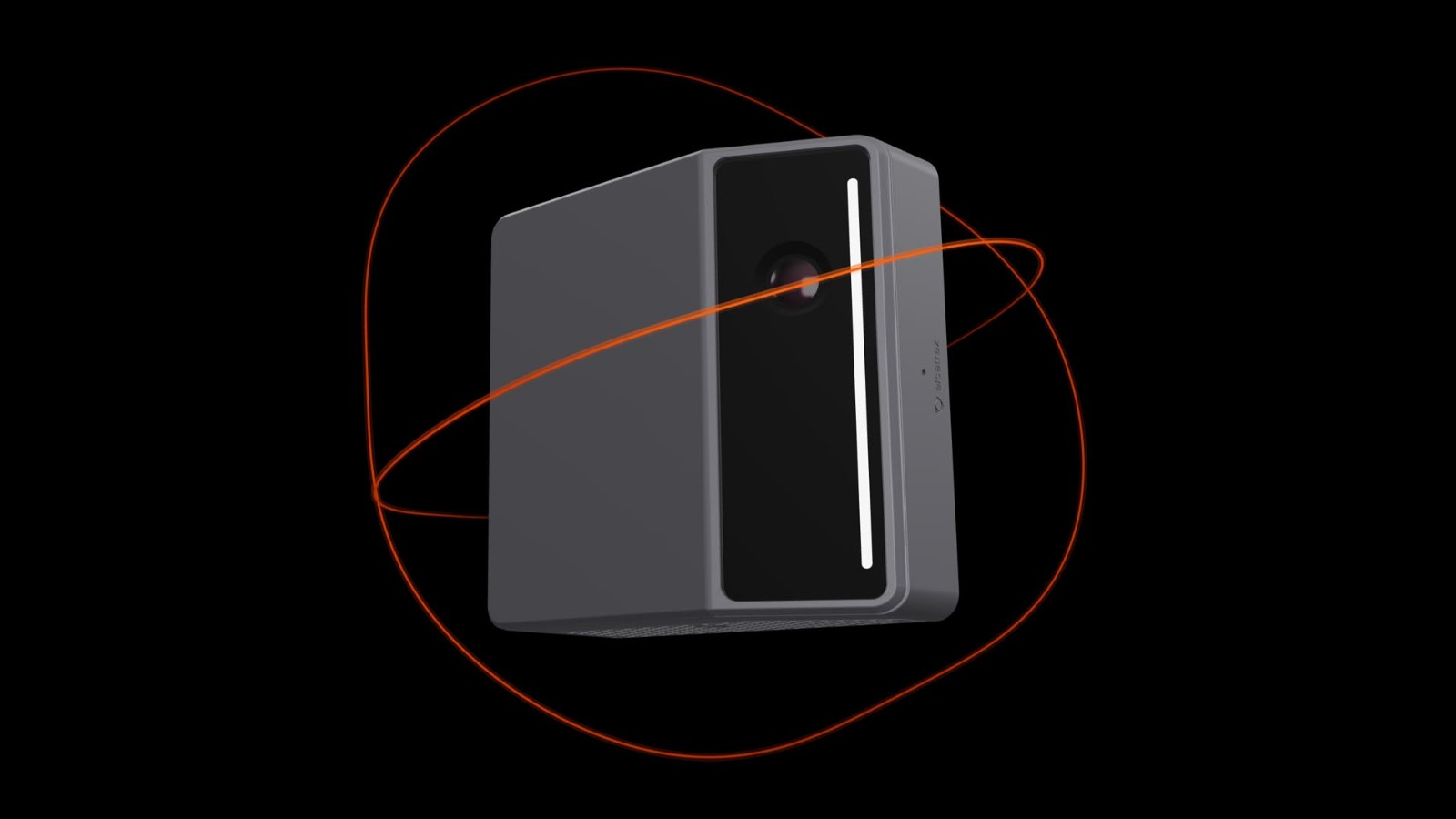
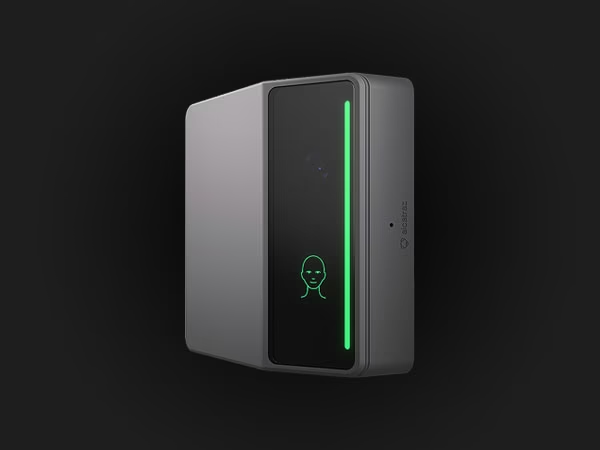
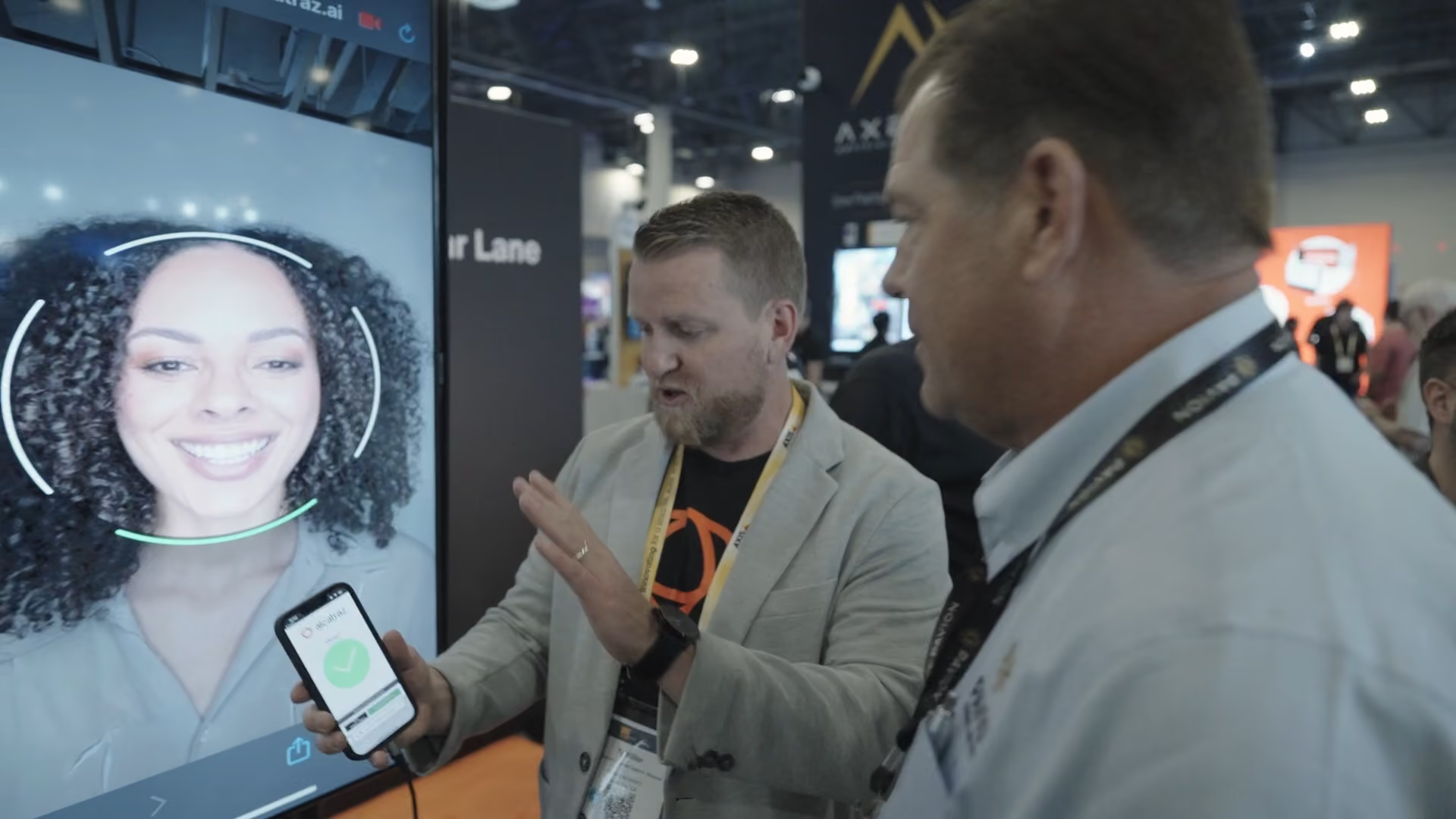
- Alcatraz AI’s Rock X delivers best-in-class tailgating detection with a privacy-first design and seamless integration.
Why tailgating is one of the most overlooked enterprise security threats?
Although tailgating is widely recognized, many organizations still treat it like an etiquette problem rather than a genuine security failure. This misconception persists because tailgating rarely looks malicious at the moment.
Most incidents happen casually and blend into normal workplace behavior.
But that surface-level simplicity hides an uncomfortable truth: when someone follows an authorized individual through a door, every layer of security behind that door becomes compromised in an instant.

What tailgating looks like inside an enterprise
Every enterprise has seen tailgating firsthand. Picture a mid-morning rush at a corporate campus: employees stream through turnstiles, and one person lingers close behind someone else, entering without scanning a badge. The system logs one credential, yet two people walk through.
The camera records the activity but does nothing to intervene. And unless a security officer is physically standing at that door at that exact second, the intruder now has free movement inside.
This is the fundamental flaw in legacy access control: badge verification ends at the door. Identity verification does not.

How tailgating opens the door to bigger problems
Tailgating is rarely the end goal for a threat actor - it’s the beginning. Once an intruder is inside, the range of possible impacts broadens quickly:
- Internal theft
- Unauthorized access to R&D environments
- Tampering with network-connected equipment
- Social engineering attempts often trace back to someone simply slipping through a secured door behind someone else.
This is why enterprise security leaders increasingly view tailgating not as a minor lapse, but as a systemic vulnerability.
How has tailgating become a board-level concern?
Regulators, insurers, and auditors no longer accept traditional access control as proof of identity. They expect organizations to demonstrate who actually entered sensitive areas, not who tapped a badge.
For C-suite leaders, the question is no longer "Is tailgating happening?" It’s “How expensive will the next occurrence be?”
The real cost of unauthorized access: the damaging ripple effect
IBM’s 2024 Cost of a Data Breach Report notes that physical security failures remain a contributing factor in some of the most expensive enterprise breaches, driving the global average breach cost to $4.88 million per incident.
But the reality is: tailgating’s financial impact extends far beyond the immediate breach. In most cases, the true cost comes from the ripple effect that spreads across the organization long after the unauthorized entry occurs. So let’s address the elephant in the room.
Direct financial losses and material theft
Unauthorized entry often leads to tangible physical losses. In manufacturing environments, intruders often steal specialized equipment that costs hundreds of thousands of dollars to replace. In pharmaceutical and biotech facilities unauthorized individuals have disrupted controlled environments, forcing millions of dollars’ worth of materials to be discarded.
The initial act (a person slipping through a door) sets the stage for damaging, costly consequences.
Operational disruptions and extended downtime
The moment a tailgating incident is detected (or even suspected), facilities typically initiate protocols that halt normal operations:
- Doors lock.
- Entrances freeze.
- Employees are interviewed.
- Access logs are reconstructed.
These disruptions often last hours, or even days, depending on the severity of the breach and the sensitivity of the facility. For a logistics hub, this could mean delayed shipments and revenue loss. For a data center, it could mean platform outages and direct revenue loss.
The real cost here is productivity: the silent budget leak that rarely gets quantified but affects every department.
Compliance exposure and audit failures
Regulations like GDPR, CCPA, BIPA, and ISO 27001 require organizations to maintain reliable records of who accessed sensitive environments. When tailgating occurs, the chain of custody breaks immediately. Access logs lose integrity. Identity verification becomes impossible.
Even without a data theft event, the organization can still face steep penalties simply because an unauthorized person entered a regulated space. In several documented cases, companies have been forced to self-report due to physical access control failures alone. Tailgating isn’t just a security gap - it’s a compliance liability.
Why do traditional access control systems fail to stop tailgating?
Enterprises often rely on badges, PINs, cameras, and guards to secure buildings, but these tools were never designed to stop tailgating. They authenticate credentials, not individuals and attackers exploit this distinction.
Before diving into AI-based prevention, it’s important to understand exactly where legacy systems fall short:
Traditional systems leave too much room for error. Facial Authentication eliminates the guesswork.
How automated tailgating detection strengthens enterprise security?
AI-based prevention transforms physical security from a passive system to an intelligent one.
Real-time identity verification and behavioral insight
Instead of relying on badges alone, AI evaluates spacing between individuals, walking patterns, environmental context, and biometric identity. This is how it recognizes legitimate access from an attempted piggyback entry.
Consistent accuracy that humans can’t match
AI doesn’t get tired, overwhelmed, or distracted. It enforces access rules exactly the same way at 7 a.m., during peak shift changes, or in the middle of the night.
Reduced operational costs
Automation saves money by reducing false alarms, minimizing the need for manual monitoring, and eliminating the administrative burden of managing badge systems. It also prevents costly disruptions that organizations face after a tailgating incident.
Better compliance and audit preparedness
Identity-verified logs give compliance teams reliable evidence during audits. When regulations require proof of who entered a sensitive area, AI-based systems provide clarity that traditional access control cannot.

Rock X: the golden standard for automated tailgating prevention
Alcatraz AI brings identity verification and tailgating detection directly to the point of entry.
Edge authentication for faster, more reliable decisions
By processing authentication directly on the device, Rock X delivers instant verification - even in bandwidth-limited environments.
Real-time alerts and evidence capture
Rock X combines facial authentication, behavioral analytics, and an 8MP camera that documents door-level activity, giving security teams immediate insight into unauthorized attempts.
Effortless Integration
Because Rock X supports OSDP and Wiegand, enterprises can upgrade to AI-powered security without replacing their access control system.
Built for harsh and high-traffic environments
Whether installed outdoors, near bright light, or in dusty or humid environments, Rock X continues to perform. Its reliability makes it suitable for data centers, campuses, industrial sites, and modern corporate offices.
Privacy by design
Alcatraz AI processes biometric data securely and locally on the device, stores encrypted templates rather than images, and maintains strict separation between biometric data and access control systems. Its technology adheres to GDPR, CCPA, and BIPA requirements, making it a privacy-first solution unlike traditional facial recognition systems.
The bottom line: why tailgating can’t be ignored any longer?
Tailgating is a predictable failure point built into every system that relies on badges, guards, or cameras alone. Once an unauthorized individual enters your facility, every downstream system becomes vulnerable. Compliance suffers, insurance claims weaken, investigations become longer, productivity stalls, and the reputational damage can linger for years.
AI-powered tailgating prevention changes that dynamic. It enforces identity at the door, detects unauthorized individuals in real time, eliminates blind spots, reduces operational overhead, and builds a stronger foundation for compliance and long-term risk management.
For modern enterprises the cost of doing nothing is far higher than the cost of prevention. Are you ready to make the difference? Book an Alcatraz Demo today.