




Privacy-first access control: eliminating PII exposure in enterprise security

Traditional access control systems create a dangerous paradox. The tools designed to protect your facilities simultaneously expose your employees' personally identifiable information (PII) to regulatory risk and potential breaches.
Organizations now face CCPA penalties reaching $7,988 per intentional violation, GDPR fines up to 4% of global revenue, and BIPA lawsuits with statutory damages of $1,000–$5,000 per violation that can rapidly escalate into company-threatening exposure.
The question isn't whether your organization needs strong physical access control. It's whether you can afford the privacy risks of legacy systems that treat employee data like a security requirement instead of a liability. Privacy-first access control eliminates this trade-off entirely, delivering enterprise-grade security without storing any personally identifiable information.
Key takeaways
- Traditional access control systems expose employee PII and create severe regulatory risks under GDPR, CCPA, and BIPA.
- 63% of organizations are shifting to biometric authentication after experiencing credential-based data breaches.
- Privacy-first access control authenticates identities using encrypted mathematical templates without storing personal data or facial images.
- Anonymous enrollment and data minimization automatically simplify compliance with strict modern privacy laws.
- High-security sectors like finance, healthcare, and government are actively adopting zero-PII biometric systems for enterprise-grade protection.

What privacy-first access control means for modern enterprises?
Privacy-first access control represents a fundamental architectural shift. It moves away from PII-dependent security toward solutions that authenticate identities without collecting or storing personal data.
63% of organizations that experienced a data breach implemented or planned to implement biometric authentication as a response to credential-based failures. The difference lies in how they are architected. Traditional systems store facial images and personal identifiers, while privacy-first solutions process biometric characteristics without retaining any PII.
The core principles that eliminate PII exposure
Privacy-first design operates on three fundamental principles that transform identity verification.
- Data minimization: Systems collect zero personal information during enrollment. No names, employee IDs, contact details, or photographs enter the database.
- Purpose limitation: Biometric data is never used beyond immediate authentication. The system processes facial characteristics at the edge device and immediately discards the data.
- Individual control: Employees have meaningful ownership over their participation. This includes opt-in enrollment and complete deletion capabilities that remove all traces of their biometric templates.
Why does traditional access control function as a PII collection machine?
Most organizations do not realize that their access control infrastructure operates as a comprehensive personal information processing system. Every time an employee badges into a facility, the system logs their identity, location, and timestamp.
The hidden compliance costs of badge and PIN systems
Traditional systems create PII exposure through enrollment databases, credential production, and backup archives. In Q4 2025 alone, nearly 1,000 data breach events exposed personal information across various sectors. More than half of all breaches — 53% — involve customer personally identifiable information.
Organizations using badge-based access control unknowingly operate extensive PII processing operations. Security and compliance teams routinely dedicate significant time to managing enrollment databases, audit trails, and credential records — time that could be better spent strengthening the security posture.
Biometric data as sensitive PII
Biometric information is the most sensitive category of personally identifiable information (PII) because it cannot be changed or revoked, unlike passwords, PINs, or badge credentials.
This permanence explains why biometric data breaches carry significantly higher regulatory penalties and civil liability than traditional credential compromises. Organizations storing biometric PII face potential BIPA damages ranging from $1,000 to $5,000 per individual affected. It means a single breach affecting 1,000 employees could result in $5 million in statutory damages before legal fees are considered.

How Alcatraz AI eliminates PII while strengthening security?
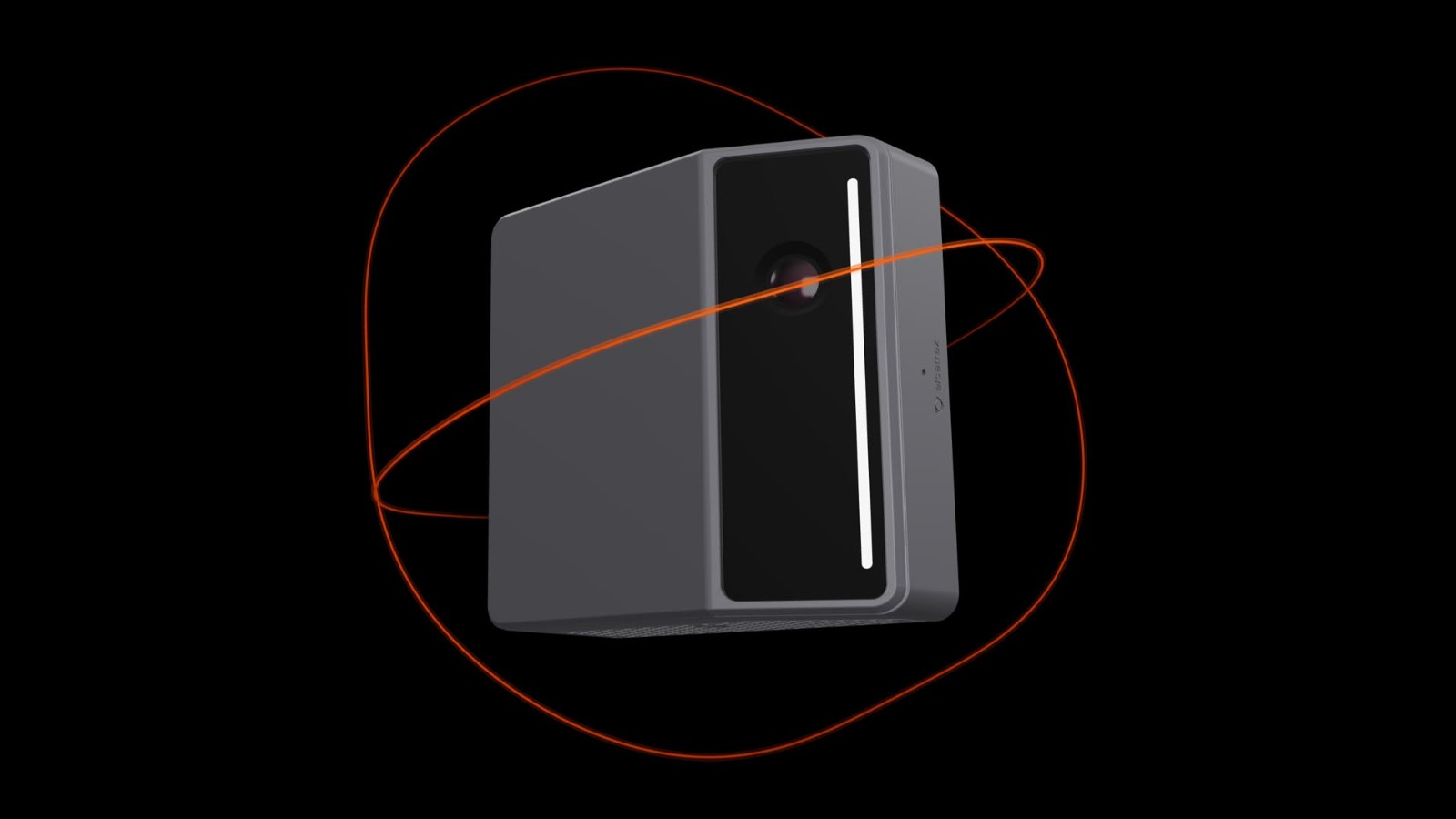
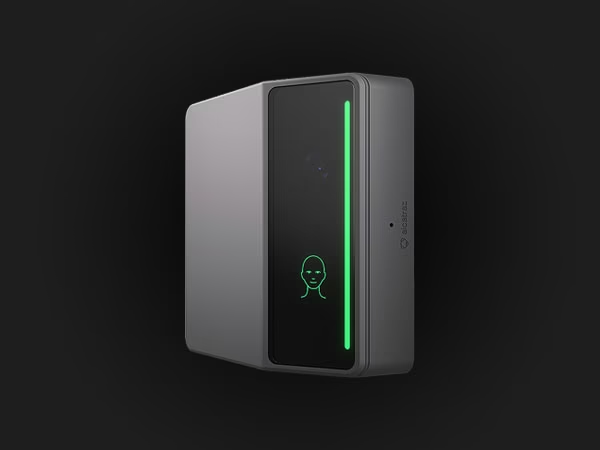
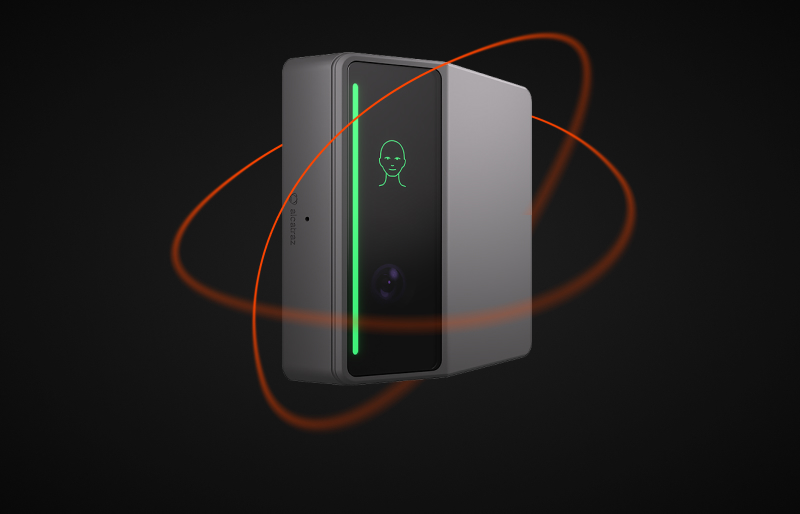
Alcatraz AI pioneered a privacy-first approach to biometric access control that eliminates the fundamental tension between security effectiveness and privacy protection. The Rock X solution demonstrates that organizations don't need to choose between security and privacy.
Anonymous biometric enrollment
Anonymous enrollment transforms how organizations onboard employees into access control systems. Traditional enrollment requires capturing employee photos, recording names and personal details, and linking this information to access credentials. The Rock X eliminates every step involving PII.
The process is simple and secure:
- One-time setup: An employee presents their face to the reader, often completing the process in less than 60 seconds.
- Template generation: The system generates an encrypted mathematical template and assigns an anonymous identifier to it.
- Immediate deletion: The source biometric data is deleted immediately. The template is entered into the database without any connection to the employee's name, job title, department, or any other identifying information.
End-to-end encryption and real-time authentication
Rock X protects the limited anonymous data it processes through military-grade AES-256 encryption with comprehensive protection extending from initial enrollment through ongoing authentication. AES-256 is the same standard used by the US government to protect top-secret classified information. The encryption architecture addresses all potential vulnerabilities across the data lifecycle:
- Edge-level protection: Template data is encrypted immediately upon creation before any network transmission, with TLS 1.2/1.3 protecting all data in transit and AES-256 protecting data at rest.
- Data minimization: Encrypted templates contain irreversible mathematical representations that cannot be decoded back into facial images.
- Speed of authentication: The system generates an authentication decision and typically grants access within two seconds.
Navigating privacy compliance: GDPR, CCPA, and BIPA
Privacy regulations set specific requirements for handling biometric data that traditional access control systems often struggle to meet through retrofitted compliance measures. Modern privacy laws demand privacy-by-design approaches in which data protection principles are embedded in system architecture rather than added as afterthoughts.
GDPR and data protection requirements
GDPR Article 9 explicitly prohibits the processing of biometric data for the purpose of uniquely identifying a natural person, unless under strict conditions. Traditional systems violate principles like storage limitation and data minimization.
Alcatraz AI complies with GDPR through its technical design — anonymous enrollment minimizes data collection, and PII elimination makes most GDPR obligations inapplicable.
CCPA and sensitive personal information
The California Consumer Privacy Act classifies biometric information as sensitive personal information. The CCPA now requires annual cybersecurity audits for businesses with annual gross revenue over $26.6 million that process the sensitive personal information of 50,000 or more consumers.
Rock X simplifies compliance by eliminating sensitive personal information. When systems do not collect names or linkable biometric data, they do not trigger CCPA's sensitive personal information protections.
BIPA consent and disclosure
Illinois' BIPA requires written consent before collecting biometric identifiers and prohibits private entities from profiting from or selling biometric data. Rock X mitigates BIPA risk through architectural design that processes biometric information without creating the PII exposure BIPA aims to prevent. Anonymous enrollment with explicit consent management satisfies authorization requirements, while the inability to sell anonymous templates eliminates commercialization risks.
Industry-specific applications for high-security sectors
Different industries face unique privacy and security challenges that require specialized approaches to access control implementation. Eliminating PII reduces compliance burdens across all sectors.
Financial services
Financial institutions operate under comprehensive PII protection requirements, including GLBA, state privacy laws, and federal banking regulations. Banks must protect customer information while securing physical facilities against both external threats and insider risks.
A global financial institution adopted Alcatraz to meet complex privacy and compliance requirements — the touchless biometric system ensured secure authentication, flexible cloud deployment, and rapid performance without compromising accuracy.
Healthcare facilities
Healthcare organizations face unique challenges combining HIPAA privacy requirements with comprehensive facility security needs. Medical facilities must protect patient areas without exposing employee privacy.
A global medical technology leader deployed Alcatraz for two-factor authentication in high-security areas — delivering compliance-ready protection across a worldwide footprint of 75,000 employees with frictionless access and tailgating detection.
Government and federal facilities
Government facilities operate under comprehensive security and privacy requirements, including the Privacy Act, FISMA, and agency-specific regulations. Federal environments require systems meeting security clearance standards. Rock X authenticates cleared individuals through anonymous templates linked to clearance levels.
This maintains DFARS compliance and separates identity management from access control operations.
The future of enterprise access control
The trajectory of physical security is clear: privacy-minimizing architectures are replacing data-heavy legacy systems. As organizations recognize that traditional PII databases pose unacceptable risks, the landscape is shifting toward solutions that protect user privacy by design.
- Market growth and adoption: The global facial authentication systems market reached $8.88 billion in 2025 and is projected to grow to $17.81 billion by 2030, driven by increasing adoption of biometrics for identity verification.
- Rising breach risks: With 1,732 data breaches publicly reported in the first half of 2025 alone, security leaders understand that reducing the attack surface is critical for operational resilience.
- Privacy as a competitive advantage: The future belongs to organizations that treat privacy not as a compliance hurdle, but as a strategic asset that builds workforce trust and reduces regulatory exposure through a strong Privacy Trust Center.
Experience enterprise-grade security with Rock X
Rock X transforms physical security by authenticating identities through encrypted mathematical templates without ever storing facial photos or personal data. This unique approach delivers a frictionless experience that provides real-time access while automating compliance with GDPR, CCPA, and BIPA requirements.
Don't wait for a regulatory fine or a data breach to rethink your architecture. Schedule a demo today to experience how Rock X delivers robust security without storing any personally identifiable information.