




Biometric airport security: modernizing employee access control systems

Airport security directors face a challenging reality: while passenger screening technologies have advanced dramatically over the past two decades, employee access control systems in many airports still rely on methods designed in the 1980s. This gap created vulnerabilities that insider threats readily exploit.
Modern biometric access control systems now offer airport operators a path forward - one that strengthens security for restricted areas without disrupting daily operations.
Key highlights
- Employee access control is the weakest link in airport security, with badge- and PIN-based systems still operating on assumptions.
- Lost, shared, and cloned credentials create daily, systemic security gaps that legacy systems cannot detect, prevent, or reliably audit.
- Insider threats are no longer hypothetical: real-world incidents show authorized employees abusing valid credentials to enable smuggling, unauthorized access, and regulatory violations.
- Facial biometric access control closes the core flaw of badges by verifying identity instead of credential possession, eliminating sharing, cloning, and “badge-in” workarounds.
- Modern biometric systems improve both security and operations, enabling touchless, high-throughput access with real-time monitoring and regulator-ready audit trails.
- Airports can modernize without disruption through phased biometric deployments that integrate with existing infrastructure and deliver measurable ROI within a few years.
Why airport employee access control demands more than traditional badges?
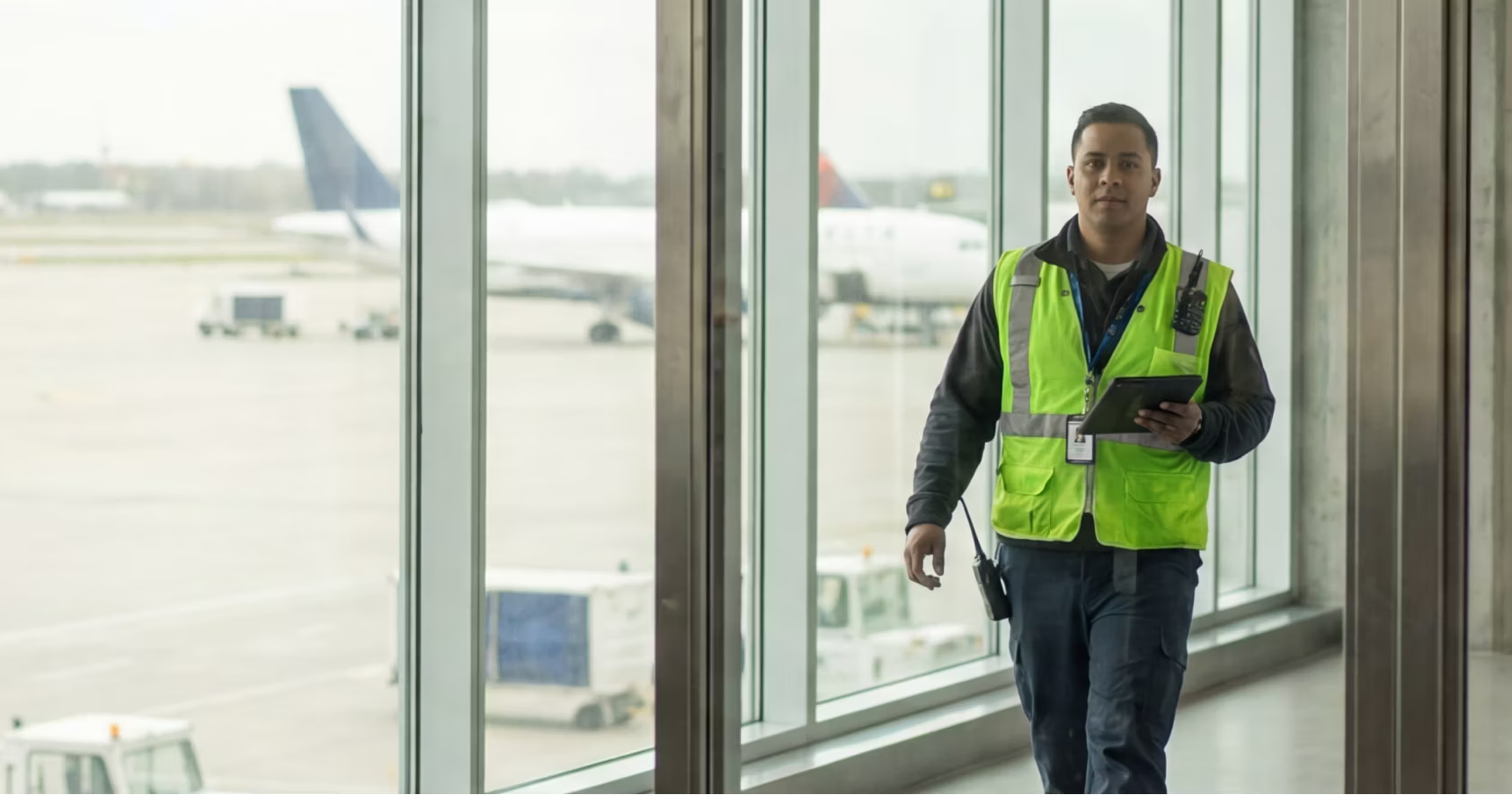
Walk through any major airport's operational areas, and you'll notice something striking: ground crews, maintenance teams, baggage handlers, and administrative staff move through dozens of secure zones each shift. Many carry worn proximity cards clipped to lanyards. Some punch in four-digit PINs at keypads near restricted doors. Others wave badges at readers that haven't been updated in fifteen years.
These traditional methods create security gaps that sophisticated threat actors understand well. According to a 2024-2025 aviation security analysis, dozens of airport staff members across various facilities were dismissed for allegedly facilitating smuggling operations and connections to organized criminal networks.
The common thread in these incidents? Compromised or shared credentials that allowed unauthorized individuals to access restricted airport zones.
Airport security leaders need authentication methods that match the sophistication of modern threats. Biometric access control for airports delivers this capability by eliminating the fundamental weakness of traditional systems: credentials that can be shared, stolen, or duplicated.
The early foundation of airport access control systems
In order to understand the problems of outdated access control systems, we first need to understand how technologies evolved over time:
- 1960s-1970s: Airports operated with minimal restrictions on employees. Staff moved freely between zones with only uniforms as identification. The trust-based approach treated airports as semi-public spaces with no zone-based access controls.
- 1980s: High-profile incidents prompted regulators to mandate badge systems. Airports began issuing photo ID credentials, establishing databases, and requiring background checks. However, these systems only verified badge possession, not whether the holder was the authorized employee. This fundamental flaw persists in legacy systems today.
How security incidents exposed vulnerabilities in employee access
The badge-based access control model that airports adopted decades ago contains inherent flaws that continue to create security risks. Recent incidents have highlighted how these vulnerabilities allow unauthorized access to sensitive airport areas.
The insider threat problem airports still face today
Insider threats are among the most significant security challenges facing airport operators. Between January 2024 and May 2025, security analysts documented numerous incidents in which airport employees exploited their credentials to facilitate illegal activities ranging from smuggling restricted items to providing access to unauthorised individuals. In one notable case at Tel Aviv Ben Gurion International Airport in May 2025, authorities arrested a border controller for abusing access privileges.
These incidents share a common pattern: legitimate credentials used for unauthorized purposes. Traditional badge systems cannot distinguish between an employee accessing areas appropriate for their role and that same employee accessing areas they shouldn't enter. They grant access-the system doesn't verify whether the person holding it is actually an authorized employee.
Credential sharing and lost badges create operational gaps
Airport security managers deal with credential management headaches daily. Employees forget badges, lose them in parking lots, or leave them in uniform pockets that go through industrial laundry. Each incident triggers a replacement process that consumes administrative time and creates temporary access workarounds that bypass security protocols.
More concerning is credential sharing, which traditional access control systems cannot prevent. An employee running late for their shift asks a colleague to "badge them in" at the security checkpoint. A supervisor loans their badge to a contractor who needs "quick access" to complete urgent repairs. A maintenance worker props open a secure door to move equipment, allowing anyone to enter during that window.
These scenarios occur hundreds of times daily at major airports. Each represents a security gap that malicious actors can exploit. Research from aviation security experts indicates that 73 badged employees at 40 different commercial U.S. airports were flagged for having potential ties to terrorist organizations, highlighting how credential-based systems can be compromised.

3 Major challenges with legacy airport access control systems
Airport security directors inheriting decades-old access control infrastructure face mounting pressure to address vulnerabilities while maintaining operational continuity. Legacy systems that once worked adequately for smaller facilities now struggle to meet the demands of modern airport operations.
1. Badge cloning and credential theft remain prevalent
Proximity cards, still the most common airport access credential, use radiofrequency identification (RFID) technology that hackers can clone with readily available equipment. A determined threat actor needs only seconds of proximity to an authorized employee's badge to capture and duplicate their credentials. The cloned badge then grants the same access as the original, with no way for the system to distinguish between them.
Lost or stolen badges compound this vulnerability. The time gap between an employee reporting a missing credential and security teams deactivating it in the system creates a window of opportunity. During this period, anyone holding that badge can access restricted areas without triggering alerts. Airport security managers know these gaps exist, but lack the resources to eliminate them.
2. Managing thousands of employees across multiple shifts
Large airports employ thousands of workers across airlines, ground handling companies, concessionaires, maintenance contractors, and airport authority staff. Each organization manages its own workforce, but all require access to shared airport infrastructure.
Coordinating credential issuance, access privilege updates, and termination procedures across dozens of employers creates administrative complexity that legacy systems weren't designed to handle.
Consider a typical scenario: A ground services contractor hires 50 seasonal workers for the busy travel season. Each requires specific access to baggage-handling areas, ramp zones, and equipment storage facilities. Security teams must process background checks, issue credentials with appropriate permissions, conduct training, and then reverse the entire process when the season ends. Multiply this across every employer operating at the airport, and the administrative burden becomes clear.
The aviation industry is experiencing rapid adoption of biometrics, with 73% of airports currently using biometric-enabled systems, according to SITA's 2024 Air Transport IT Insights report. This shift reflects recognition that traditional credential management cannot scale to meet modern operational demands.
3. Compliance pressures from TSA and FAA regulations
U.S. airports operate under strict Transportation Security Administration (TSA) and Federal Aviation Administration (FAA) mandates governing employee access to secure areas. These regulations require comprehensive audit trails showing who accessed which areas and when. Legacy badge systems often lack the granular tracking capabilities that regulators now expect.
When security incidents occur, airport operators must demonstrate that their access control systems meet federal requirements. Gaps in audit trails or an inability to definitively verify that authorised employees, not unauthorised individuals using their credentials, accessed restricted areas can result in regulatory penalties and increased scrutiny.
The rise of biometric access control for airport restricted areas
Biometric authentication fundamentally changes the airport access control equation by verifying identity rather than just checking for credential possession. This shift addresses the core vulnerabilities that traditional systems cannot overcome.
1. Facial authentication eliminates shared credentials
AI-powered facial authentication makes credential sharing physically impossible. The system captures an individual's facial biometric data during enrollment, then compares subsequent authentication attempts against that stored template.
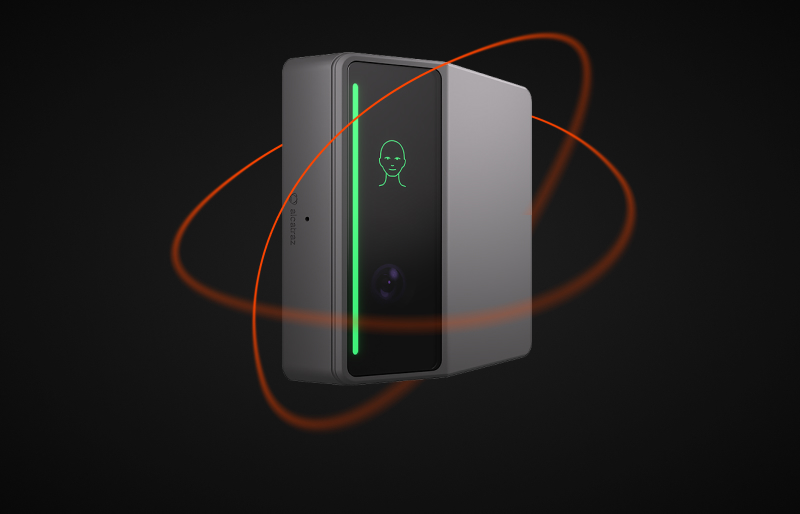
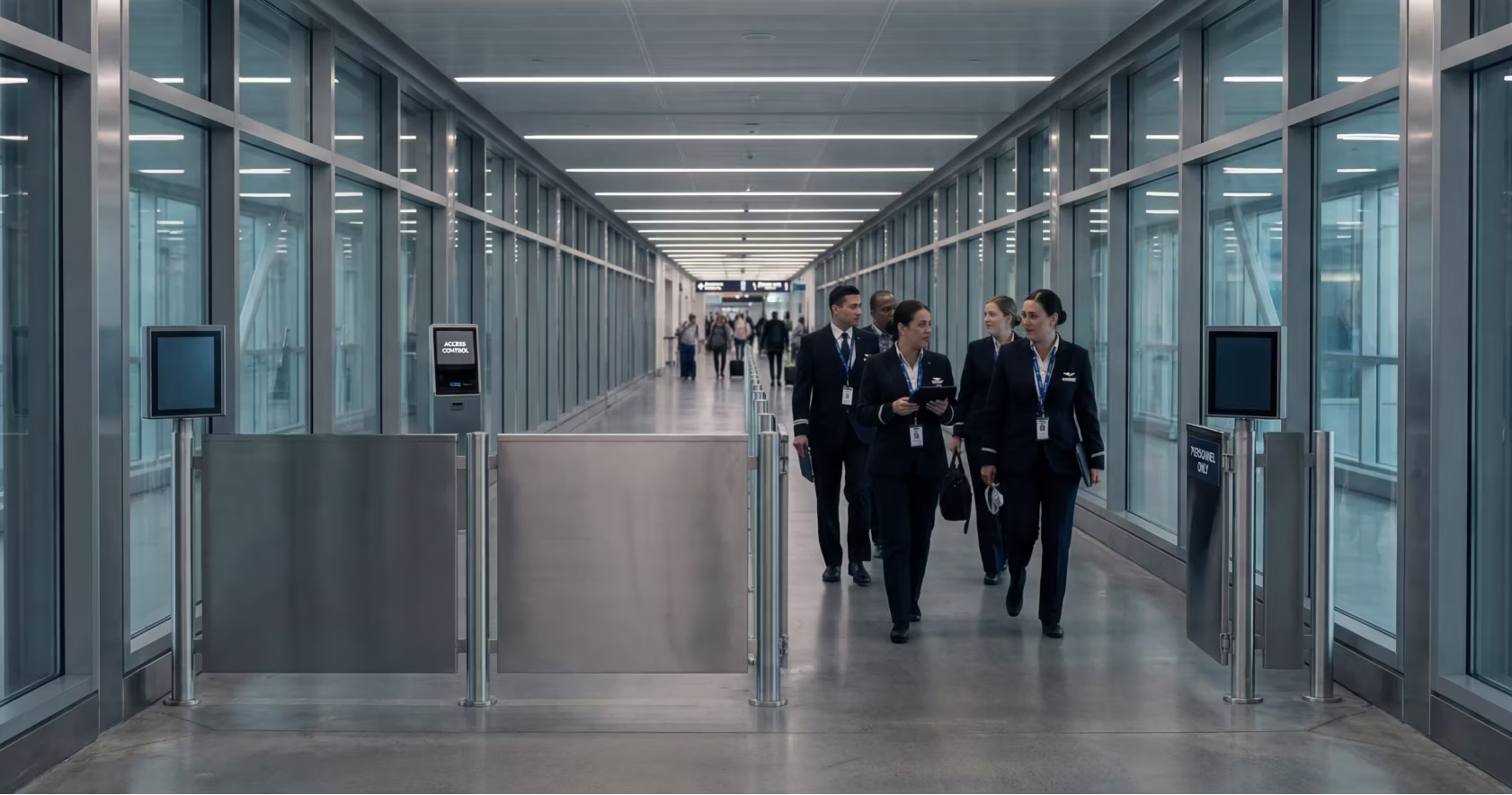
When an employee approaches a secured entrance to an aircraft maintenance hangar or air traffic control facility, cameras capture their facial features and verify their identity in less than one second - all without requiring them to pause, press a badge against a reader, or enter a PIN.
This speed matters in operational environments. Maintenance crews carrying equipment, ramp workers wearing gloves and protective gear, and administrative staff juggling laptops and coffee can all authenticate hands-free. The convenience factor doesn't compromise security; it enhances it by eliminating workarounds that traditional systems force employees to use.
2. Touchless entry for high-traffic operational zones
Airport operational areas experience significant traffic volume during shift changes. Baggage handling facilities, airline operations centers, and ground equipment maintenance areas see dozens or hundreds of employees entering within short time windows. Traditional access control creates bottlenecks as workers queue to badge in, especially when readers malfunction or employees struggle with worn credentials.
Facial authentication eliminates these bottlenecks through contactless verification that processes employees at walking speed. The system authenticates identity as staff members approach the entry point, triggering door releases without requiring them to stop. This throughput improvement reduces congestion at secure checkpoints while maintaining - indeed, strengthening - security verification.
3. Real-time monitoring and audit trail capabilities
Modern biometric access control systems provide security directors with capabilities that traditional badge systems cannot match. When an employee authenticates at any controlled access point, the system creates a detailed audit record that includes identity verification confidence scores, precise timestamps, location data, and photographic documentation of the authentication event.
This comprehensive audit trail proves invaluable during security investigations or compliance audits. Security teams can quickly reconstruct who accessed specific areas during particular time periods, identify unusual access patterns that might indicate security concerns, and demonstrate to regulators that only authorized employees entered restricted zones.
The system also enables real-time alerting for policy violations. If an employee attempts to access an area outside their authorisation, security personnel are immediately notified. If someone tries to enter during off-hours when their role doesn't require access, the system flags the attempt for review. These proactive capabilities transform access control from a reactive record-keeping function into an active security tool.
Deploying biometric solutions without disrupting airport operations
Airport security directors evaluating biometric access control often worry about implementation complexity and operational disruption. Modern deployment methodologies address these concerns through phased approaches that prove the technology in a limited scope before full-scale rollout.
1. Phased implementation starting with high-security zones
Successful airport biometric deployments typically begin with a pilot program in one or two high-security areas, such as:
- Air traffic control facilities
- Airport operations centers
- Fuel farm access points make ideal initial deployment locations.
These areas have relatively small authorized user populations, high security requirements, and tolerance for additional authentication steps during the evaluation period.
The pilot phase allows security teams to validate system performance in real airport conditions, train staff on enrollment and authentication procedures, and build confidence among stakeholders before expanding to larger operational areas. Early wins in high-security zones build organizational support for wider deployment.
After validating performance, airports typically expand biometric access control to operational areas with larger user populations, such as baggage-handling facilities, maintenance shops, and administrative zones.
2. Integration with existing access control infrastructure
Airport security directors operating legacy access control systems often assume that implementing biometric authentication requires replacing their entire infrastructure. Modern, AI-powered biometric solutions are designed to integrate with existing access control platforms, preserving investments in door hardware, control panels, and management software.
The biometric authentication device sits alongside existing badge readers and communicates authentication decisions to the legacy access control system via standard integration protocols. This approach allows airports to add facial authentication to critical access points without ripping out and replacing infrastructure that is still adequate for lower-security applications.
Integration capabilities extend beyond basic access control. Alcatraz’s AI-powered biometric platforms connect with video management systems, intrusion detection platforms, and security operations center dashboards to provide unified visibility across all physical security systems. This interoperability ensures that biometric access control enhances rather than complicates existing security operations.
Measuring ROI: Cost savings and security improvements
Airport executives evaluating biometric access control need clear financials. The ROI case combines hard cost savings with risk mitigation that badge systems cannot deliver. Credential management drains resources daily. Each lost badge triggers deactivation procedures, replacement processing, and temporary access workarounds. For an airport managing 5,000 employee credentials, these incidents add up fast. Facial authentication eliminates this operational burden; your staff cannot lose or forget their credentials.
Unauthorized access incidents carry substantial financial and reputational consequences. According to recent workplace security benchmarks, early adopters of facial authentication reported annual savings of $234,000 in security-related costs, with some organisations seeing an 88% reduction in unauthorised entry incidents. For airports, where security breaches can trigger regulatory penalties, operational disruptions, and extensive investigations, preventing even a single serious incident justifies significant investment in enhanced access control.
Most airports that implement facial authentication for access control achieve ROI within a few years through eliminating credential costs, reducing security incidents, and improving compliance posture. The facial recognition access control market is growing at 15% CAGR through 2033, reflecting industry-wide recognition that upfront costs deliver long-term operational and security returns.
Modernizing airport security through intelligent access control
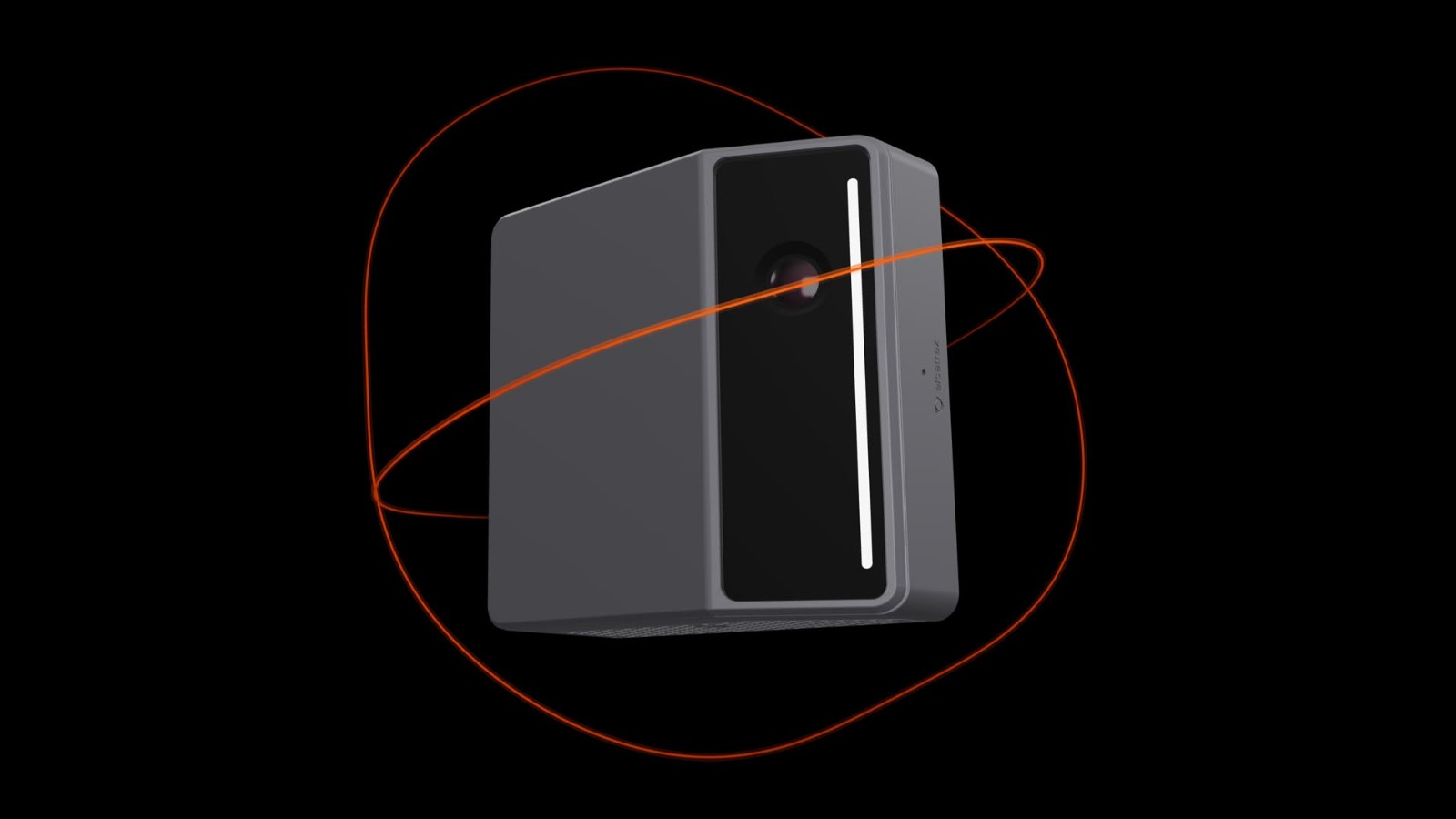
Airport security directors stand at a critical decision point. Legacy access control methods designed for smaller facilities decades ago cannot address the complex workforce requirements, sophisticated threat landscape, and regulatory expectations that define modern airport operations. AI-powered biometric facial authentication, like The Rock and Rock X, offers a proven path forward that strengthens security while improving operational efficiency.
The airports leading this transformation aren't waiting for the perfect moment - they're starting with focused pilot programs in high-security areas, validating performance in real operational conditions, and expanding systematically. This pragmatic approach delivers quick wins that build organizational confidence and lay the foundation for comprehensive biometric access control across all restricted areas.
The question for airport security leaders isn't whether to adopt biometric access control, but when and how to begin the transition. The airports that move decisively today will operate tomorrow with security postures that match modern threats and operational efficiency that traditional systems cannot provide.
Ready to modernize your airport's employee access control? Discover how Alcatraz AI's privacy-first facial authentication technology can strengthen security for your restricted areas without disrupting daily operations.
Technologies validated by the National Institute of Standards and Technology (NIST) in their Face Recognition Vendor Tests (FRVT) ensure that these systems are accurate, unbiased, and reliable enough for high-security environments.