




How to prevent tailgating and secure your business with modern access control

Picture this: It's Monday morning. Your security manager reviews weekend access logs and discovers 47 unauthorized entries across three buildings. No alarms triggered. No forced entry detected. The culprit? Tailgating. Employees held doors open for people they assumed belonged there. This scenario plays out daily at enterprises worldwide, and the consequences extend far beyond a single breach.
Over 60% of companies faced physical breaches recently, costing an average of $100,000 per incident. When these breaches compromise sensitive data, costs skyrocket to an average of $10.22 million.
This guide explores these critical challenges and provides actionable solutions to protect your people and assets.
Key takeaways
- Physical security failures cost companies an average of $100,000 per incident, with costs skyrocketing to over $10 million when data is compromised.
- Traditional badges fail to prevent tailgating ("piggybacking") and credential sharing, leaving critical gaps in your security perimeter.
- Modern facial authentication verifies the person, not just the card, ensuring only authorized individuals gain entry.
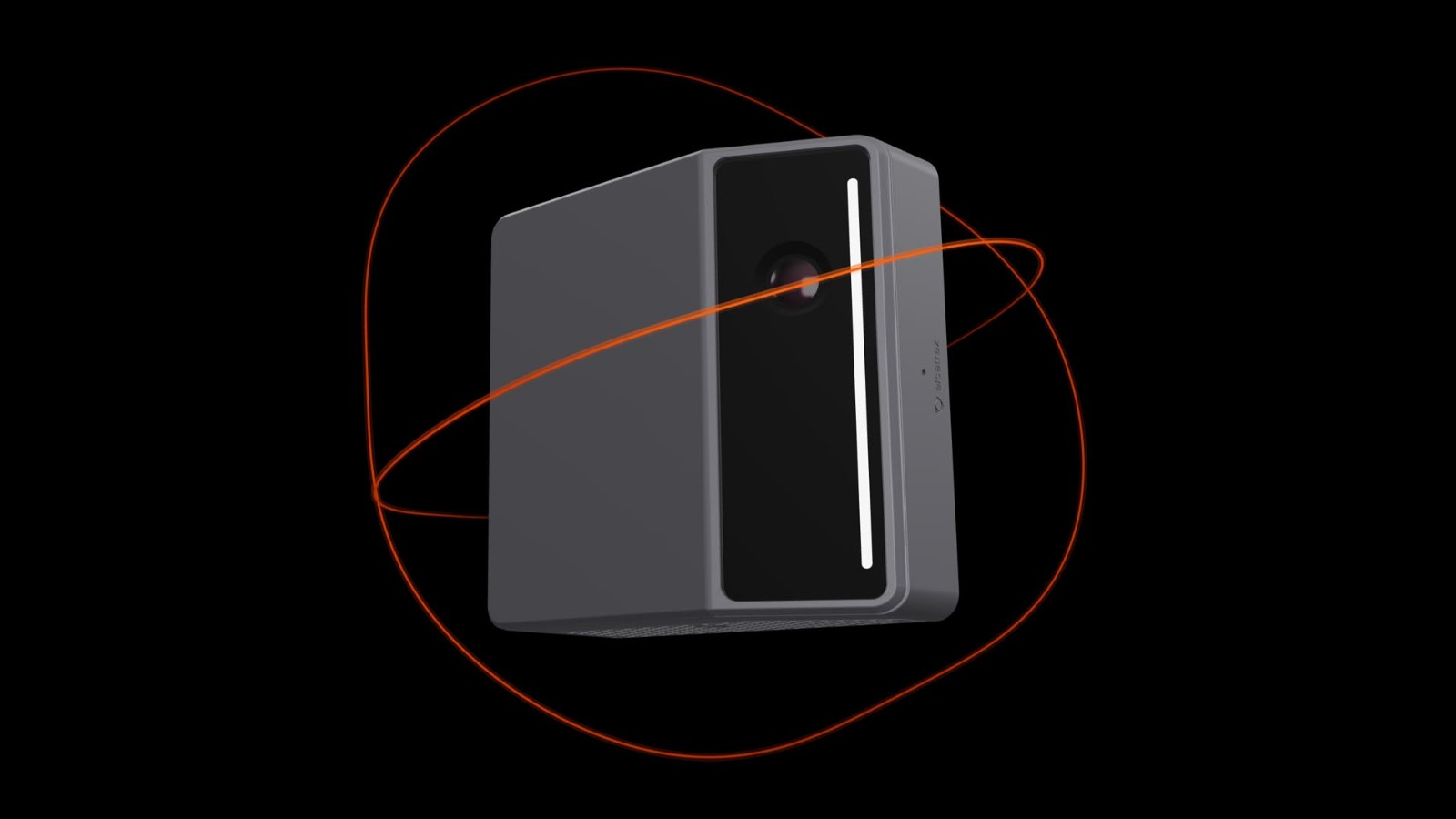
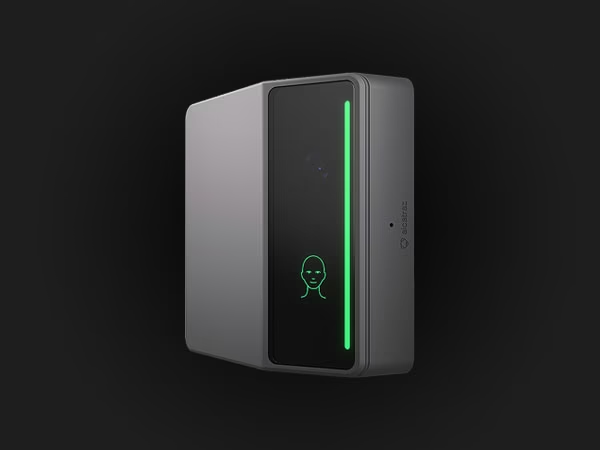
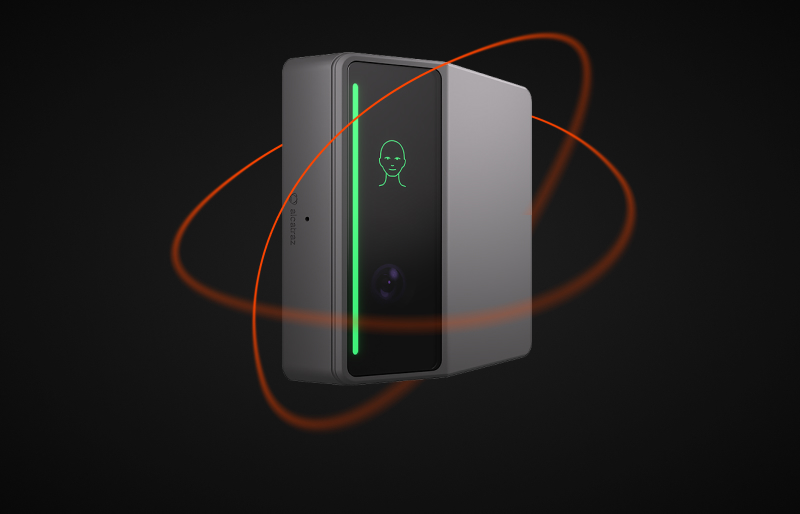
- Advanced AI solutions like the Rock X integrate natively with your existing infrastructure to upgrade security instantly.
- Robust physical access control is now a requirement for regulatory compliance (GDPR, HIPAA) and protecting sensitive data assets.

Why physical security vulnerabilities cost businesses millions
Physical security breaches generate substantial financial and reputational damage, not just inconvenience. Organizations that implement robust physical access control systems report fewer than five major security incidents annually, compared to companies relying on outdated methods.
The cascading cost of failure
The financial impact extends beyond immediate breach costs. Consider a 2024 breach at a financial services firm where stolen proximity cards enabled unauthorized access to sensitive client data. This single failure resulted in catastrophic outcomes:
- $50 Million Loss: Legal fees, regulatory fines, and client compensation skyrocketed. According to the IBM Cost of a Data Breach Report 2024, the financial sector continues to face the highest breach costs globally.
- Catastrophic Outcome: A prime example of how physical security gaps lead to massive financial damage, proving that digital data is only as secure as the building it’s stored in.
Market growth and prevention
The biometric access control market is responding to these challenges with unprecedented growth.
- Current Size: The global market reached $6.8 billion in 2024.
- Future Projection: Projected to hit $17.4 billion by 2033.
- Growth Rate: Expanding at an 11.2% compound annual growth rate.
This expansion reflects enterprises prioritizing secure entry systems that genuinely prevent unauthorized access rather than simply logging it after the fact.
Understanding tailgating: The most overlooked security threat
Tailgating represents one of the most common yet preventable security vulnerabilities facing organizations today. Security professionals know it as "piggybacking"—when unauthorized individuals follow authorized personnel through access points without presenting valid credentials.
What does tailgating mean in access control?
Tailgating detection technology identifies when multiple people pass through a secured entry point using a single credential. Traditional access control relies on badge readers that authenticate credentials, but can't verify whether additional people slip through behind the authorized user.
Market Growth & Recognition
The tailgating detection market is experiencing rapid growth, reflecting increasing recognition that credential validation alone is insufficient.
- Projected Value: Market to reach $35.1 million by 2032.
- Growth Rate: Expanding at a 7.4% CAGR.
- The Need: Organizations require systems that authenticate individuals AND verify that only authorized people gain entry.
Real scenarios where tailgaters breach your facility
Tailgating occurs in predictable patterns that security teams must address. Here are common vulnerability points:
- Morning Rush Vulnerabilities
During peak times (8:00-9:00 AM), authorized users often hold doors for colleagues. A financial institution discovered this when an unauthorized individual accessed secure trading floors simply by wearing business attire and carrying coffee.
- Delivery and Vendor Access
Attackers exploit social engineering by posing as service personnel. One healthcare organization suffered a significant data breach when an intruder in a contractor uniform tailgated into IT server rooms and stole hard drives containing patient records.
- Exit Lane Exploitation
Tailgaters don't just follow people entering; they also exploit exits. Organizations without anti-passback controls create bidirectional vulnerability, allowing unauthorized access through exit lanes.
A Technological Solution
While you should encourage employees to follow "one-credentialed-person-per-entry" protocols, relying on human vigilance alone is risky. People naturally hold doors open out of courtesy. Effective security requires technological solutions that detect and alert security teams to tailgating attempts in real-time.
The hidden cost of credential sharing and ID fraud
Credential sharing creates security vulnerabilities that many organizations drastically underestimate. When employees share access badges, organizations lose audit trail integrity and create unauthorized access pathways that bypass standard security controls.
Why employees share access badges
Despite security policies prohibiting the practice, credential sharing remains prevalent. Employees often share badges for convenience in common scenarios:
- Forgetting Credentials: Colleagues lend badges to those who left theirs at home.
- Contractor Access: Helping workers who lack proper access to bypass slow processes.
- Avoiding Bureaucracy: skipping provisioning steps they perceive as cumbersome.
Research shows that shared credentials dramatically increase unauthorized access risk. This creates compliance nightmares for organizations subject to regulatory requirements like GDPR, HIPAA, or SOX. When multiple people use the same credentials, investigators cannot definitively determine who accessed the facility.
How biometric access control eliminates credential fraud
Biometric access control solves credential sharing by authenticating individuals based on unique physical characteristics rather than possessable tokens.”You can lend your badge, but you cannot lend your face.”
Facial authentication provides the optimal balance between security and user experience. Unlike cards or PINs, this technology requires the authorized person to be physically present. It verifies identity in milliseconds as users approach the access point, enabling authentication at walking speed.
Privacy by Design Architecture
Modern systems address legitimate biometric privacy concerns through smart engineering. Systems like Alcatraz AI’s Rock X utilize advanced privacy features:
- No Image Storage: They never store actual facial images.
- Encrypted Templates: They create mathematical templates that cannot be reverse-engineered.
- Full Compliance: This ensures adherence to BIPA, CCPA, and GDPR.
Organizations implementing biometric access control report significant security improvements. This certainty becomes critical for high-security environments like data centers and financial institutions, where unauthorized access creates catastrophic risk.

Physical access control systems that actually prevent unauthorized entry
Not all access control systems deliver equal security. Understanding the gap between legacy hardware and modern solutions is the key to protecting your organization effectively.
1. Legacy systems vs. modern secure entry systems
While 60% of organizations still rely on traditional ID badges, these legacy systems have a major flaw: they authenticate the card, not the person. This creates three critical vulnerability vectors:
- Lost Cards: Creating windows where missing credentials remain active.
- Stolen Cards: Providing attackers with complete access until reported.
- Cloned Cards: Letting attackers duplicate credentials without physical theft.
The Modern Solution
Modern secure entry systems use multi-factor authentication (combining a badge with biometric verification). This ensures that possession of a card alone is never enough to grant access—the system must verify the actual identity of the user.
2. Anti-passback technology explained
Anti-passback controls prevent credential abuse by tracking directional movement. Simply put, if a user badges "in," they cannot pass that badge back to a friend to badge in again.
How it protects you:
The system maintains a real-time status of every user. If a credential attempts to enter twice without an exit, access is denied. When combined with tailgating detection, this creates a comprehensive security layer that legacy systems cannot match.
3. Facial authentication for multi-layered security
Facial authentication is the most advanced, user-centric solution available. It provides frictionless security, verifying identity in milliseconds as users walk through the door, without slowing them down.
Why it matters:
- 3D Liveness Detection: Prevents spoofing using photos or videos.
- Zero-Touch Experience: No fumbling for cards or touching keypads.
Seamless Integration with Rock X
You don't need to replace your entire system to get this security. Solutions like the Rock X biometric access control system integrate natively with your existing infrastructure. This allows you to upgrade to enterprise-grade security while protecting your current technology investments.
Tailgating detection technology that works in real-world environments
Theoretical security solutions that fail in actual deployment scenarios provide zero protection. Effective tailgating detection must function reliably in the challenging conditions of real-world facilities during peak usage periods.
How AI-powered detection identifies unauthorized access
Advanced systems use 3D stereo vision and thermal imaging to distinguish between authorized users and tailgaters accurately. Unlike legacy motion sensors, AI analyzes spatial depth and body shape to determine exactly how many people are entering.
Why this matters for you:
- Reduces false alarms: The system differentiates between a person carrying a box and an actual tailgater, solving "alert fatigue."
- Continuous learning: Machine learning models improve accuracy by training on millions of access events across diverse facilities.
Real-time alerts that enable immediate response
Detection provides value only when it leads to action. Modern systems integrate with your video management systems (VMS) and access control platforms to provide comprehensive situational awareness.
Actionable intelligence
When the system detects potential tailgating, it immediately sends alerts to security operations centers, including thumbnail images of the individuals, exact location, time, and the credential used for legitimate access. This allows for immediate assessment and response.
- Smart Prioritization: The system adjusts alert urgency based on the zone (e.g., a data center breach is flagged higher than a lobby entry).
- Proven Results: One Fortune 500 financial company reduced unauthorized access incidents by 87% within six months of deploying AI-powered detection.
Protecting sensitive data through physical security measures
Cybersecurity dominates security discussions, but physical breaches create equally devastating data exposure. Comprehensive data protection requires addressing both digital and physical attack vectors.
The connection between physical breaches and data theft
Physical access to facilities, devices, and documents creates direct pathways to sensitive information.
The 2025 global average data breach cost reached $4.44 million, and many high-profile breaches begin with simple physical failures—like stolen laptops or unauthorized server room access.
The Physical Attack Chain
An intruder doesn't need to hack a firewall if they can walk through the front door.
- Entry: Tailgating during off-hours or shift changes.
- Access: Moving through unlocked interior spaces to desks or server rooms.
- Theft: Stealing devices or connecting rogue hardware to network ports.
Defense in Depth
To prevent this, you need layered controls. Robust access control at building perimeters and interior secure zones forces attackers to pass through multiple authentication barriers before reaching data assets.
Compliance requirements for access control systems
Regulatory frameworks increasingly recognize the connection between physical security and data protection. GDPR, HIPAA, and SOX all mandate appropriate physical security controls to protect sensitive information.
Organizations must demonstrate they implement reasonable physical safeguards, including:
- Restricting facility access to authorized personnel only
- Maintaining audit logs of who accessed sensitive areas and when
- Implementing controls to prevent unauthorized individuals from gaining physical access to data
- Regularly reviewing and updating access permissions
The Biometric Advantage
Biometric access control systems simplify compliance by providing definitive identity verification. Every access event is linked to a specific, verified individual—not just a plastic card.
- Accountability: Creates the audit trails regulators require.
- Privacy-First: Modern systems never store facial images, ensuring you meet data protection requirements while maintaining high security.
Upgrading aging infrastructure without ripping and replacing
Aging facility infrastructure creates security challenges, but you don't need complete system replacements to achieve modern security outcomes. Strategic upgrades deliver substantial improvements while preserving your existing technology investments.
Modern legacy access control upgrade paths
Older buildings often lack the power or network infrastructure for new systems. Security leaders need solutions that work with constraints, not against them.
- The Smart Solution: Focus on augmenting existing systems rather than replacing them. Solutions that integrate through standard protocols (Wiegand, OSDP) enable you to add advanced biometric authentication and AI-powered tailgating detection while keeping your current card readers, controllers, and software.
Key Benefits:
- Preserves Investment: Avoids costly full replacements of functional hardware.
- Familiar Interface: Keeps the user interface your security team already knows.
- Reduced Risk: Enables incremental upgrades rather than a risky "all-at-once" switch.
Phased deployment and resource allocation
Organizations successfully upgrade aging facilities by prioritizing the highest-risk access points first.
- Strategic Approach: Deploy advanced authentication at exterior entrances and high-security zones before addressing lower-risk interior doors. This phased approach delivers maximum security improvement with optimized budget allocation.
- Seamless Integration: Facial authentication systems designed for legacy integration provide elegant upgrade paths. They mount at existing access points and deliver enterprise-grade security without requiring infrastructure overhauls.
- Market Validation: The access control market's 119% growth reflects a clear trend: organizations recognize they cannot rely on legacy-only approaches. Strategic modernization enhances your system without replacing it, respecting both your budget and infrastructure realities.
Ready to eliminate tailgating and strengthen your physical security?
The threats facing your facilities continue to evolve, and your security infrastructure must keep pace. Alcatraz AI’s facial authentication solutions integrate seamlessly with your existing access control to prevent tailgating and eliminate credential sharing without replacing your current system.
Schedule a demo with our experts today to design a modernization strategy tailored to your specific needs.