




Facial biometrics vs iris biometrics: which is more secure?

Traditional access control methods like badges and PINs have become liabilities. The modern choice isn't just about adopting biometrics, but choosing the right modality. Security professionals must decide between two leading contenders: facial biometrics vs iris biometrics.
While both offer stronger security than proximity cards, they differ significantly in throughput, user experience, and operational friction. Here is how to determine which technology delivers the strongest security for your environment:

Key Takeaways
- The facial authentication market is projected to reach $59.7 billion by 2026, driven by the demand for frictionless and touchless entry.
- 61% of organizations report tailgating as their most prevalent security breach, a vulnerability that advanced facial AI detects but traditional iris scanners often miss.
- Facial authentication allows for high-throughput access from 3 to 10 feet away, unlike iris biometrics, which requires precise positioning within inches.
- Modern privacy-first systems protect user data by converting facial features into encrypted templates rather than storing actual images.
- While iris scanning excels in static, high-security niches, facial authentication provides the optimal balance of security and speed for modern enterprises.
Understanding the core technological differences
Biometric authentication relies on capturing unique physiological patterns to verify identity. While both facial and iris modalities offer higher security than traditional credentials, their underlying mechanisms create distinct differences in how users interact with the system daily.
The mechanics of facial authentication
Modern facial systems use multispectral imaging and AI to verify identity. The process creates an encrypted mathematical template based on unique features like the distance between the eyes and the nose shape.
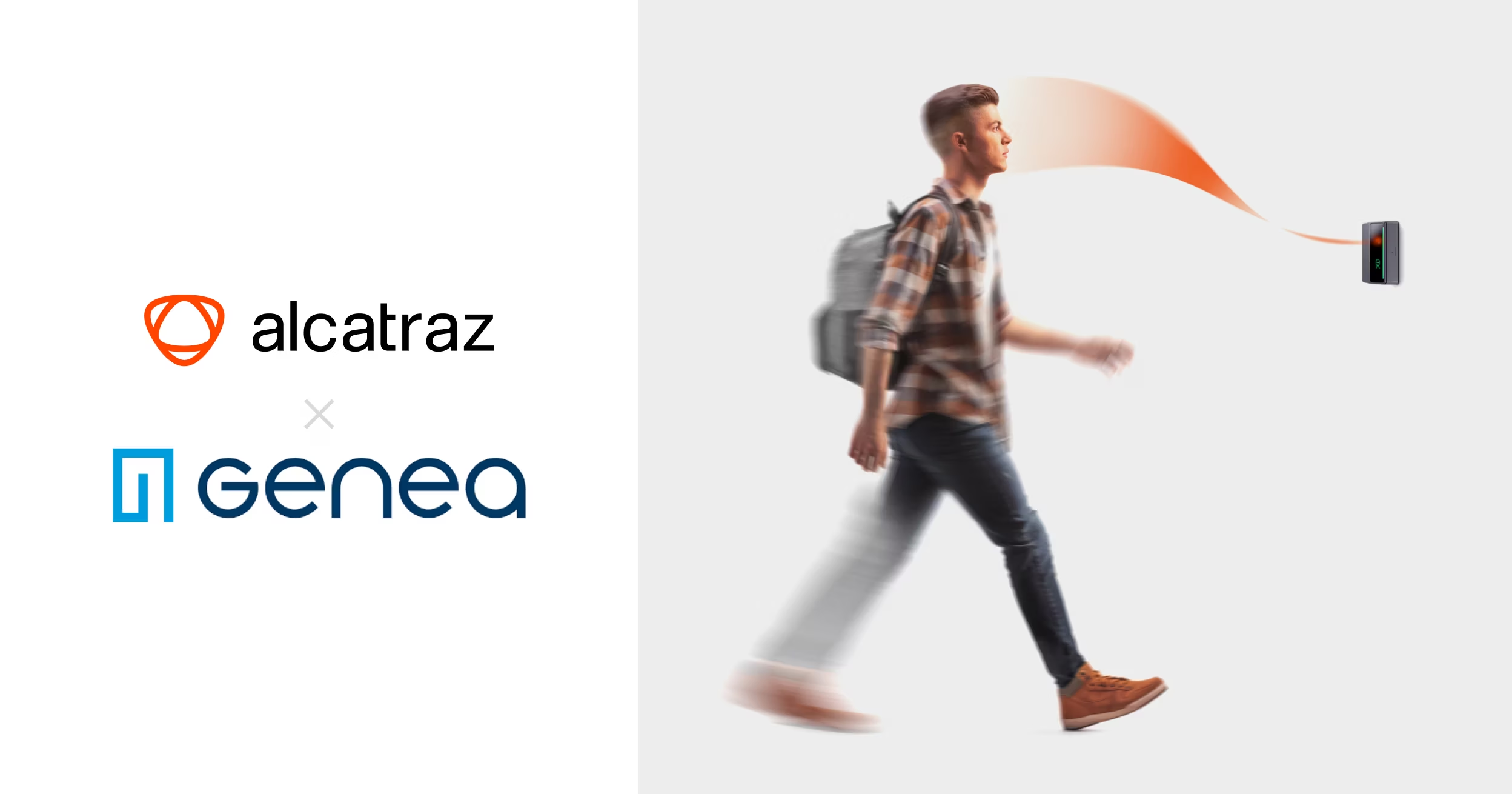
- Touchless operation: It works at a distance (3-10 feet), allowing users to be authenticated while walking.
- AI adaptation: Algorithms adjust to changes in lighting, facial hair, or glasses.
- Growth: 68% of Fortune 500 companies now embed facial analytics in their security infrastructure, with the market growing from $7.92 billion in 2025 to a projected $20.88 billion by 2030.
The mechanics of iris recognition
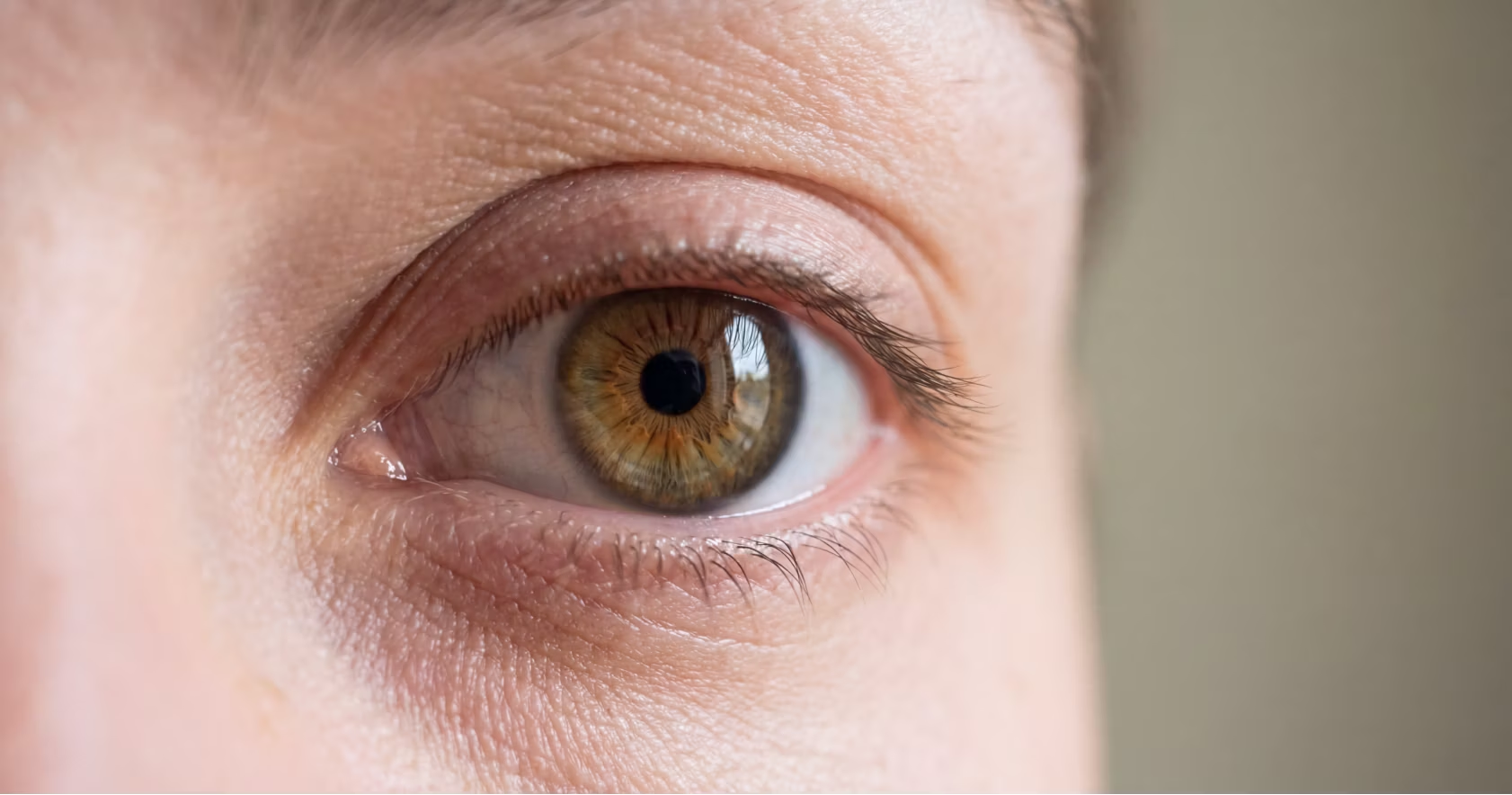
Iris recognition uses infrared light to capture the intricate patterns of the colored ring around the pupil to create a highly specific template.
- High complexity: The iris contains over 240 degrees of freedom, creating a highly unique template.
- Precision required: Users must position their eyes precisely within a small capture zone that is typically 3 to 12 inches from the sensor.
- Limitations: It struggles with certain contact lenses or glare from glasses, often requiring users to stop and adjust.
Comparing operational efficiency across different environments
Security directors must balance the need for stringent verification against the reality of employee throughput. The physical layout of your entry points and the volume of daily traffic significantly influence which biometric modality performs best in your specific facility.
Corporate and enterprise access
Throughput is the priority here because thousands of employees may arrive at a headquarters within a short window.
- Facial biometrics: It eliminates bottlenecks because users authenticate at walking speed without stopping. This frictionless experience is why the market is projected to reach $59.7 billion by 2026.
- Iris biometrics: It can create lines during rush hours due to the precise positioning required for each scan.
High-security government and financial zones
In areas like bank vaults or server rooms, speed is often secondary to absolute verification and distinctiveness.
- Iris biometrics: It is traditionally favored here for its distinctiveness and high accuracy in controlled settings.
- Facial biometrics: It has closed the gap as modern systems now offer multi-factor authentication to provide zero-trust security without the complexity of iris scanners.
Analyzing security, reliability, and resistance to spoofing
The effectiveness of an access control system is defined by its ability to reject unauthorized attempts without impeding legitimate users. Organizations must evaluate how well each technology resists sophisticated spoofing attacks and addresses common breaches like tailgating.
Preventing tailgating and spoofing
Legacy RFID cards are easily cloned, and a 2024 Quarkslab security report exposed backdoors in widely used MIFARE Classic smart cards that allow cloning in minutes. Biometrics solve this, but they must also stop piggybacking.
- The tailgating problem: This is significant as 61% of organizations report tailgating as their most prevalent breach.
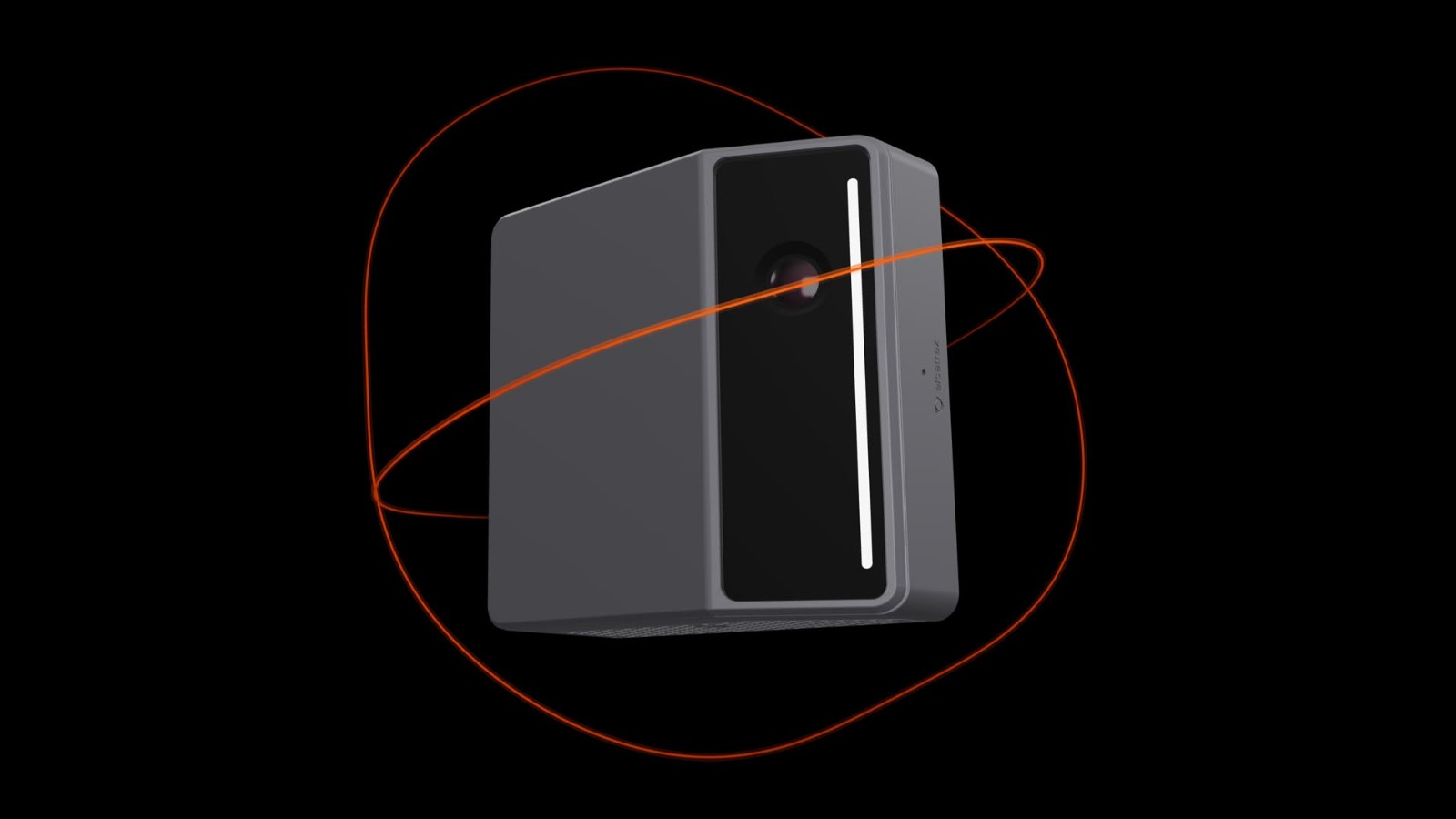
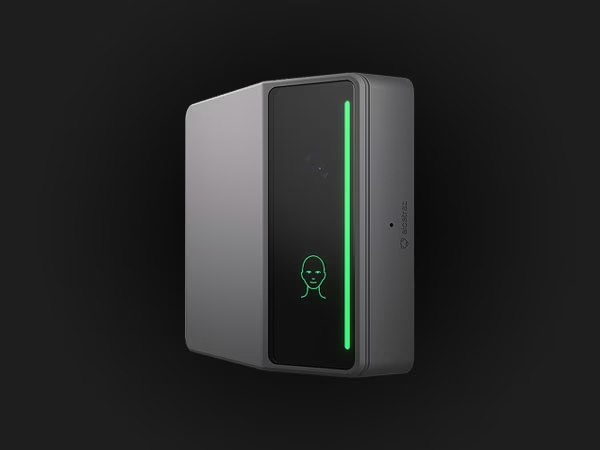
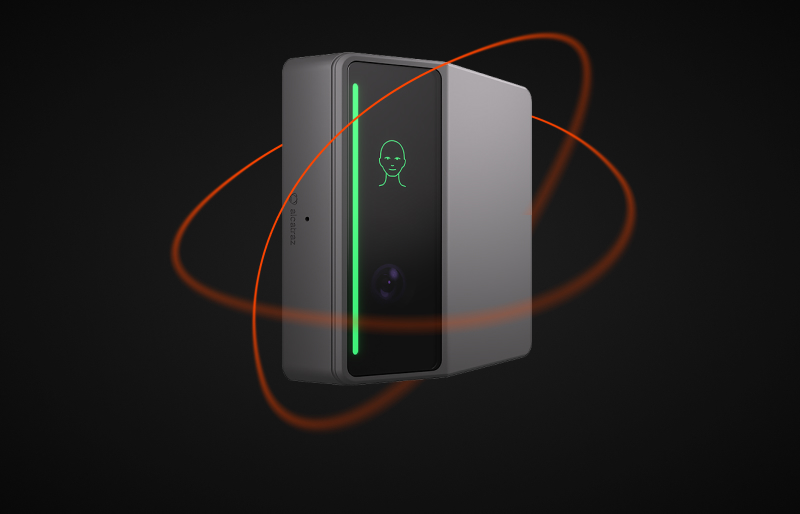
- The facial advantage: This capability in advanced solutions like the Alcatraz Rock uses computer vision to detect if multiple people enter on a single authentication. If an unauthorized person follows an employee, then the tailgating detection system triggers an alert.
- The iris limitation: This exists because traditional scanners verify the person at the sensor, but often fail to detect someone slipping in behind them.
Accuracy metrics in practice
Leading facial systems now demonstrate a False Non-Match Rate of less than 0.65% at 1 in 100,000 FMR across all demographic groups in NIST testing. While iris scanners are highly accurate in ideal conditions, their performance degrades in the real world.
A fusion study found that iris accuracy drops significantly with poor user positioning or lighting, while facial systems maintained consistent performance across varying conditions.
Ensuring data privacy and regulatory compliance
Handling sensitive biometric data requires a rigorous approach to data protection and legal compliance. Organizations must implement systems that prioritize user privacy through encryption and strictly adhere to evolving regulations like BIPA and GDPR.
Template storage vs image storage
A common misconception is that biometric systems store photos. Privacy-first facial authentication converts facial features into encrypted binary code known as templates.
- Templates: They cannot be reverse-engineered to recreate a face.
- Difference: This differs fundamentally from surveillance systems that store searchable image databases.
Navigating regulations
Whether operating in Illinois under BIPA or Europe under GDPR, your system must support specific privacy standards.
- Opt-in enrollment: This ensures users voluntarily provide data.
- Data retention policies: These allow for automated deletion of data when no longer needed.
- Audit logging: This keeps a secure record of data access.
Evaluating deployment requirements and long-term maintenance
Implementing a new access control technology involves more than just purchasing hardware. Decision makers need to consider the complexity of installation, the ease of integration with existing infrastructure, and the ongoing maintenance required to keep the system secure.
Installation and integration
- Iris systems: They often require precise mounting at eye level, which can be challenging for user populations of varying heights and may require structural modifications.
- Facial systems: They offer flexible mounting options because devices capture users from a distance and accommodate tall or short users without adjustment.
- Integration: This is seamless with systems supporting OSDP and Wiegand standards. This allows facial readers to act as drop-in replacements for existing card readers, often supported by A&E Consultants, and can be installed in under an hour.
Choosing the future-proof solution for your enterprise
While iris biometrics serve a niche for static and high-security checkpoints, the future of physical security is undoubtedly facial authentication. Organizations are moving toward solutions that offer high security without compromising the user experience.
The facial recognition market is projected to reach $36.75 billion by 2035, growing at a 14.73% CAGR, driven by the ability to combine high security with a passive and welcoming user experience.
It solves the three biggest pain points of modern access control, which are unauthorized badges, slow throughput, and undetected tailgating.
Ready to transform your physical access control with privacy-first facial authentication?
Alcatraz AI delivers enterprise-grade security without compromising user experience. Our Rock X solution integrates seamlessly with your existing infrastructure, providing touchless authentication that works at the speed of business.
Request a demo to see how facial biometrics can eliminate credential vulnerabilities while detecting tailgating attempts that your current system misses.