




How AI-powered access control stops tailgating and unauthorized entry

A simple act of kindness, like holding a door open, often creates the biggest gap in your perimeter security. While legacy badge systems verify credentials, they cannot stop unauthorized individuals from walking in behind your staff.
Tailgating represents one of the most persistent vulnerabilities in physical security, yet many organizations still rely on outdated methods that fail to address this critical threat. True security requires AI solutions that validate the person rather than just the card to ensure only authorized personnel gain access.
Key takeaways
- Tailgating (and the closely related “piggybacking”) happens when an unauthorized person follows an authorized person through a secured entry without presenting their own credentials.
- Don’t rely on badges, PINs, or cards alone—they validate a credential, not the person, so they can’t consistently stop someone from slipping in behind an employee.
- Use AI-powered facial authentication to make the person the credential, so you speed up entry while strengthening security with tailgating detection and “video at the door” incident evidence.
- Modern solutions can integrate with existing access control systems (ACS) using standard protocols (e.g., Wiegand/OSDP) and can support cloud or on‑prem deployment, making upgrades more practical.
- A privacy-first approach (opt-in enrollment, encrypted templates, and separation between ACS data and biometric system data) supports adoption and helps meet privacy expectations.

What is tailgating in access control?
Tailgating occurs when an unauthorized person follows an authorized individual through a secure entry point without providing their own credentials. Security professionals also call this “piggybacking,” though the terms differ slightly. Tailgating happens without the authorized person's knowledge, while piggybacking involves their consent.
The problem extends far beyond someone sneaking into a building. Once inside, tailgaters can cause significant damage by:
- Accessing sensitive data and confidential information
- Stealing equipment or valuable assets
- Installing malware on internal networks
- Conducting reconnaissance for future attacks
According to recent security assessments, 73% of tailgating attempts succeed when organizations lack proper detection systems.
Common tailgating scenarios that create security risks
Organizations face tailgating threats in several distinct situations:
- Morning rush periods: When dozens of employees enter simultaneously, security teams struggle to verify each individual.
- Delivery and maintenance access: External vendors create opportunities for unauthorized individuals to blend in with legitimate visitors.
- Courtesy holds: Employees hold doors open for people carrying packages or appearing to struggle with access credentials.
- Emergency exits: Individuals enter through exits that lack proper authentication controls, circumventing front-door security entirely.
In 2024, an unauthorized breach at a major telecommunications facility resulted in a data leak costing over $50 million in legal fees and remediation. This entire incident occurred simply because someone gained access using a stolen proximity card and tailgated through a secondary entrance.

Why tailgate detection matters for modern organizations
Unauthorized access creates cascading security failures that extend throughout an organization. When your physical security perimeter fails, every other security measure becomes compromised.
The real cost of unauthorized entry incidents
Physical security breaches are increasing, and common methods like tailgating make up a large share of these incidents in organizations. These breaches can lead to serious financial losses and disrupt daily operations.
- Data theft and intellectual property loss
These expose organizations to competitive disadvantages and regulatory penalties. Once inside secure areas, unauthorized individuals can access confidential information, steal research materials, or photograph sensitive documents.
- Malware installation
Attackers who gain physical access can connect devices to network infrastructure to install keyloggers or compromise air-gapped systems that cannot be breached remotely.
- Workplace violence and safety threats
Organizations cannot protect their workforce when they cannot verify exactly who enters their facilities.
- Regulatory compliance failures
HIPAA, SOC 2, ISO 27001, and industry-specific regulations require organizations to demonstrate effective physical access controls. Tailgating incidents create audit failures and potential legal liability.
Legal and regulatory implications in the United States
Organizations operating in regulated industries face specific compliance requirements around physical access control:
- Financial institutions must satisfy strict audit requirements under SOX and federal banking regulations.
- Healthcare organizations must demonstrate HIPAA compliance for areas containing patient information.
- Government contractors need to maintain CFATS and NISPOM standards for facility access.
The average cost of achieving regulatory security compliance reached $3.5 million annually in recent surveys. This makes automated access control systems an essential investment rather than an optional upgrade.
How traditional access control methods fail to prevent tailgating
Legacy security approaches create a false sense of protection while leaving critical vulnerabilities unaddressed. Understanding these limitations helps organizations recognize why modern solutions have become necessary.
Limitations of keycards, PINs, and badges
Traditional credential-based systems suffer from fundamental security weaknesses that make tailgating prevention nearly impossible.
1. Credential sharing undermines authentication
Employees routinely share access cards with coworkers, contractors, and even family members. A security survey found that 49% of security breaches involved compromised or shared credentials that bypassed authentication controls.
2. Lost and stolen credentials create persistent threats
Many organizations regularly need to replace lost access cards, which leads to added costs and temporary security risks while new cards are issued.
3. Cards don't verify identity
A proximity card reader cannot determine whether the authorized cardholder actually presented the credential. Anyone holding a valid card gains access, regardless of whether they should have it.
4. PIN systems fail through observation and sharing
Employees enter PINs in public view, making them vulnerable to shoulder surfing. Shared PINs for group access eliminate accountability.
Why security guards cannot scale
Human monitoring creates inherent limitations that prevent consistent tailgating detection. Security personnel cannot simultaneously watch multiple entry points during peak traffic periods. Attention fatigue reduces detection effectiveness after extended shifts. Guard rotations create inconsistent enforcement as different personnel apply varying levels of scrutiny.
The human element also introduces social engineering vulnerabilities. Employees feel uncomfortable challenging colleagues or visitors, even when they lack proper credentials. Attackers exploit this reluctance by appearing confident, carrying packages, or claiming to have forgotten their access card.
Biometric access control: The modern solution to tailgating prevention
The biometric access control market reached $6.94 billion in 2024, and it’s projected to expand to $7.92 billion in 2025. This growth is driven largely by organizations seeking more effective tailgating prevention and reflects a fundamental shift in how enterprises approach physical security.
How Alcatraz facial authentication eliminates credential vulnerabilities
Facial authentication transforms access control by making the person themselves the credential. You cannot share, lose, steal, or forget your face.
- Speed and efficiency
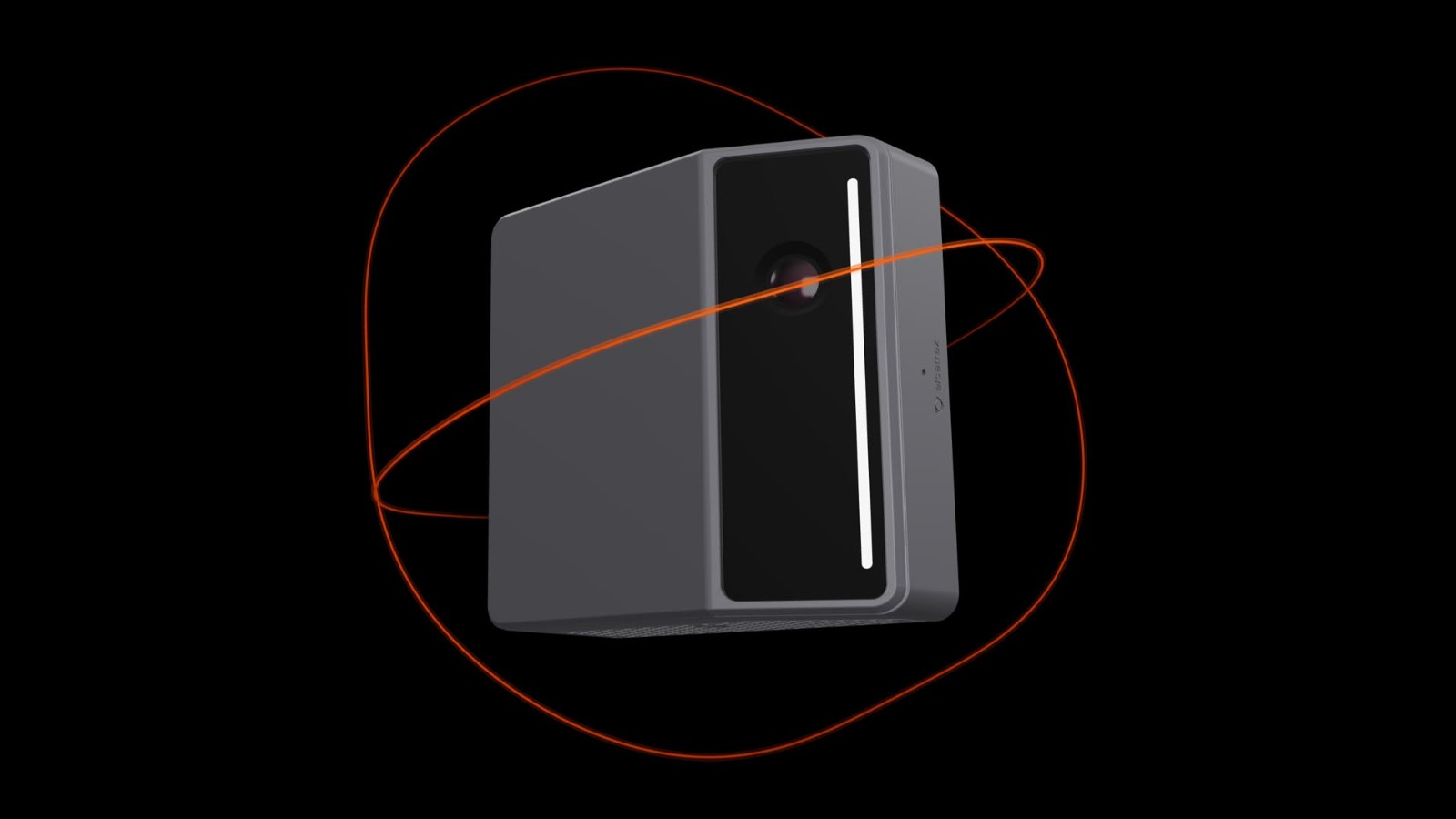
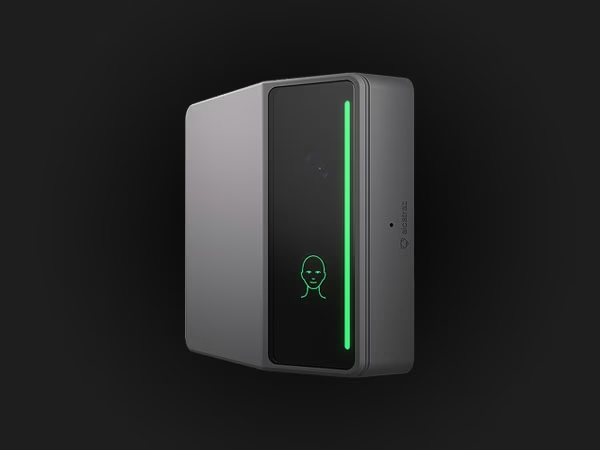
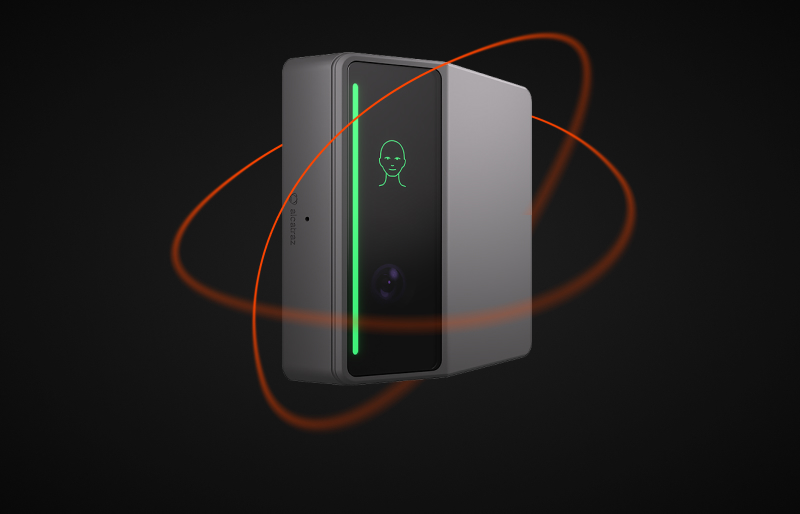
The Rock X authentication process happens in seconds as individuals approach an entry point. Advanced systems capture facial geometry and convert it into an encrypted template. It compares that template against enrolled users, all before the person reaches the door.
- Opt-in enrollment
This ensures privacy compliance and user consent. Employees enroll through a simple process that captures their facial features to create a mathematical template. The system never stores actual face images, only encrypted representations that cannot be reverse-engineered.
- Template-based privacy
The system converts each face into a unique numerical template using one-way, non-reversible algorithms. These templates remain encrypted and stored securely. Processing happens locally at the device rather than in the cloud.
- Multi-factor authentication
Organizations can combine facial authentication with additional verification methods for high-security areas. Requiring both facial authentication and badge presentation creates layered security. This prevents unauthorized access even if one factor becomes compromised.
Real-time tailgating detection with Alcatraz AI access control
Alcatraz Al’s biometric systems do more than verify the authorized person. They also detect when unauthorized individuals attempt to follow them through secure entry points.
- Individual tracking: The system identifies each person approaching an access point. It distinguishes between multiple individuals and tracks whether each person successfully authenticates before entering.
- Automatic alerting: Security personnel are notified immediately when the system detects unauthorized entry attempts. Teams receive real-time notifications with still images and video of the incident, enabling rapid response.
- Comprehensive audit trails: Every access event is documented with timestamps, user identities, and video evidence. This documentation supports security investigations, compliance reporting, and forensic analysis when incidents occur.
A recent survey found that 39% of businesses now use biometrics for physical access control, up from 30% two years ago. Security professionals cite tailgating prevention as one of the primary drivers for this adoption.
Implementing tailgate detection and integration with existing access control infrastructure
Our tailgating detection solution works with your current security systems rather than requiring a complete system replacement.
- Native protocol support: This enables new detection systems to communicate with established access control platforms. Solutions supporting Wiegand and OSDP protocols integrate with virtually any existing system, preserving your investment while adding advanced capabilities.
- Phased deployment strategies: These allow organizations to modernize high-priority areas first, then expand coverage as budget permits. Start with areas facing the greatest tailgating risk and demonstrate ROI before scaling.
- Cloud and on-premises options: These provide flexibility for organizations with specific data residency or infrastructure requirements. Choose deployment models that align with your IT policies and security frameworks.
Ready to eliminate tailgating vulnerabilities with Alcatraz AI?
Alcatraz AI delivers the industry’s most effective tailgating detection solution, closing the security gaps left by traditional badge systems. See why Fortune 500 organizations trust our privacy-first technology to actively prevent unauthorized entry and safeguard their workforce without compromising convenience.
Schedule a demo today to explore how the Rock X uses AI-powered facial authentication to transform your physical security posture.