




Zero trust security for data centers: biometric authentication + continuous verification
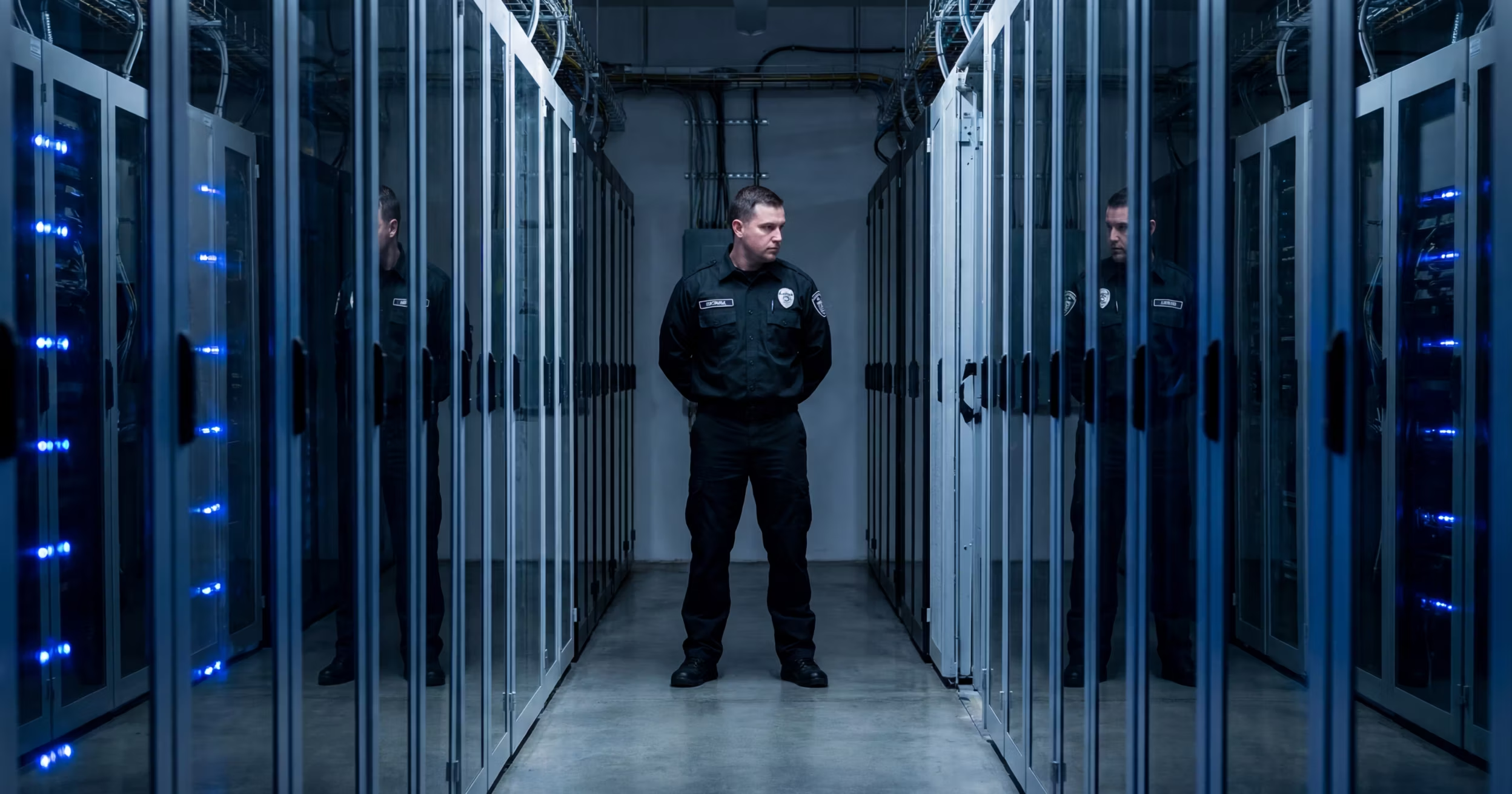
Securing a data center means protecting the absolute core of modern business operations. Yet traditional security perimeters constantly fail when tested by sophisticated threats. According to IBM's 2024 Cost of a Data Breach Report, the average cost of a data breach hit a staggering $4.88 million. If you rely solely on legacy keycards and standard firewalls, you leave your most critical assets vulnerable.
You need zero-trust security for data centers to close the dangerous gap between physical and digital vulnerabilities.
Key takeaways
- The average cost of a data breach has reached $4.88 million, proving that legacy keycards and standard perimeters are no longer sufficient for data center security.
- Over 68% of breaches involve human factors, such as lost or stolen credentials, highlighting the critical need to verify actual identity rather than just plastic cards.
- Physical zero-trust architecture requires continuous authentication and micro-segmentation to ensure "never trust, always verify" at every single door and server cage.
- Biometric facial authentication forms the foundation of modern access control by eliminating credential sharing and preventing unauthorized entry, such as tailgating.
- Advanced biometric systems use encrypted mathematical templates rather than storing actual photos to maintain peak security while complying with NIST, CCPA, and GDPR via the privacy trust center.
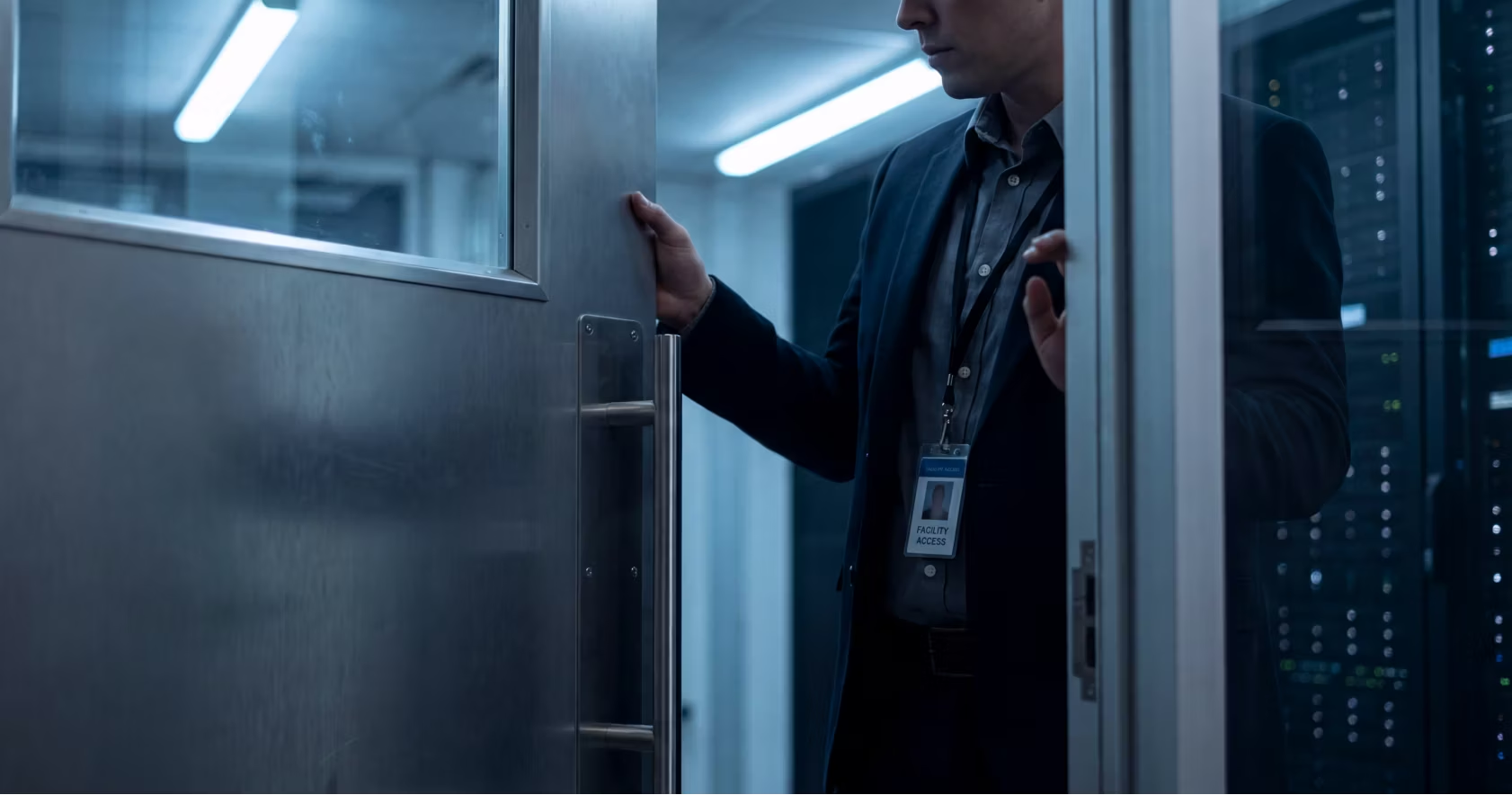
Understanding zero-trust architecture in data centres
Moving to a zero-trust model fundamentally shifts how security teams manage access across the facility. You stop assuming trust based on the mere possession of a credential and start demanding absolute proof of identity at every checkpoint.
Definition and core principles of zero trust
Zero trust architecture operates on a simple, unforgiving mandate: "never trust, always verify." Historically, security teams built strong perimeters around data centers but allowed users free rein once inside. Modern zero-trust data center security eliminates this blind spot. To achieve this, you must enforce three core principles:
- Continuous authentication: Constantly verifying users at every checkpoint rather than just at the perimeter
- Breach assumption: Operating under the mindset that breach attempts are imminent and already inside the network
- Least privilege access: Strictly enforcing access control across all zones so users only get the access they absolutely need
Why data centers need a zero-trust approach
Threat actors actively exploit the weakest link in your security chain: human behavior. The 2024 Verizon Data Breach Investigations Report (DBIR) notes that over 68% of breaches involve a non-malicious human element, including the use of lost or stolen credentials.
Imagine a busy morning at a colocation data center. A senior network engineer drops their proximity card in the parking lot. A malicious actor picks it up, walks through the main entrance and accesses the server floor. This happens because the legacy system only validates the plastic card, not the human holding it. This scenario drives the urgent need for a physical zero-trust architecture that anchors access to real identity.

Physical zero trust architecture: fundamentals and strategies
Applying physical zero-trust requires a massive upgrade from legacy access control systems. You must integrate identity-first checks at every physical chokepoint to prevent unauthorized lateral movement.
Key elements of a physical zero-trust architecture
Instead of granting blanket access to the entire data center, you restrict access on a room-by-room basis. When designing your defense in depth strategy, you should implement these core components:
- Identity validation: Tying access permissions directly to the actual human being requesting entry.
- Micro segmentation: Dividing the facility into secure zones requiring independent authentication.
- Continuous monitoring: Tracking user movements in real time to spot anomalies immediately.
Integrating physical and logical security controls
Cyber and physical security cannot operate in silos. You must tie logical network access to physical presence. Gartner projects that by 2026, 10% of large enterprises will enforce mature, comprehensive zero-trust programs that fully integrate physical and cyber defenses. If an employee logs into a secure server from a remote IP address, but your access control system shows they just badged into the physical server room, your integrated system should instantly flag this impossible travel scenario and lock down access.
The role of biometric authentication in zero-trust security
Credentials verify what someone carries, while biometrics verify exactly who someone is. This critical distinction makes biometric access control for data centers the strongest possible foundation for secure environments.
Advantages over card and PIN-based systems
Employees share access cards. They forget complex PINs. They write passcodes on sticky notes attached to their monitors. Data center biometric authentication eliminates these risks.
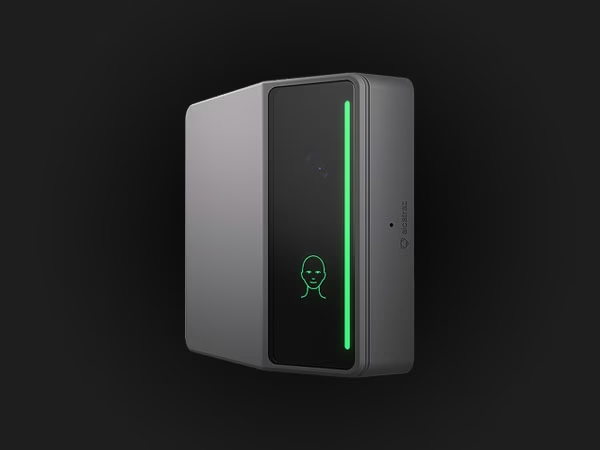
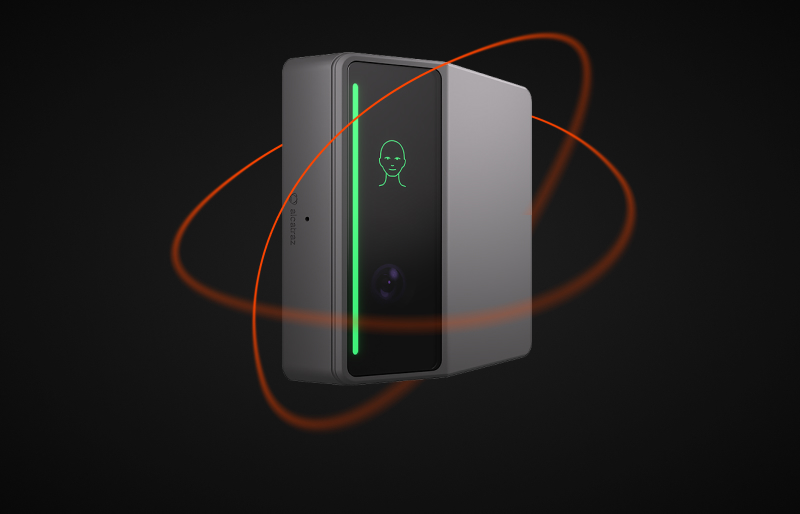
By using facial authentication for access control, you eliminate the friction of carrying physical tokens while significantly strengthening your security posture.
Continuous verification for secure data center access
Zero trust demands continuous verification for physical access. You cannot simply authenticate a user at the front door and trust them for the rest of their shift. Real-time identity validation ensures that the person accessing the restricted server cage is the same authorized individual who entered the building.
Consider a real-world scenario: An authorized technician enters a highly classified server room but intentionally props the door open to bring in equipment. Without continuous verification, an unauthorized person can slip in right behind them. Your system must instantly detect this anomaly.
Applying zero-trust principles to physical security layers
Implementing robust data centre access control requires strict adherence to security protocols at every door, server cage, and mantrap.
Combating tailgating and unauthorized entry
You enforce identity-first security by requiring multi-factor authentication (MFA) that includes a biometric element. MFA for data center security prevents threat actors from bypassing systems with stolen credentials.
Tailgating remains one of the most dangerous physical threats to critical infrastructure. Uptime Institute data consistently highlights human error and physical security lapses as major contributors to costly data center outages, with nearly 40% of organizations reporting major outages caused by human error over the past three years.
To build a layered defense that aggressively protects your assets, you need:
- Facial recognition zero-trust setups: Allowing authorized personnel to move seamlessly while blocking impostors.
- Advanced edge computing devices: Using AI to detect when two faces enter a frame, but only one authorized credential is presented
- Automated threat response: Instantly triggering alerts and locking subsequent doors during a breach attempt
Industry standards and compliance for data center physical security
Regulatory bodies demand strict adherence to zero-trust access frameworks to protect sensitive user data. You must align your facility with recognized security standards to avoid massive compliance penalties.
Meeting NIST guidelines and data protection regulations
The National Institute of Standards and Technology (NIST) Special Publication 800-207 mandates strict zero-trust architectures for federal and critical infrastructure systems. Compliance requires comprehensive audit trails detailing exactly who accessed which physical space and when.
Furthermore, you must balance this high security with user privacy. Modern compliance requires a privacy-first approach. Secure biometric systems do not store actual photos of employees; instead, they create an encrypted, anonymous mathematical template of the user's facial geometry. This ensures you maintain peak security without violating privacy regulations like the CCPA or GDPR.
Ready to secure your critical data centers with Alcatraz AI
Leading enterprise data centers and colocation facilities worldwide are replacing vulnerable credential systems with advanced biometric technologies that strengthen physical security and streamline daily operations.
Book a demo to learn how Rock X delivers frictionless zero trust access control tailored to the unique demands of high security data centers and why industry leaders choose Alcatraz AI to protect their most sensitive environments.