



Privacy-first facial authentication: the modern standard for higher education

Students today unlock their phones with a glance and verify banking transactions with their faces. Yet on campus, they still fumble with physical keycards and forgotten PINs. This gap between daily digital life and outdated campus security creates unnecessary friction and vulnerabilities.
The solution lies in privacy-first facial authentication. This technology respects student autonomy while providing the seamless, secure access they expect.
Key takeaways
- Cost Efficiency: Universities with 20,000 students spend over $200,000 annually on lost keycard replacements—an expense eliminated by facial authentication.
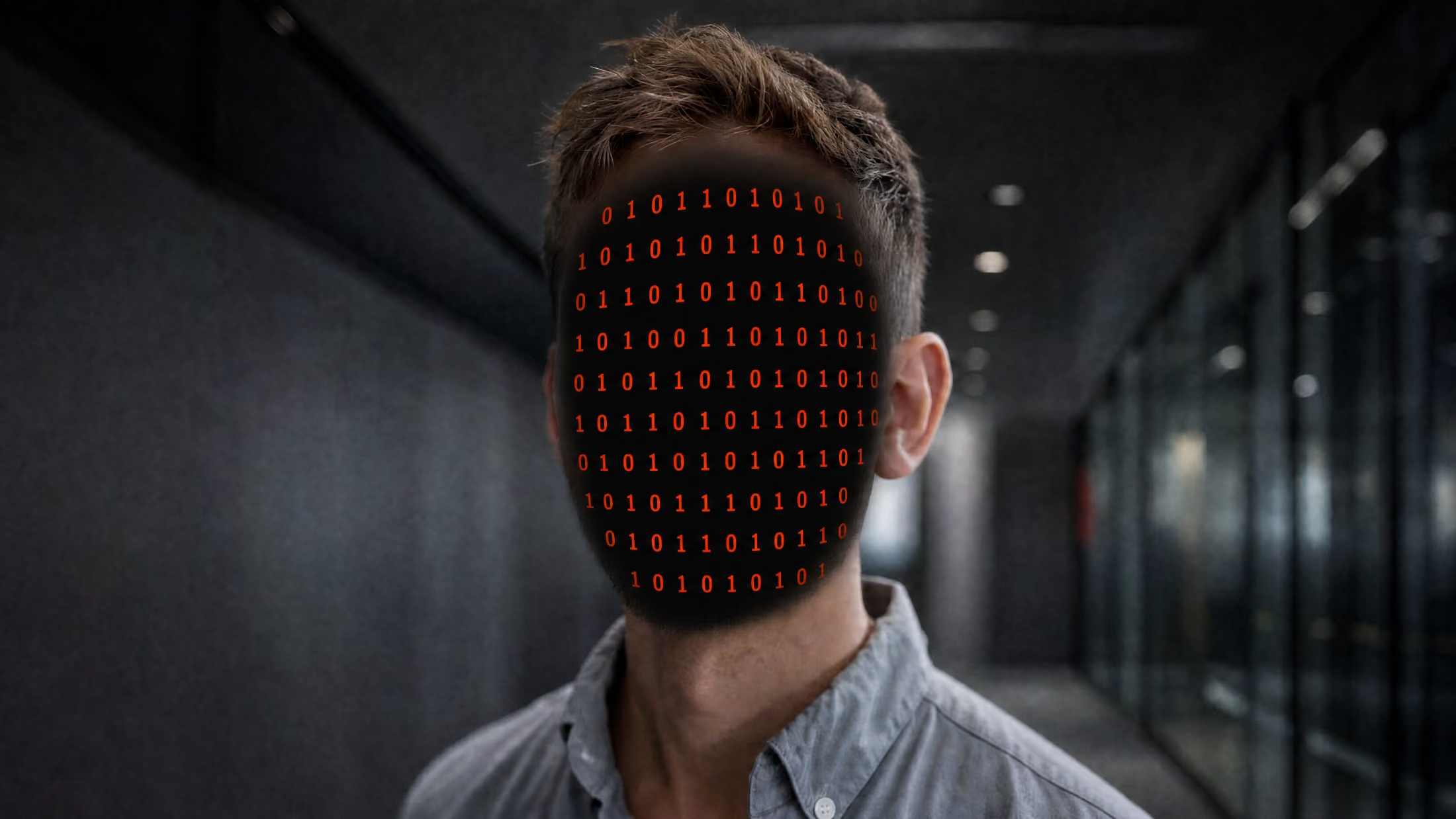
- Privacy-First Architecture: Modern systems convert facial geometry into Anonymous Facial Vectors, ensuring no actual photos are stored or can be recreated if accessed.
- Rapid Campus Adoption: In 2025, major institutions like UVA and George Mason deployed biometric credentials for over 69,000 students, moving away from legacy physical IDs.
- Market Expansion: The biometric authentication market is projected to reach $18.6 billion by 2033, driven by a 15.7% CAGR as sectors shift toward anti-spoofing identity solutions.
- Regulatory Compliance: Privacy-first solutions ensure FERPA compliance through data segregation and "opt-in" enrollment models, bridging the gap between security and student trust.
Evolving campus security needs in the United States
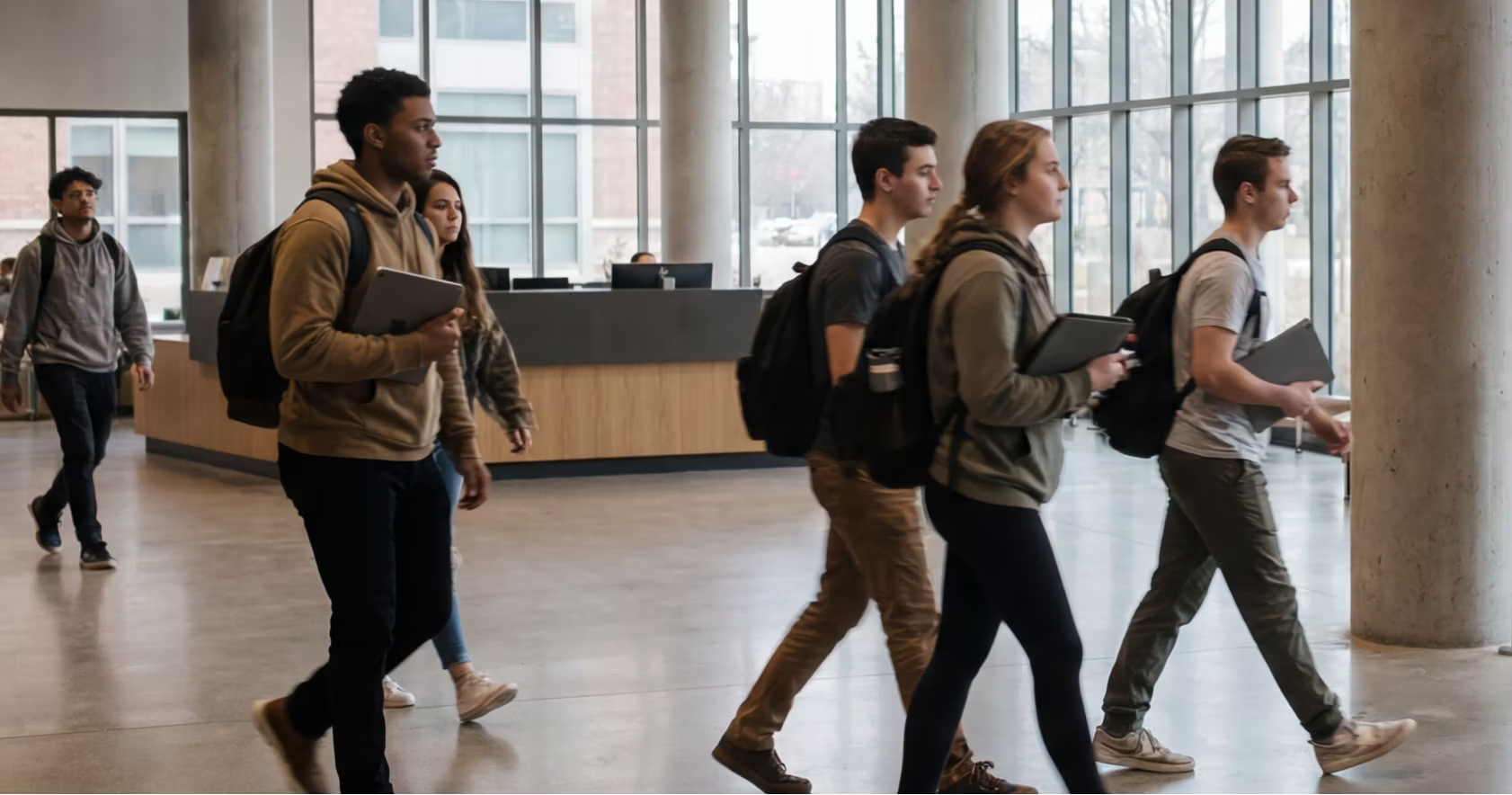
Campus security has undergone dramatic change over the past decade. Universities now face a complex threat landscape involving unauthorized access attempts and behavioral incidents.
Security professionals must balance the need for an open academic environment with rigorous protection. Traditional methods, such as magnetic stripe badges, no longer meet these demands.
The hidden cost of physical credentials:
- Universities with 20,000 students replace approximately 4,000 lost access cards annually, resulting in over $200,000 in replacement expenses alone.
- Card fees range from $5 to $25 per card, plus administrative time for distribution and deactivation.
Growing expectations for privacy-first solutions
While students embrace biometrics personally, they hesitate when institutions use it. Statistics reveal a contradiction. Although students use face unlock daily, 41.75% of college students believe facial recognition invades privacy when implemented on campus.
This concern stems from traditional surveillance systems that track individuals. An EDUCAUSE survey found that 70% of college students expressed confidence in their institution's ability to safeguard their personal data — yet only 44% reported understanding how their institution actually used their personal data. To bridge this gap, universities must adopt solutions that prioritize transparency and user control.

The difference between facial recognition and facial authentication
It is critical to distinguish between these two technologies. Traditional facial recognition identifies who you are by searching databases of known individuals. This often happens without consent.
Facial authentication is different:
- It verifies that you are who you claim to be.
- It does not identify you by name or store your photograph.
- It functions as a digital key rather than a surveillance tool.
This approach addresses tailgating effectively. When authorized students enter a residence hall, the system detects if an unauthorized person attempts to follow them. It alerts security immediately without disrupting the flow of legitimate users.
How anonymous facial vectors work
Privacy-first systems do not store images. Instead, they convert facial geometry into anonymous facial vectors. These are encrypted mathematical templates based on the spatial relationships between features.
Even if someone accessed this data, they could not recreate the original face. This template exists independently of personal information. No names, student IDs, or grades are linked to the biometric data stored in the authentication device.
Liveness detection and preventing spoofing
Advanced systems must defend against spoofing attempts using photos or masks. Liveness detection ensures the system recognizes only real, present individuals.
The global biometric authentication market was valued at $6.5 billion in 2024 and is projected to reach $18.6 billion by 2033, growing at a 15.7% CAGR, driven by the need for secure, anti-spoofing identity solutions.
Addressing student privacy and regulatory compliance
Universities must navigate complex regulations like FERPA and state privacy laws. Success depends on data segregation and clear consent.
FERPA-compliant data storage
To comply with the Family Educational Rights and Privacy Act (FERPA), biometric systems must segregate data. The technical architecture must ensure that biometric templates are never linked to educational records.
- Encryption: Military-grade encryption protects data at rest and in transit.
- Separation: Access logs verify authorization without revealing student identities to the system administrators.
Transparency and opt-in enrollment
Maryland and other states are introducing laws requiring strict data governance. Best practices suggest an opt-in model. Students should actively choose to enroll after reviewing how their data is protected.
- Mobile enrollment: Students can register via their own devices.
- Revocability: Students must have the right to withdraw consent and delete their templates at any time.
Advantages of privacy-first facial authentication
Modernizing access control removes the friction of physical tokens. The global biometrics market is expected to grow from $50.08 billion in 2024 to $60.32 billion in 2025, indicating that institutions are moving away from legacy credentials.
Streamlining entry with biometric turnstiles
Biometric turnstiles combine authentication with physical barriers to stop tailgating. This allows high throughput without compromising security.
In 2025, the University of Virginia, George Mason University, and Rockhurst University deployed unified biometric credentials covering more than 69,000 students — successfully eliminating the reliance on lost or shared ID cards.
Seamless integration with existing systems
Universities do not need to replace their entire infrastructure. Modern facial authentication devices integrate with existing access control panels using standard protocols. This allows institutions to enhance security without expensive rewiring or downtime.
Universities that implement biometric technology must navigate complex regulatory requirements while protecting students' privacy rights. Transparency, consent, and data protection form the foundation of any successful deployment.
Real-world applications for university environments
Facial authentication extends beyond just the front door. It supports diverse needs across the campus ecosystem.
Secure access to residence halls and libraries
Residence halls require 24/7 access. Traditional cards are lost when students leave them late at night. Facial authentication ensures residents can always enter their homes safely.
Similarly, libraries can automate entry for late-night study sessions, allowing security staff to focus on monitoring rather than checking IDs.
Exam proctoring and identity verification
Academic integrity is paramount. Facial verification at exam centers ensures that the registered student is the one taking the test. This eliminates bottlenecks caused by physical ID checks and prevents impersonation in large lecture courses.
Implementation best practices
Successful facial authentication deployment requires strategic planning that addresses both technical requirements and organizational considerations.
- Phased Rollout: Start with high-impact areas, such as a single residence hall. Monitor metrics such as authentication speed and cost savings before expanding.
- Clear Communication: Educate students on the difference between authentication and surveillance.
- Staff Training: Utilize intuitive management interfaces that require minimal training for security teams.
Future-proofing campus security
The disconnect between how students live their digital lives and how they access campus facilities is disappearing. The next-generation biometric authentication market is estimated to reach $339.7 billion by 2035, growing at a 25.2% CAGR.
The disconnect between how students live their digital lives and how they access campus facilities is disappearing. The next-generation biometric market is estimated to reach $339.7 billion by 2035.
This shift demonstrates that privacy-first biometrics are not just a trend but the future of institutional security. Universities that adopt these systems today are building a foundation for a safer, more efficient educational environment.
Ready to transform your campus security infrastructure?
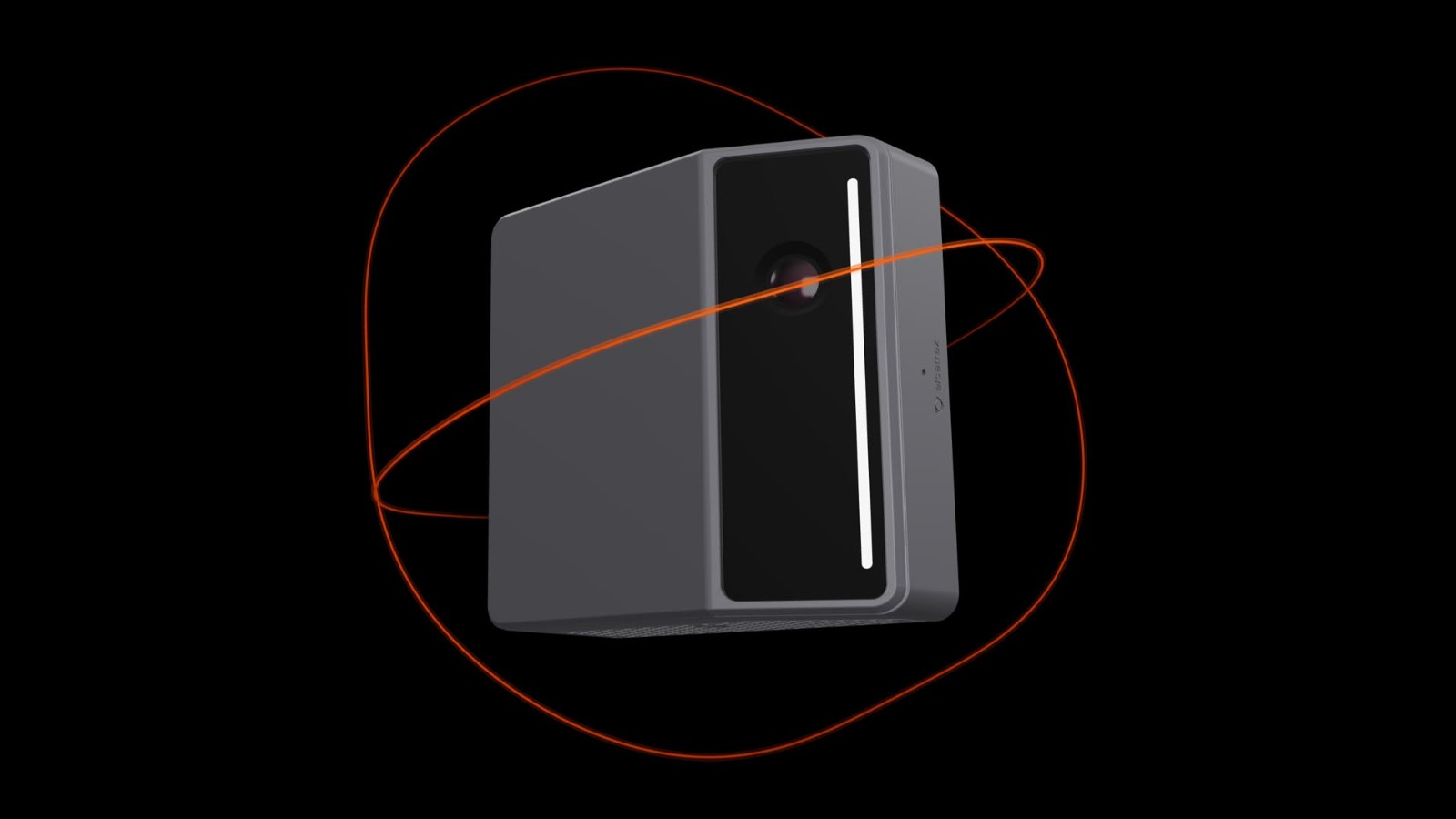
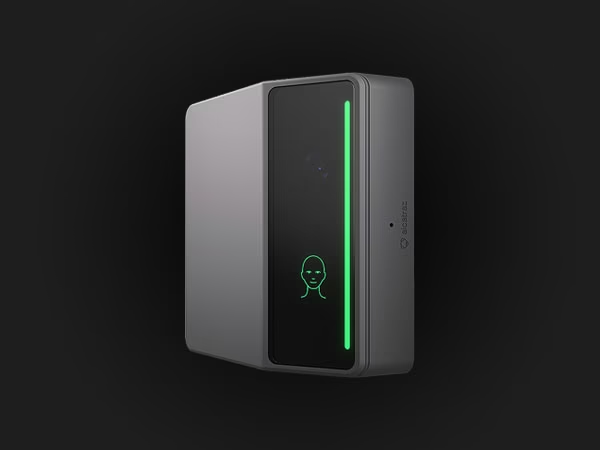
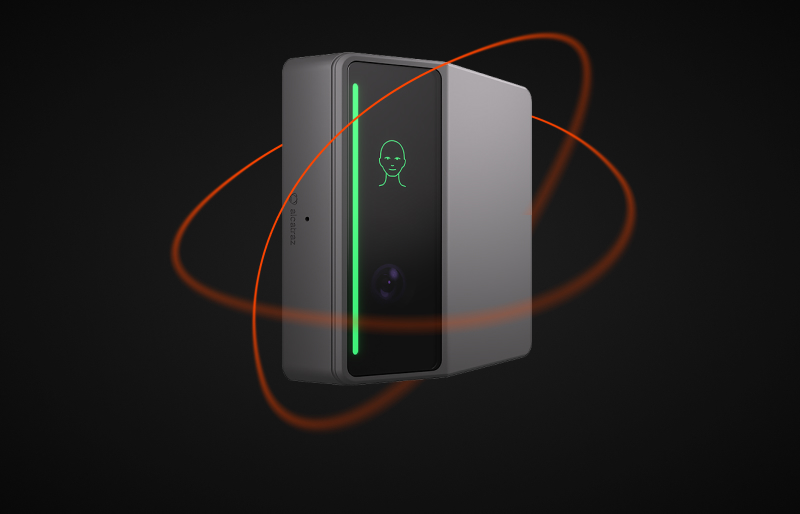
Upgrade to the Rock X by Alcatraz AI to deliver the frictionless experience your students expect. Our solution offers the "Gold Standard" in privacy-first access control, combining military-grade encryption with AI-powered tailgating detection.
Replace outdated keycards with a secure, eco-friendly, and student-centered solution that protects identity and ensures safety.
Schedule a demo to explore how privacy-first facial authentication can enhance security, reduce costs, and improve the student experience across your campus.