




How to prevent data breaches before they cost you millions

A data breach rarely announces itself. It often begins with a simple phishing email or an unlocked server room door. By the time your team detects the intrusion, the financial and legal damage is already underway.
According to the IBM 2025 Cost of a Data Breach Report, the average breach now costs $4.44 million globally and $10.22 million in the United States alone. The harder truth? Most of these breaches were preventable.
This guide breaks down exactly how these compromises happen and what your organization needs to stop them before the bill arrives.
Key takeaways
- The average cost of a data breach has reached $4.44 million globally, underscoring the need for proactive prevention.
- Phishing accounts for 16% of all breaches, while 83% of organizations experienced at least one insider attack in 2024.
- Nearly 10% of malicious breaches trace back to physical security compromises that bypass digital defenses entirely.
- Integrating physical security with digital defenses is essential, as 60% of organizations plan to adopt zero trust as their primary framework by 2025.
- Replacing traditional keycards with AI-powered facial authentication and tailgating detection eliminates the vulnerabilities of credential-based access.

What a data breach actually is and why they are getting worse
Understanding the scale of the threat is your first step toward building a solid prevention strategy. The threat landscape has shifted significantly, and old security assumptions no longer apply.
Defining the modern data breach
A data breach occurs when an unauthorized party steals or exposes confidential information—whether that's customer PII, financial records, health data, or trade secrets. Breaches do not always require sophisticated hacking. They often start with a weak password or an unlocked door.
In 2024, the Identity Theft Resource Center tracked 3,158 data compromises in the U.S, resulting in over 1.3 billion victim notices. This represents a 211% year-over-year increase, driven largely by five “mega breaches.”
The critical gap in most prevention strategies
Most security budgets flow strictly toward network defenses like firewalls and email filters. These tools matter, but they only protect one layer of your environment.
An intruder who physically accesses your server room does not need advanced hacking tools. Physical and cyber threats share the exact same target. Treating them as separate problems creates the exact gap attackers look for.

The most common ways data breaches happen
Attackers follow a defined playbook. Recognizing their methods helps your team close vulnerabilities before they become active incidents.
Phishing attacks
Phishing remains the leading cause of data breaches globally. The IBM 2025 Cost of a Data Breach Report attributes 16% of all breaches to phishing, making it the single most common initial attack vector.
Attackers send an estimated 3.4 billion phishing emails every day. AI-generated content now makes these fraudulent messages nearly indistinguishable from legitimate internal requests.
Malware and ransomware
Malware often arrives as a hidden payload after a successful phishing attempt. Once inside your environment, it can encrypt files for ransom or establish persistent backdoor access.
Malware deployment occurred in 42% of all reported incidents, making it the most common action threat actors take against victim networks. Modern strains increasingly evade traditional antivirus detection, making layered defenses essential.
DDoS attacks
A distributed denial-of-service attack floods your network with traffic from thousands of sources, taking systems offline and diverting your security teams' full attention to restoring service. Cloudflare blocked 20.5 million DDoS attacks in Q1 2025 alone, a 358% year-over-year surge.
The real danger isn't the attack itself. Attackers often use DDoS attacks as a smokescreen while simultaneously probing your network for potential intrusion points. Never treat an active DDoS event as an isolated incident.
Insider threats
Insider threats cost more per incident than almost any other breach category. According to the Fortinet 2025 Insider Threat Report, 83% of organizations experienced at least one insider attack in 2024. The Ponemon Institute 2025 Cost of Insider Risks Report found that average annual costs reached $17.4 million. Malicious insiders generate the costliest individual incidents, averaging $4.92 million per breach.
Not every insider threat is intentional, though. Accidental data sharing and poor access management carry the same regulatory consequences.
Physical data theft and access creep
Physical security failures create direct data exposure. Stolen hardware or unauthorized access to sensitive areas can result in data leaving your facility without triggering a single digital alarm.
- Physical breaches: A significant share of malicious breaches trace back to physical security compromises, often bypassing digital defences entirely.
- Access creep: Employees accumulate permissions they no longer need over time, creating silent vulnerabilities.
- Information misuse: Improper access accounts for more than one in twelve data security breaches.
Proven data breach prevention strategies that actually work
Closing these gaps requires layered, deliberate action rather than a single tool purchase. Here is what effective prevention looks like across your digital and physical environments.
Stop phishing at the source and in your culture
Technical filters catch a lot, but senior executives are now 23% more likely to fall victim to AI-personalised phishing attacks. Effective defense requires ongoing security awareness training paired with strict technical controls.
- Multi-factor authentication: MFA alone blocks over 99% of automated account attacks, according to Microsoft research.
- Credential management: Apply zero-trust access principles to limit what a compromised account can reach.
Layer your malware defenses
Relying on a single endpoint security tool leaves organizations exposed. Effective protection requires a combination of endpoint detection, regular software patching, and least-privileged account configurations. This limits the blast radius if an attacker gains access to one account.
Build DDoS resilience into your architecture
You cannot prevent a DDoS attack, but you can contain its impact. Deploy rate limiting and traffic filtering. More importantly, assign dedicated team members to monitor for parallel network intrusion attempts during any active DDoS event.
Physical security: the prevention layer most breach plans overlook
Digital defenses protect your network perimeter, but physical access represents a completely separate attack surface. Closing this gap requires the exact same rigor you apply to network security.
Biometric access control for sensitive areas
Keycards and PINs only authenticate what someone has or knows. A stolen keycard grants an attacker the same server room access as your most senior engineer. Biometric access control closes that gap by binding entry rights directly to individual identity.
For organizations managing compliance with SOC 2, GDPR, HIPAA, or PCI DSS, biometric access provides verified, timestamped audit trails.
Tailgating detection: the vulnerability no badge policy can fix
Tailgating defeats every credential-based access system. No PIN policy or swipe card validation prevents an unauthorized person from following an authorized employee through a secured entrance. AI-powered tailgating detection identifies these unauthorized entry attempts in real time.
This triggers immediate alerts and gives your security team the opportunity to respond before an intruder reaches critical areas.
Facial authentication versus facial recognition
Security decision makers often conflate facial authentication with surveillance-based facial recognition. The distinction matters operationally and legally.
- Facial authentication: Opt in and identity-specific to verify a known individual against their enrolled profile
- Privacy focus: It does not scan crowds, identify strangers, or retain images
Zero-trust physical access control, where security strategy comes together
Gartner projects that 60% of organizations will adopt zero trust as their primary security framework by the end of 2025, with 81% already working toward it. The most secure organizations apply zero trust to every access point, physical and digital alike.
Core principles of zero-trust architecture
This framework rests on continuous verification and breach assumption. Every access request gets authenticated regardless of the user's location. Segmenting access controls the blast radius, while least-privileged access grants users only the minimum permissions required by their specific role.
Organizations that implement zero-trust frameworks experience a 68% reduction in insider-related security incidents.
Applying zero trust to physical access
Physical zero trust replaces credential-based entry with identity-based entry. Every person accessing a secured space gets verified against their biometric profile. Detailed access logs integrate with your SIEM infrastructure, allowing security teams to correlate physical access events with network activity.
When a breach happens, the first steps that determine the outcome
Even strong defenses do not guarantee immunity. Faster detection directly determines the final cost of a breach. IBM 2025 data shows organizations contained breaches in a mean of 241 days, but 76% still took more than 100 days to fully recover. Your response plan should cover these rapid actions.
- Contain: Isolate affected systems immediately to stop lateral movement.
- Assess: Determine what data was accessed, exfiltrated, or compromised.
- Notify: Follow timelines, such as the GDPR requirement to notify of a breach within 72 hours.
- Remediate: Close the entry point and conduct a forensic review using both digital and physical access logs.
Building security awareness that actually sticks
Technology closes known gaps, but workplace culture prevents new ones from forming. Run regular tabletop exercises that simulate breach scenarios, including physical intrusion attempts.
Security awareness is an ongoing operational discipline that keeps your human layer as strong as your technical one. When physical and digital security teams share the same incident data, your organization stops defending two separate perimeters and starts defending a single one.
Ready to secure your critical facilities with Alcatraz AI
Organizations worldwide are replacing vulnerable credential systems with advanced biometric technologies that strengthen physical security and close the gap in their data breach prevention strategy. Every vulnerability your team closes today is a bill that never arrives.
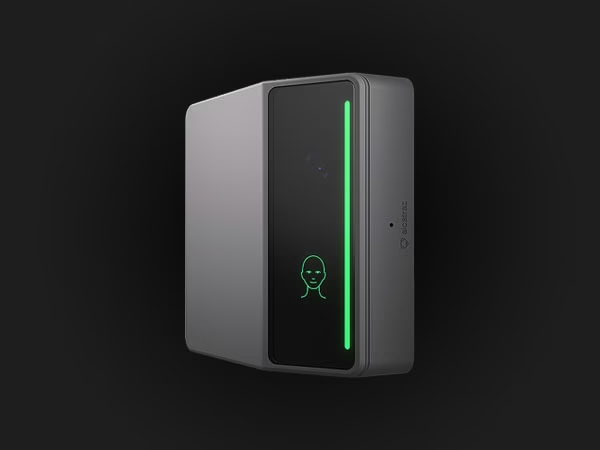
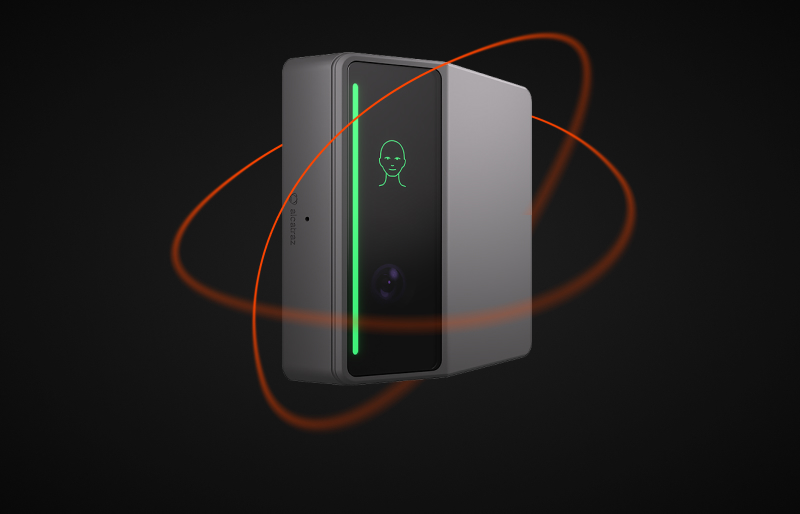
Schedule a demo to learn how Rock X delivers frictionless facial authentication and zero trust access control tailored to the unique demands of modern enterprises and why security leaders choose Alcatraz AI to protect their most sensitive data environments.