


Government access control that proves who walked through the door
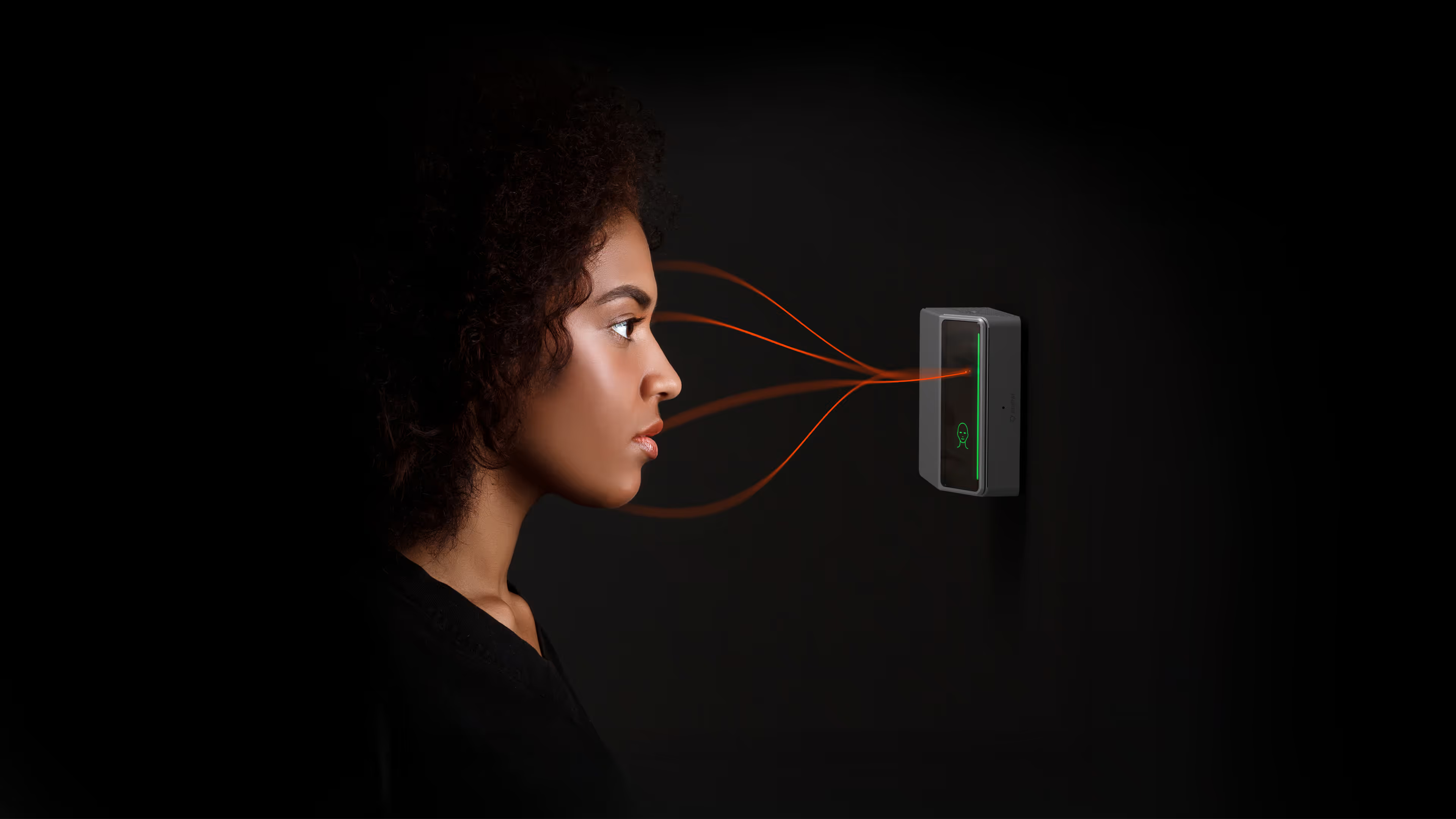
Government access control from Alcatraz adds sub-second facial authentication to federal, state, and local facilities. Pair the existing government credential with a verified face for true multi-factor at classified and sensitive spaces, detect tailgating in real time, and keep all biometric processing on the edge device, never in a cloud.
Trusted across regulated sectors







Requirements no other sector shares
Government facilities carry obligations commercial buildings never see. Classified spaces demand access control that can withstand adversarial scrutiny, not just casual misuse. Visitor processing spans citizens, contractors, and officials from other agencies, each with different vetting. Insider threat programs are mandated, not optional. And a single campus may host multiple agencies with separate authorities over the same corridors.
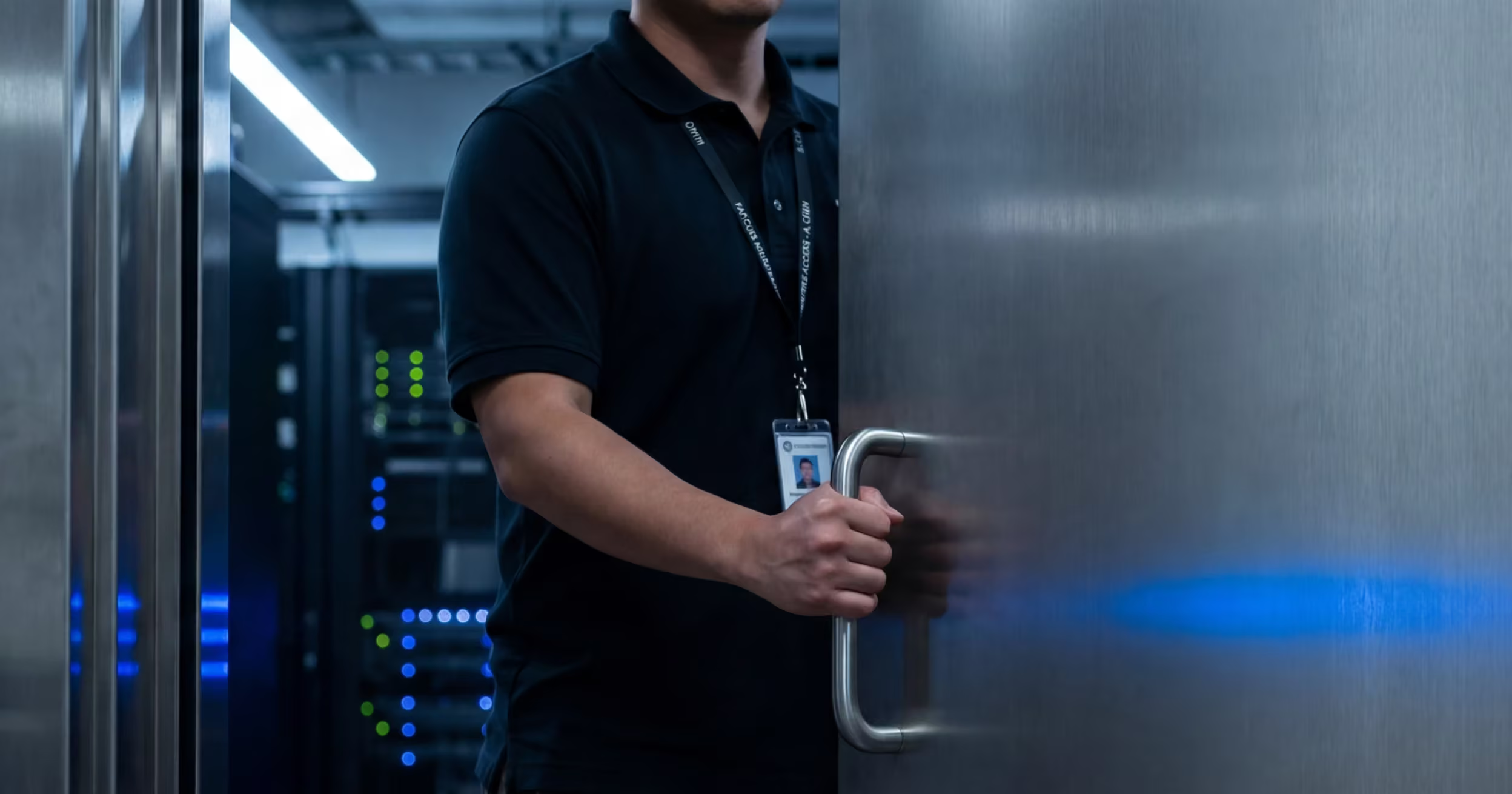
Card-based access answers none of this well. A credential proves it was issued, not that the right person presented it. In an environment where credentials are explicitly targeted, that gap is the whole problem.
Alcatraz closes it by verifying the person, at the door, every time, with tailgating detection at secure boundaries covering anyone who follows them through.
Working with the credentials government already issues
Federal and government personnel already carry standardized credentials, and those credentials are the anchor of existing access policy. Alcatraz does not replace them. It strengthens them.
In 2FA mode, entry requires the existing government credential plus the verified face of the person it was issued to. That is true multi-factor at the door: something you have, issued and vetted through your existing process, and something you are, verified by 3D liveness detection that defeats photos, screens, and masks.
Because Rock readers sit in line via Wiegand or OSDP between the reader position and the panel, the credential infrastructure, enrollment authorities, and access policies your agency already maintains continue to govern. Alcatraz adds the verification layer they were always missing.
Privacy and compliance for biometric data
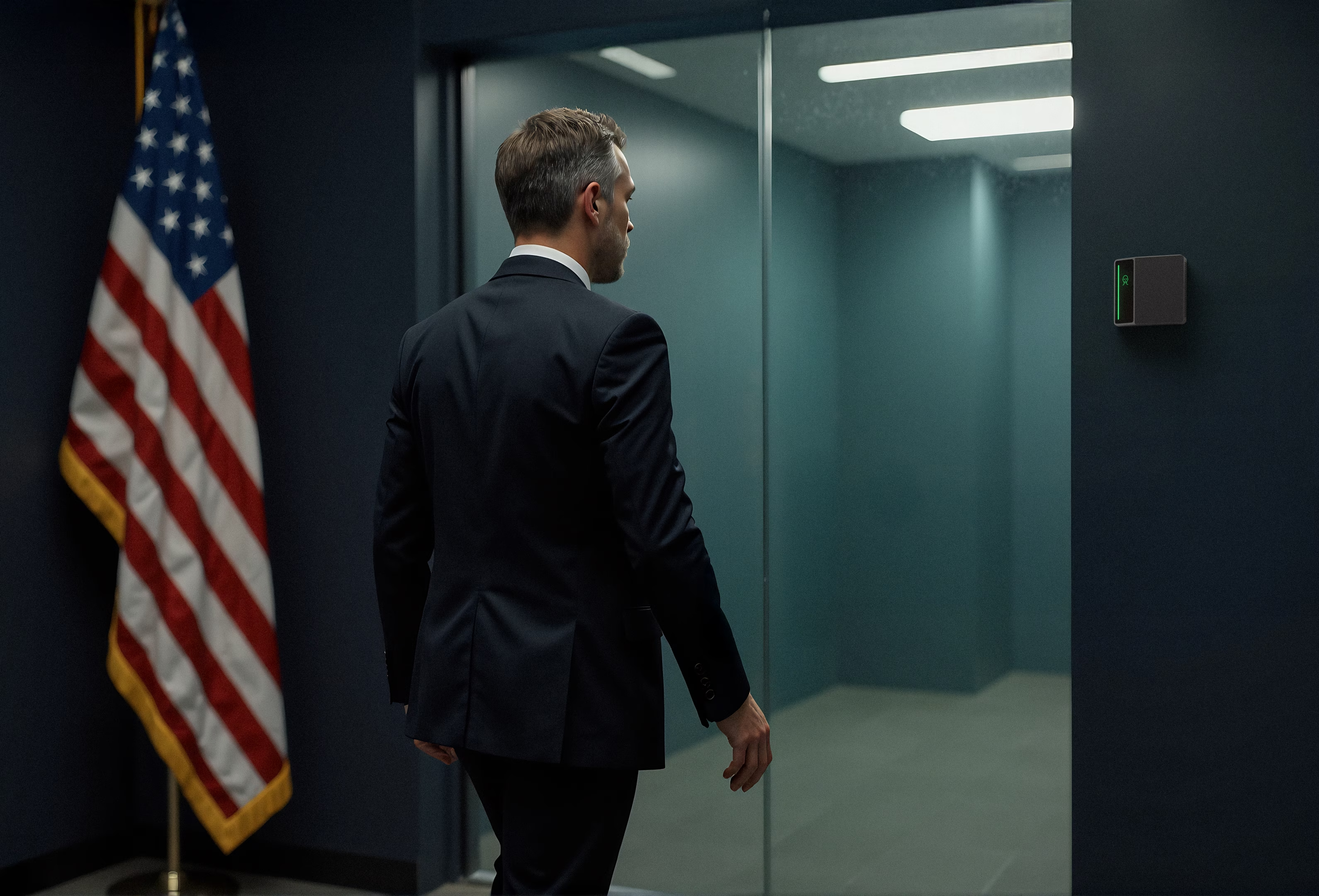
Government deployments face the strictest questions about biometric data, and Alcatraz is built for those questions. Enrollment is opt-in. All processing happens on the edge device at the door. Faces are converted to encrypted, non-reconstitutable templates, and templates never leave the device in identifiable form. No photos or videos of faces are stored.
This is facial authentication, not surveillance-style recognition: enrolled personnel are verified at doors they are authorized to use. No one is scanned from a crowd, and there is no watchlist function. For agencies with data residency and sovereignty requirements, the architecture keeps biometric data inside the facility by design, and audit-ready logs in Rock Cortex support your compliance evidence collection without exposing biometric material.

Deployment
Deployment across government facilities
Federal offices and courthouses
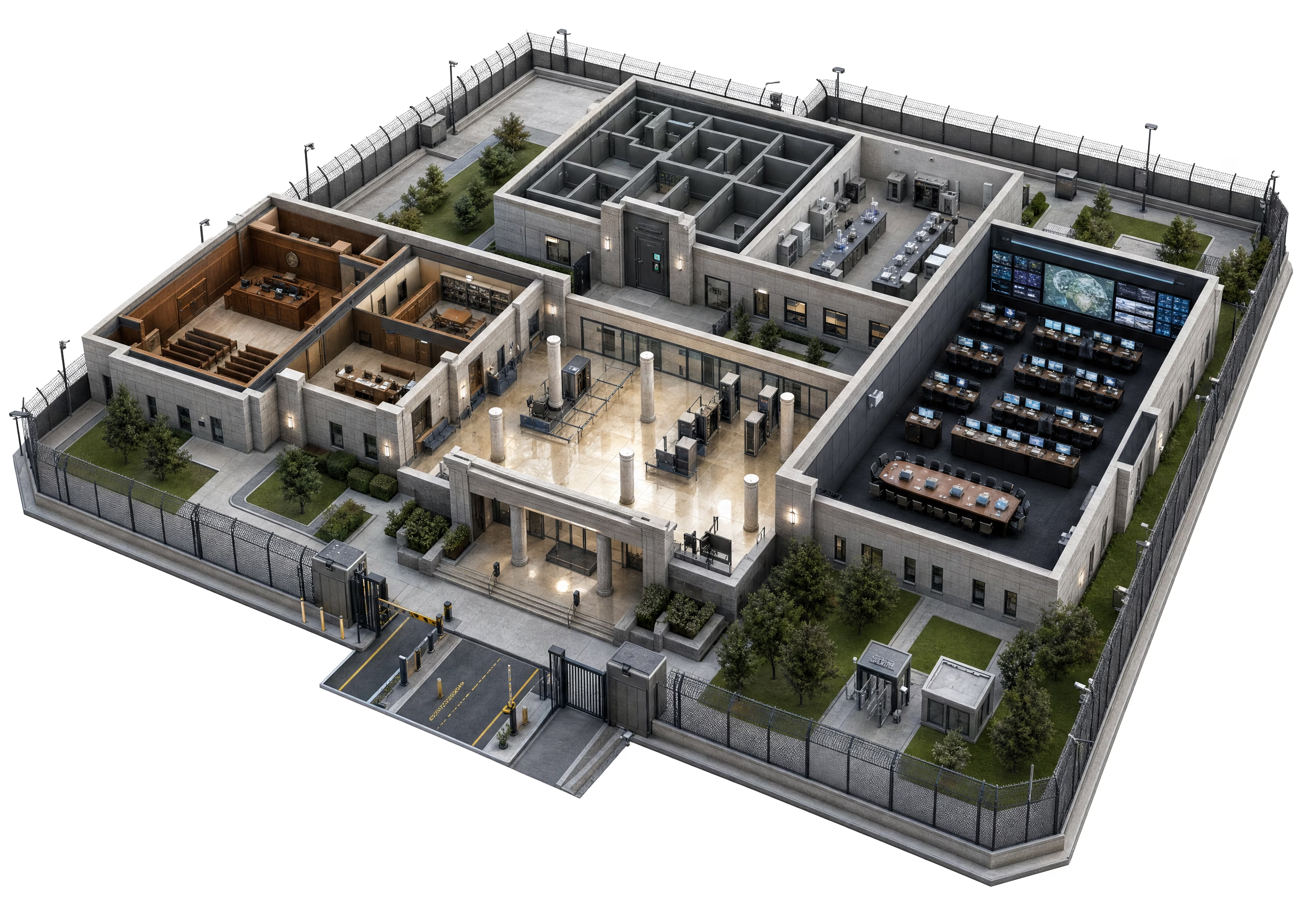
Public-facing buildings must stay open at the front and controlled everywhere else. Facial authentication secures judges’ chambers, evidence rooms, and staff corridors while public areas remain public. Hands-free, sub-second entry keeps daily movement fluid for personnel, and tailgating detection covers the transition doors where a member of the public could follow staff into a restricted zone, with video captured for the security office.
Defense installations
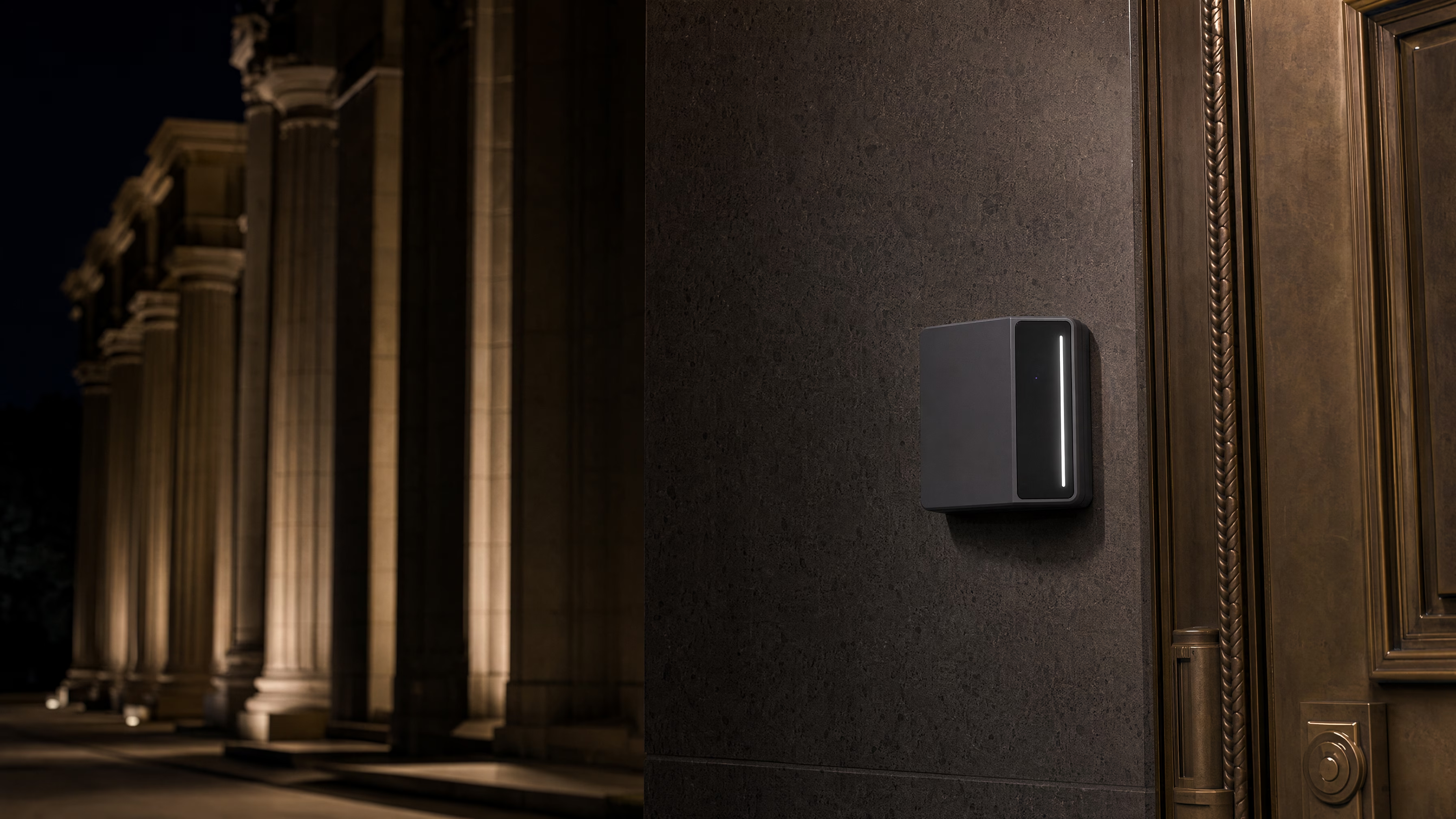
Defense sites combine perimeter scale with interior compartmentalization. Rock X handles outdoor gates and building entrances rain or shine, while interior doors run badge-plus-face 2FA where policy requires multi-factor. Contractor populations, often the largest group on an installation, enroll through Rock Cortex with permissions scoped to specific buildings and time windows, and are removed the day the contract ends.
Outdoor gates and perimetersResearch labs and SCIFs
Compartmented and sensitive research spaces are where verification matters most and tailgating hurts most. Alcatraz enforces person-level entry at the boundary: 2FA authentication, liveness checking, and real-time detection of any second person crossing on a valid entry. Every crossing is an immutable record tied to a verified individual, giving security managers a defensible answer for any hour of any day.
One verified person per cycleState and local operations centers
Emergency operations centers, 911 facilities, and public works control rooms run around the clock with rotating staff. Hands-free facial authentication suits personnel arriving with equipment during activations, and enrollment scales across the mutual-aid partners and surge staff these facilities depend on. Access records show exactly who was in the room during any event, which after-action reviews consistently need.
5M+
Employees protected by Alcatraz across all industries
91%
Customer satisfaction
<1s
Hands-free authentication at the door
Why biometrics
Why biometrics in government
The government threat model includes adversaries who steal, clone, and counterfeit credentials deliberately. Against that adversary, possession-based access is a known weakness. Facial authentication with 3D liveness verifies the physically present, enrolled person, which is the property a stolen credential can never provide.
It also serves the insider threat mission. Badge sharing and tailgating disappear as silent behaviors and become detected, evidenced events. And it respects operational reality: authentication is sub-second and hands-free, so hardened doors do not slow the people cleared to use them.

Badge sharing ends
A credential can be stolen, cloned, or lent. A face cannot, which is the property adversarial threat models require.
Tailgating becomes visible
Card systems are blind to the second person crossing a boundary. Alcatraz detects them in real time, with video at the door.
Liveness proves presence
3D liveness detection defeats photos, screens, and masks, so entry to a sensitive space means a physically present person.
Processing stays on device
All processing happens on the device. Templates are encrypted, no face images are stored, and biometric data never flows to a cloud.
Use cases
Every entrance type
Door
Chambers, evidence rooms, labs, and secure offices get sub-second facial authentication with tailgating detection, in badge-plus-face 2FA wherever policy designates multi-factor, with person-level logging throughout.
Turnstile
Building lobbies authenticate cleared personnel hands-free at walking pace, separating staff flow from visitor processing while guaranteeing everyone crossing is enrolled and verified.
Mantrap
At SCIF entrances and the most sensitive boundaries, a biometric mantrap enforces one verified person per cycle with 2FA at both doors, closing the piggyback path entirely.
Benefits
Why government security teams choose Alcatraz
Multi-factor built on your credential
The existing government credential plus a verified face gives sensitive doors true multi-factor without changing issuance, vetting, or policy. Rock readers drop in line with your current access control system via Wiegand or OSDP, so the upgrade is a door project, not a program.
Insider threat visibility at the door
Badge sharing stops working and tailgating becomes a real-time, video-documented event. The physical behaviors insider threat programs worry about most become detectable, attributable, and reportable through Rock Cortex.
Edge privacy that survives scrutiny
Opt-in enrollment, on-device processing, encrypted non-reconstitutable templates, and no stored face images. The architecture answers privacy officers, unions, and oversight bodies with design facts rather than policy promises.
Proof for government evaluators


United Nations agency modernizes secure access for employees
A UN agency in Latin America deployed Alcatraz to provide contactless authentication for employees. The solution established a reference design for future UN facilities across the region, ensuring secure, frictionless entry.
Sheriff’s office enhances security with frictionless biometrics
One of the largest U.S. law enforcement agencies deployed Alcatraz to secure its new headquarters. The system provided 1FA for general areas and 2FA for sensitive zones, with built-in video capture and tailgating detection to protect weapons and evidence rooms.
Technology leader achieves privacy-first compliance
A major technology enterprise worked with Alcatraz to deploy a scalable biometric platform across regulated facilities. The system ensured high availability for 150,000+ employees, while future-proofing compliance with government-grade security and privacy requirements.
Harden the doors your mission depends on
The credential your agency issues is only as strong as the certainty that its holder is presenting it. Alcatraz adds that certainty at the door: verified identity, true multi-factor, tailgating detection, and privacy-first edge processing, all on the access control infrastructure you already operate. Start with your most sensitive spaces and expand with confidence.
FAQ
How does facial authentication work with existing government credentials?
It pairs with them. In 2FA mode, entry to a government facility requires the existing credential plus the verified face of the person it was issued to, enforced at the door in under a second. Issuance, vetting, and access policy stay with your current systems and authorities.
Can Alcatraz secure SCIFs and classified spaces in government facilities?
Alcatraz enforces person-level entry at sensitive government boundaries with badge-plus-face 2FA, 3D liveness detection, and real-time tailgating detection with video. Every crossing is an immutable record tied to a verified individual, giving security managers defensible, auditable control at compartmented spaces.
How does government access control from Alcatraz handle visitor and contractor populations?
Contractors enroll opt-in through Rock Cortex web enrollment, with roles and permissions scoped to specific buildings and durations, and access ends the day the engagement does. Visitors remain on your escorted processes, while facial authentication ensures staff doors open only for enrolled, verified personnel.
Where is biometric data stored in a government Alcatraz deployment?
On the edge device, as encrypted, non-reconstitutable templates that never leave the device in identifiable form. No photos or videos of faces are stored, enrollment is opt-in, and there is no cloud biometric database, which keeps biometric data inside the facility by design.
Is Alcatraz facial authentication a surveillance system, and can government facilities use it without recognition concerns?
Alcatraz is facial authentication, not a surveillance recognition system. Enrolled personnel are verified at government doors they are authorized to use. There is no crowd scanning and no watchlist function, and the edge-processing, opt-in architecture is designed to satisfy privacy officers and oversight review.