


Financial services access control built for insider risk
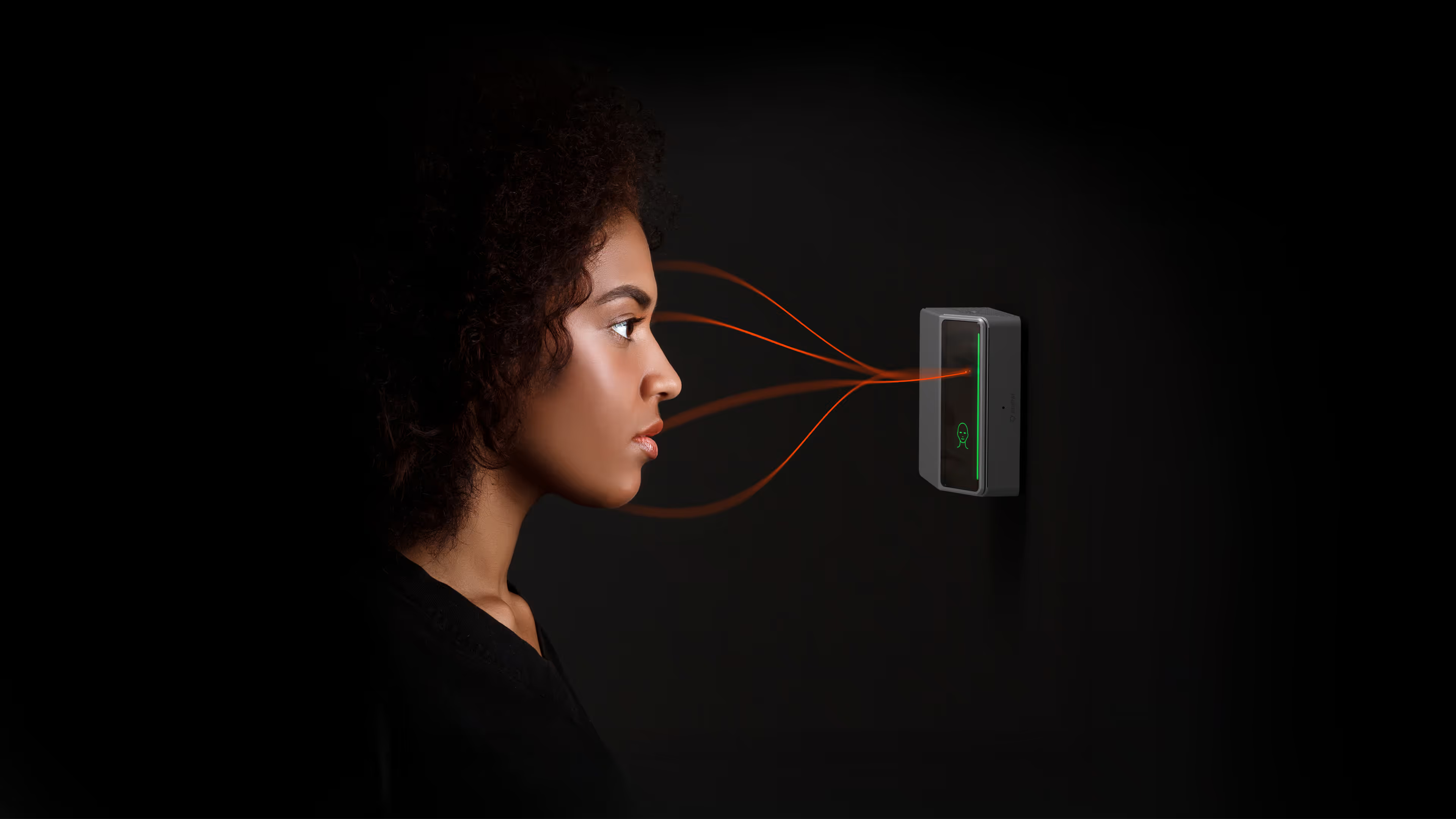
Financial services access control from Alcatraz verifies every person entering vaults, trading floors, and secure rooms with sub-second facial authentication. Badge sharing stops working, tailgating is detected in real time with video, and every entry becomes an audit-ready record, on the access control system your institution already runs.
Trusted by leading financial institutions





The stakes inside a financial institution
The threat model in financial services is mostly inside the building. The people with authorized access to cash rooms, wire operations, and customer data are the same people a compromised credential impersonates. Regulators know it, examiners ask about it, and the institution’s name is on the line every time a door opens for a badge instead of a person.
The physical footprint compounds the problem: branch vaults, trading floors, back-office processing centers, data rooms, executive suites. Each has its own risk profile, and each is typically protected by the same weak proof, possession of a card.
Alcatraz replaces possession with identity. The door opens because the verified, enrolled person is standing at it, and the log records exactly that, with the second person through the door flagged in real time.
Security requirements for financial facilities
Financial institutions answer to examiners, internal audit, and their own risk committees, and the questions converge: who can access sensitive areas, who actually did, and how do you know. Dual-control zones, clean rooms for deal work, and segregation-of-duties policies all depend on knowing the person, not the credential.
Alcatraz supports these requirements at the door. 2FA, badge plus face, enforces true multi-factor at vaults and secure rooms. Roles and permissions in Rock Cortex map to your control framework, so access follows function.
Every entry is an immutable, person-level record, producing audit-ready logs that support evidence collection for your compliance and examination processes.
Insider threat prevention
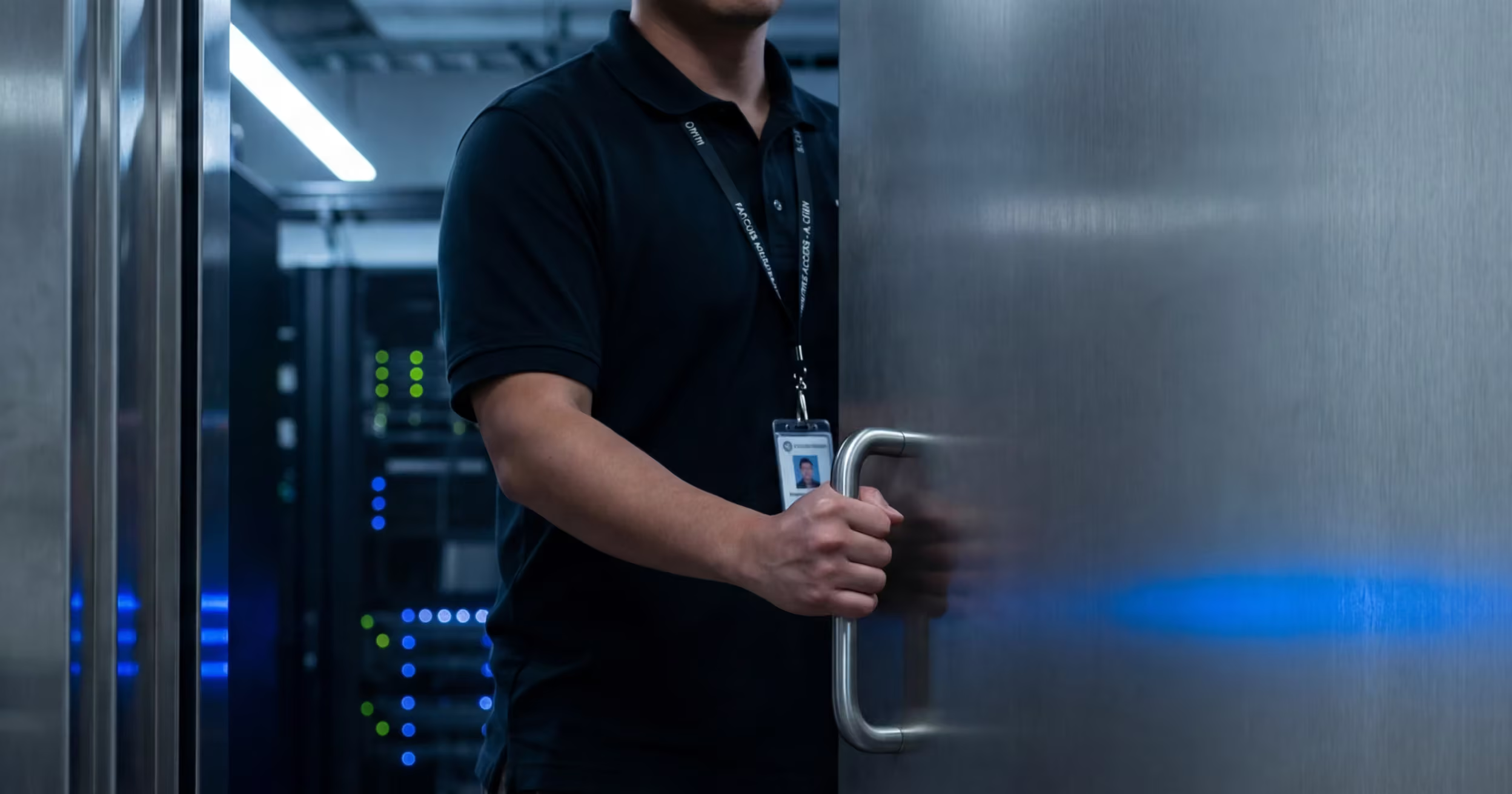
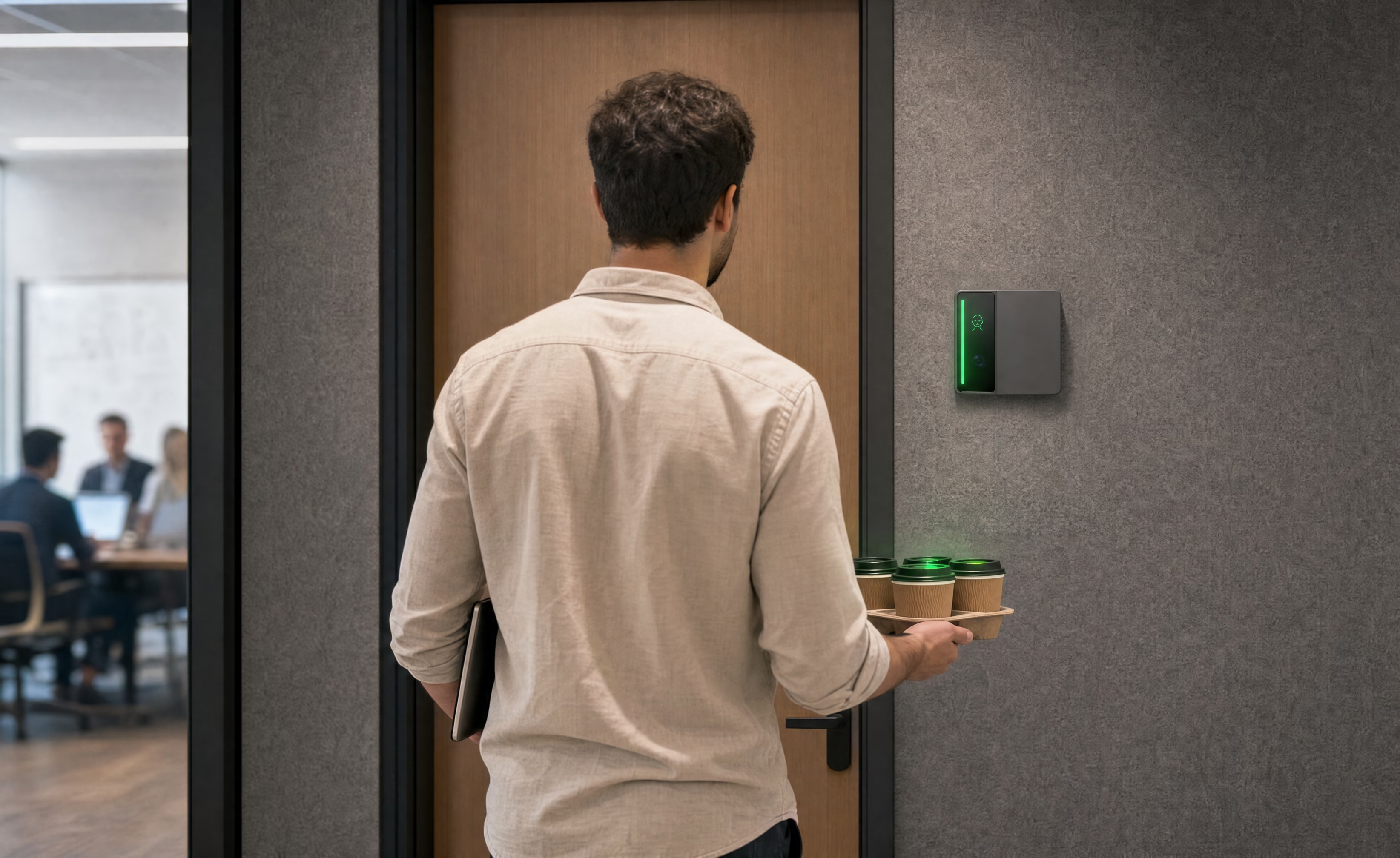
The most common insider technique at the door is not dramatic. It is a borrowed badge, a card left in a drawer, a tailgate behind a colleague too polite to object. Every one of those defeats card-based access silently, leaving logs that point at the wrong person or at no one.
Alcatraz closes each path. The face cannot be borrowed, and 3D liveness detection blocks photo and mask spoofing. Tailgating detection flags the follower in real time with video at the door. The result is verified identity at every entry, which is the foundation every insider-threat program is missing at the physical layer.

Deployment zones
Deployment zones across the institution
Branch vaults and cash rooms
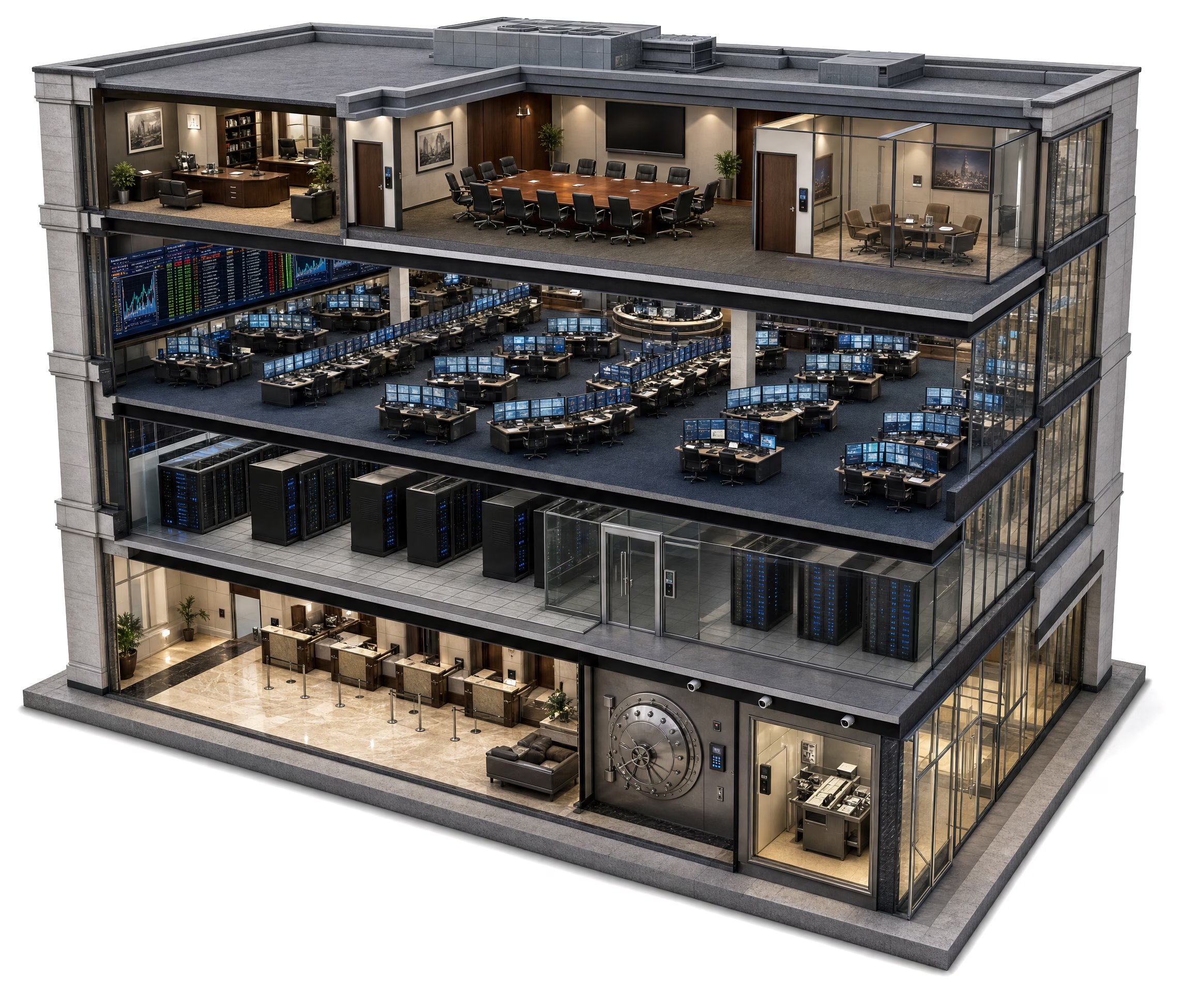
Cash areas are dual-control by policy, but a shared badge quietly breaks the policy. Facial authentication makes each entry attributable to a verified individual, and 2FA at the vault door means entry requires the institution’s credential and the enrolled person carrying it. Tailgating detection covers the second-person scenario at the cash room door, with video captured for investigations. Loss events get shorter timelines and clearer answers.
Trading floors
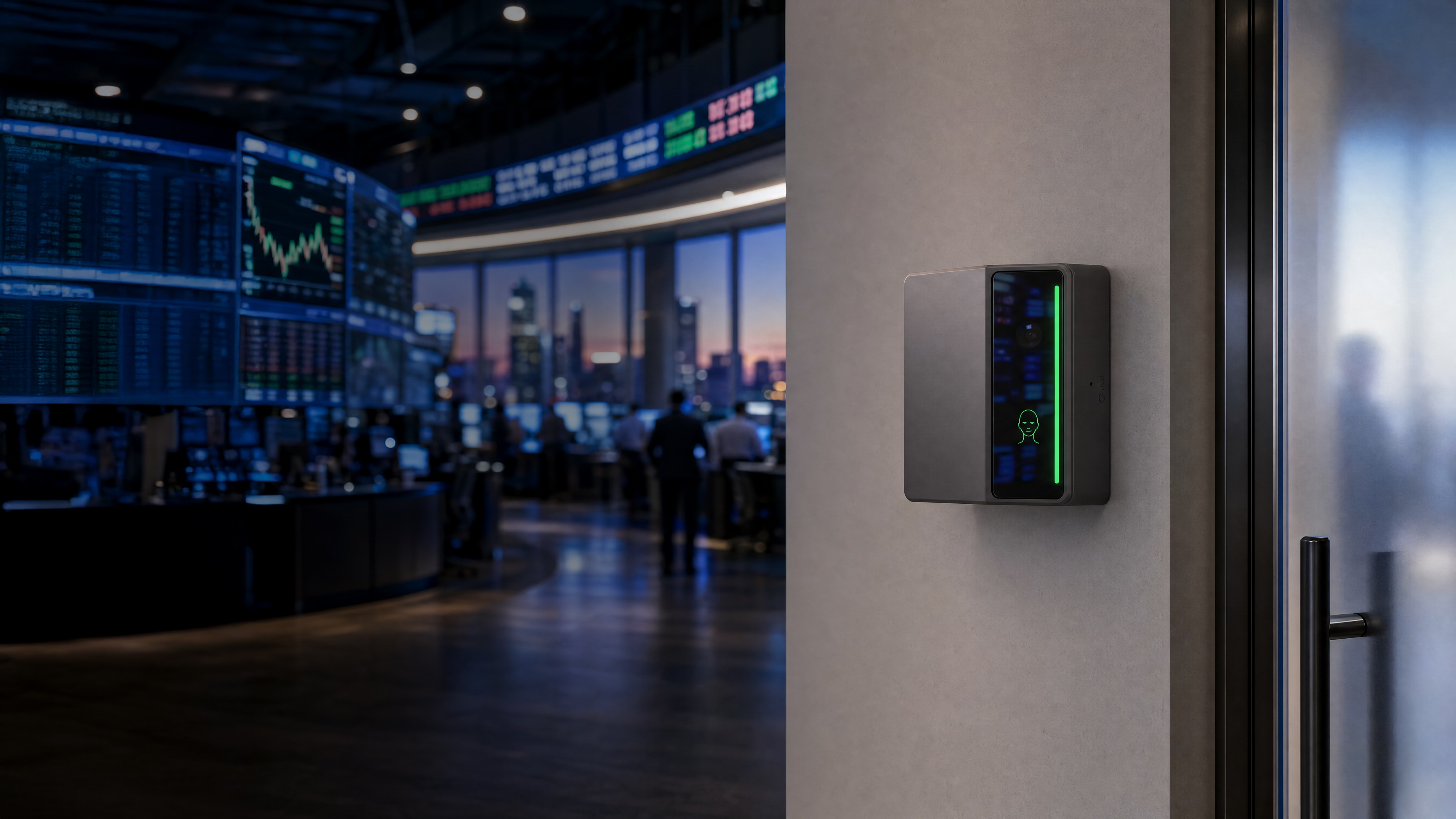
Trading floors mix high headcount with material nonpublic information. Hands-free facial authentication keeps the open, fast culture of the floor while ensuring everyone who crosses the threshold is enrolled and authorized. Visitor and support staff access is scoped through roles in Rock Cortex, and the entry record gives compliance a person-level answer when information-barrier questions arise.
Audit-ready reporting and permissionsBack-office data centers
Processing centers and server rooms hold the systems that move the money. Deploy facial authentication at data room doors with 2FA at critical boundaries, bringing zero-trust verification to the physical layer beneath your cybersecurity stack. Entry logs tie every access during an incident window to a named person, which is what regulators and forensic teams actually need.
Zero trust at the data center doorExecutive floors and deal rooms
M and A work and executive operations depend on rooms where presence itself is sensitive. Facial authentication restricts these floors to verified, enrolled individuals without a receptionist checking faces against a list. Deal room access can be provisioned per transaction in Rock Cortex and revoked the day the deal closes, leaving a clean record of exactly who was inside while it was live.
5M+
Employees protected by Alcatraz across all industries
91%
Customer satisfaction
<1s
Hands-free authentication at the door
Why biometrics
Audit-ready access logs
When an examiner or internal auditor asks who entered the wire room in March, the answer should not depend on assuming badges were in the right hands. With Alcatraz, every entry is an immutable record tied to a verified person, exportable from Rock Cortex, supporting evidence collection for your audit and examination cycles.
Exceptions, including tailgating events, are documented with video, so your control narrative describes detection that demonstrably works.
Badge sharing ends
The top insider risk at a vault door is not forgery, it is lending. A face cannot be lent, cloned, or left in a drawer.
Tailgating becomes visible
Card systems are blind to the person following a colleague in. Alcatraz detects them in real time, with video at the door.
Liveness proves presence
3D liveness detection defeats photos, screens, and masks, so the second factor at a vault door cannot be faked.
Processing stays on device
All processing happens on the device. Templates are encrypted, no face images are stored, and biometric data never flows to a cloud.
Use cases
Every entrance type
Door
Vaults, wire rooms, and records areas get sub-second facial authentication with tailgating detection, in 2FA where policy demands true multi-factor, with every entry logged to a verified person.
Turnstile
Headquarters and trading floor turnstiles authenticate employees hands-free at walking pace, holding morning throughput while guaranteeing only enrolled personnel reach the floors behind them.
Mantrap
For cash vaults and critical data rooms, a biometric mantrap enforces one verified person per cycle with 2FA at both doors, ending piggybacking at the institution’s most sensitive boundaries.
Benefits
Why financial services teams choose Alcatraz
Attribution you can defend
Every entry into a vault, cash room, or data room is tied to a verified individual, not a card number. Investigations start with facts, dual-control policies become enforceable, and the access log finally means what the auditors assume it means.
Multi-factor at the doors that matter
Badge plus face delivers true multi-factor at high-security doors: something you have and something you are, verified in under a second. 3D liveness detection ensures the second factor cannot be spoofed with a photo or mask.
No core-system replacement
Rock readers sit in line via Wiegand or OSDP with the access control platforms institutions already run, including Genetec, LenelS2, and Software House C•CURE. Deploy at the highest-risk doors first, expand on your schedule, keep your existing infrastructure.
Proof financial buyers can take to committee


Financial institution enhances security with cloud compliance
A global financial institution adopted Alcatraz to meet complex privacy and compliance requirements. The touchless biometric system ensured secure authentication, flexible cloud deployment, and rapid performance without compromising accuracy.
Financial services firm embraces touchless authentication
A major financial services firm modernized access control by deploying Alcatraz. The privacy-first, future-ready platform provided speed, accuracy, and compliance tools to safeguard sensitive environments.
National bank adopts biometrics for secure branch access
A leading U.S. bank selected Alcatraz to deliver frictionless access with 2FA and tailgating detection. Initially deployed at pilot branches, the solution is scaling to more than 60 corporate locations, strengthening security while improving the employee experience.
Make every entry a verified entry
Your controls assume the person in the room is the person on the log. Alcatraz makes that assumption true, with facial authentication at the door, multi-factor where policy requires it, and tailgating detection everywhere. Start with the vault, the wire room, or the data center door your last audit flagged, and expand from there.
FAQ
How does facial authentication prevent badge sharing in a bank or financial institution?
It makes the face the credential, and a face cannot be lent or cloned. At financial facilities, the door opens only for the verified, enrolled person, and 3D liveness detection blocks photo and mask spoofing, so a borrowed badge no longer opens a cash room or data room.
Can Alcatraz provide multi-factor authentication at bank vaults and secure rooms?
Yes. Alcatraz supports 2FA, existing badge plus face, at high-security financial doors. Entry requires both the institution’s credential and the verified person it was issued to, delivering true multi-factor, something you have and something you are, enforced at the door itself.
How does Alcatraz detect tailgating on a trading floor or at a cash room?
The reader monitors the doorway after each valid entry and flags a second person in real time, capturing video at the door. Financial security teams get an actionable, evidenced event instead of a silent breach, and the record supports investigations and audit reporting.
Do biometric access logs help with financial services audits and examinations?
Yes. Every entry is an immutable record tied to a verified person, and Rock Cortex produces audit-ready logs that support evidence collection for examinations, internal audit, and frameworks like SOC 2. Person-level attribution replaces the assumption that badges were carried by their owners.
Is facial authentication in financial facilities compatible with employee privacy expectations?
Yes. Enrollment is opt-in, all processing happens on the edge device, and biometric data exists only as encrypted, non-reconstitutable templates. No photos or videos of faces are stored, and authentication happens at authorized doors, which is verification of enrolled staff, not workplace surveillance.