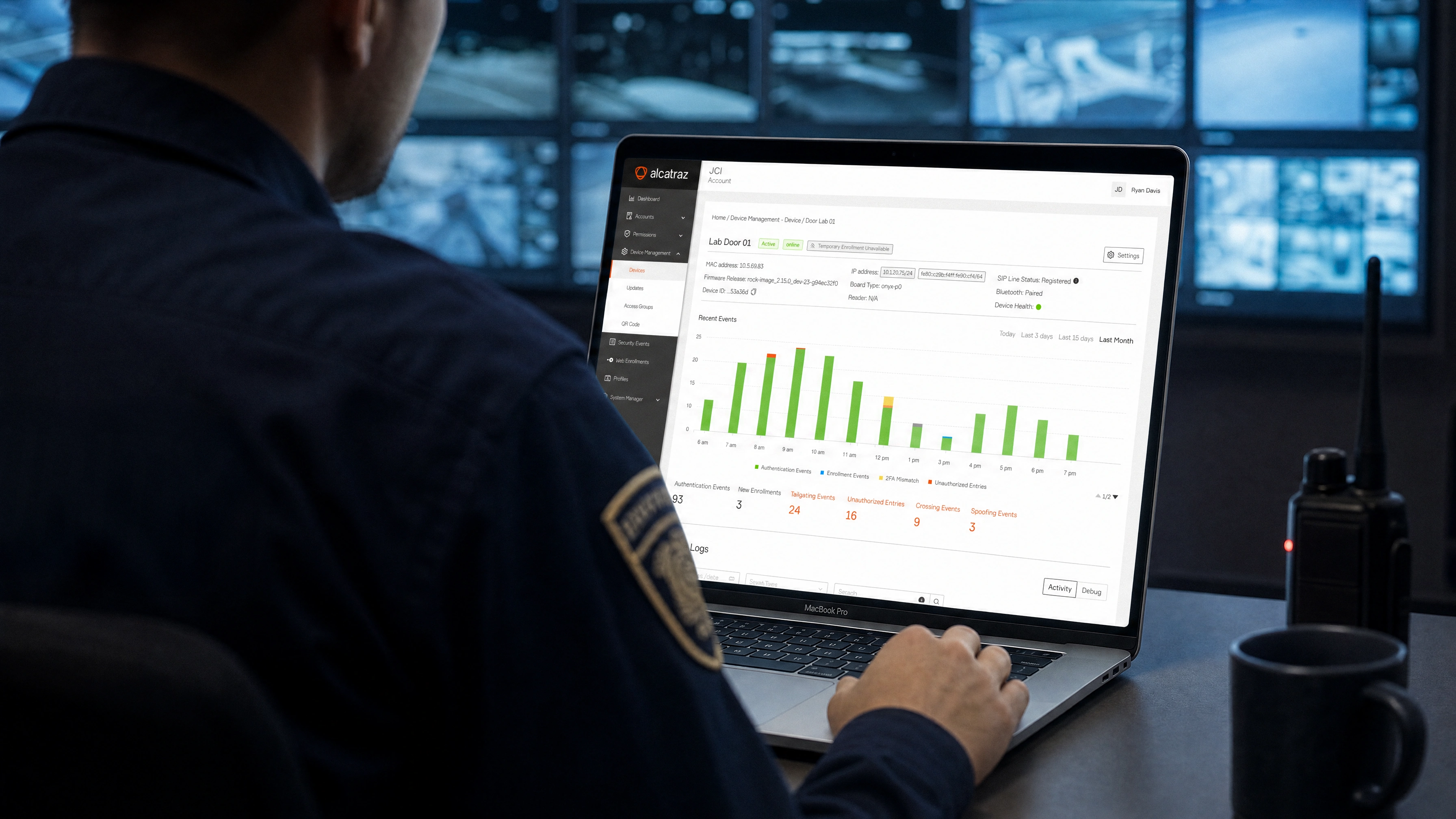




The Rock: the facial authentication reader that replaces the badge
The Rock is the Alcatraz facial authentication reader for indoor doors. It verifies the enrolled person in under a second, hands-free, detects tailgating in real time with video, and processes all biometric data on the device. It drops into your existing access control system via Wiegand or OSDP, in line between the reader position and the panel.
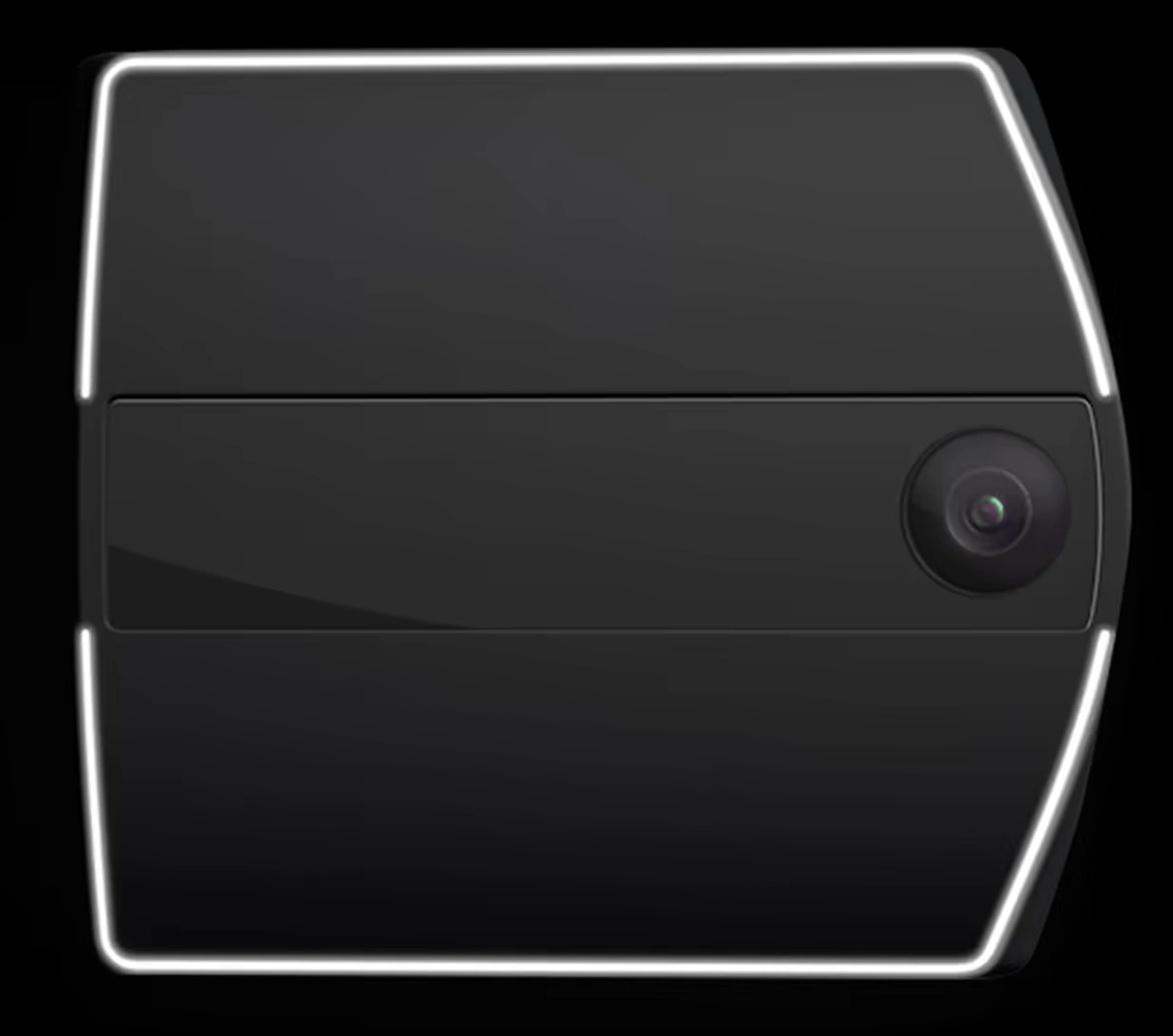
One device, three jobs
Most door hardware does one thing. The Rock does the three things a modern entry actually requires, in a single device at the reader position.
It authenticates. The enrolled person approaches and is verified by face in under a second, hands-free, with nothing to present. 3D liveness detection defeats photos, screens, and masks, so a verified entry means a physically present, enrolled person, not a picture of one.
It watches the doorway. After every valid entry, the Rock keeps monitoring and flags a second person the moment they follow, capturing video at the door. The most common physical breach, the tailgater, becomes a real-time, evidenced event instead of an invisible one.
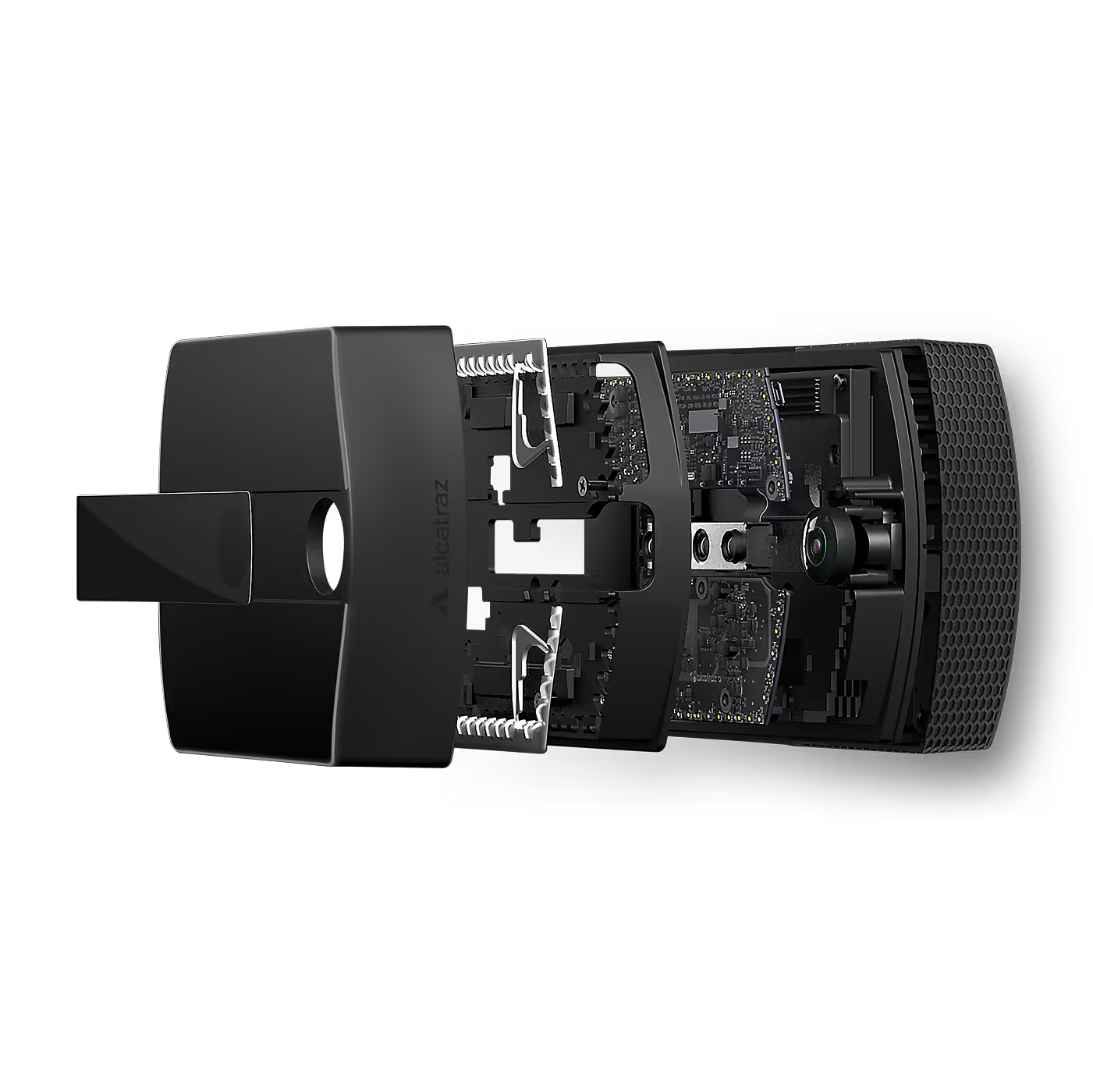
It speaks your panel’s language. The Rock passes credentials over Wiegand or OSDP, sitting in line between the reader position and the panel, so it takes the place of a card reader without replacing anything behind it.
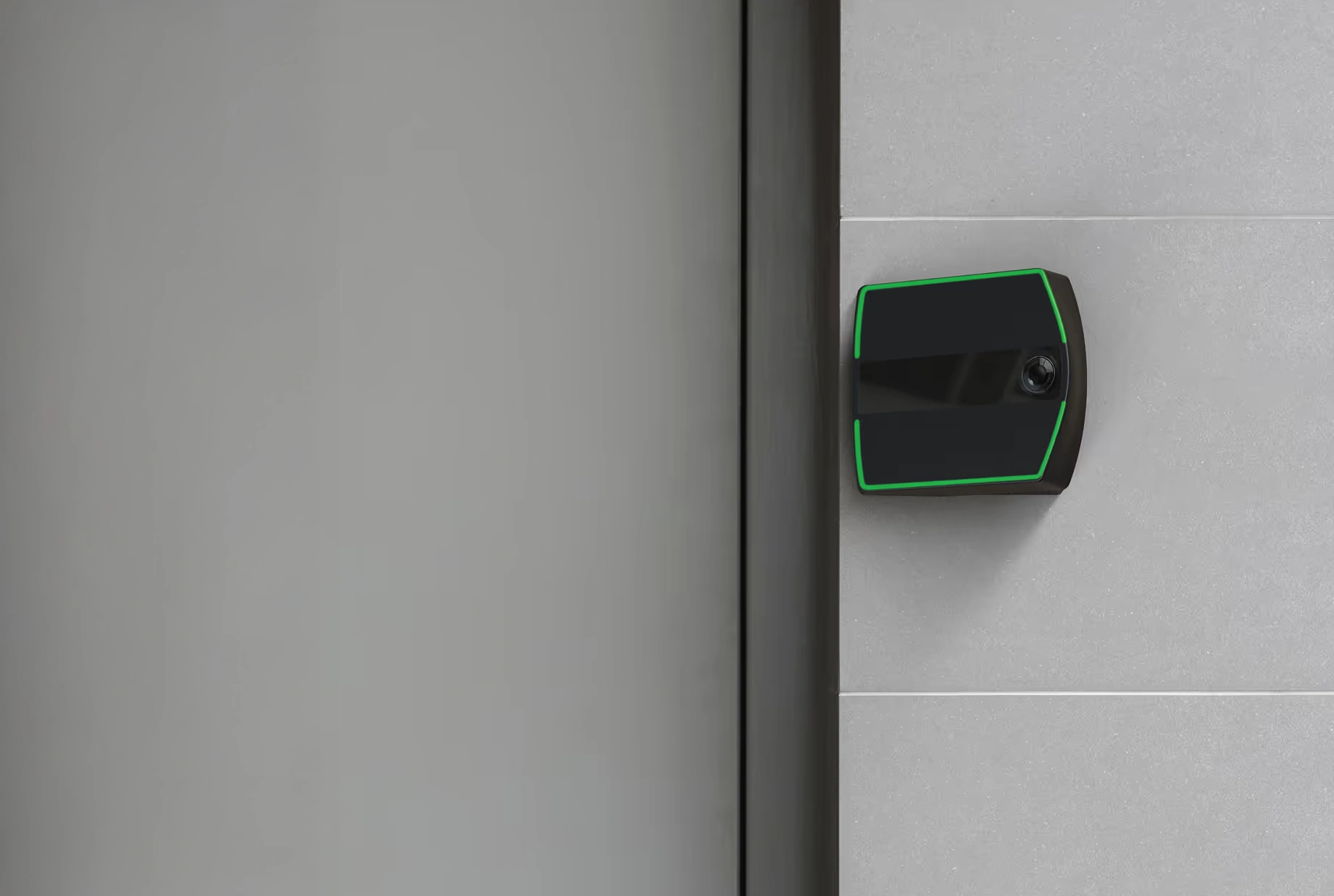
How the Rock works at the door
Mount the Rock at the door, connect it where the card reader was, and enroll your people. From that moment, the entry sequence is simple: the person walks up, the Rock verifies their face on the device, and the credential passes to your existing panel, which makes the access decision it has always made. To the panel, the Rock looks like a reader. To the person, the door just opens.
Every door can run the mode its risk deserves. 1FA, face only, gives everyday doors pure speed. 2FA, badge plus face, gives high-security doors true multi-factor: something you have and something you are, verified together in under a second. Modes, roles, and permissions are set per door in Rock Cortex, and RockOS firmware keeps the device fleet current in the field.
Privacy is built into the hardware path. Enrollment is opt-in, all processing happens on the edge device, and faces are converted to encrypted, non-reconstitutable templates. No photos or videos of faces are stored, and there is no cloud biometric database.
Benefits
Why security teams choose the Rock
The credential that cannot be shared
With the Rock, the face is the credential. It cannot be loaned at shift change, cloned in a coffee shop, or left in a gym bag, and 3D liveness detection blocks photo and mask spoofing. Badge sharing, the top insider vector at the door, simply stops working.
Tailgating detection with evidence
The Rock flags a second person following a valid entry in real time and captures video at the door, tying the event to the verified entry it exploited. Your SOC gets an actionable case file, and your audits see detection that demonstrably works.
A reader swap, not a rip-and-replace
The Rock integrates via Wiegand or OSDP with the platforms you already run, including Genetec, LenelS2, Software House C•CURE, Genea, Axis, and Johnson Controls. Panels, credentials, alarm monitoring, and procedures stay. Roll out door by door, starting where risk is highest.